
Inventory Replenishment Methods: Min/Max, Reorder Point, and Periodic Review
Every replenishment method answers the same two questions for each item: when should we order, and how much? The methods differ in what triggers the order and whether the quantity is fixed or calculated at the time.
Most distributors use more than one without naming them. Fast-moving items are bought when they hit a reorder point, and a vendor with a weekly truck is bought on a calendar. The trouble starts when one method is applied to everything, or when the numbers behind it were set years ago.
This guide compares the three core inventory replenishment methods, reorder point, min/max, and periodic review, with a worked example of each using the same item. It also shows where safety stock and economic order quantity fit, and how to match a method to an item.
What Is a Replenishment Method?
A replenishment method is the rule that decides when a stocked item is reordered and in what quantity. The rules fall into two families:
- Continuous review: the system checks the item every time inventory changes and orders when it reaches a trigger level. Reorder point and min/max are both continuous review methods.
- Periodic review: the item is checked on a schedule, such as every Tuesday or every two weeks, and an order is placed to bring it back up to a target.
The quantity is either fixed in advance or calculated as the gap between a target and what you have.
The Shared Building Blocks
All three methods are built from the same inputs. Each has its own guide, so this section only summarizes them.
- Inventory position. On hand, plus on order, minus quantities already allocated to customers. Every method should compare against position, not on-hand stock, or you will reorder what is already on a truck.
- Demand during lead time. Average daily demand multiplied by the supplier’s lead time in days.
- Safety stock. The buffer for demand and lead time running above average. See the safety stock formula.
- Order quantity. Often based on economic order quantity (EOQ), which balances ordering cost against carrying cost, then adjusted for case packs, vendor minimums, and price breaks. See our EOQ guide.
The examples below use one item throughout:
- Average demand: 30 units per day
- Supplier lead time: 7 days
- Safety stock: 90 units
- Case pack: 30 units
Method 1: Reorder Point
With a reorder point, you order a fixed quantity whenever inventory position falls to a set level.
Reorder point = (Average daily demand × Lead time) + Safety stock
Reorder point = (30 × 7) + 90 = 300 units
The order quantity is set separately. Here the buyer uses 420 units, which is 14 cases and about two weeks of demand.
In practice: a sale brings the item’s position down to 290. That is below 300, so an order for 420 is placed, and position becomes 710. About 210 units sell before it arrives. If demand runs high or the truck is late, the 90 units of safety stock cover the difference.
This method responds as soon as stock gets low, so it needs the least safety stock. It requires the system to know the position at all times, and it produces orders on unpredictable days. For the full calculation, including variable demand and lead time, see the reorder point formula.
Method 2: Min/Max
Min/max uses the same trigger and a different quantity. When position falls to the minimum, you order enough to bring it back to the maximum.
Order quantity = Max − Inventory position
For the example item, set the min at the reorder point and the max one order quantity above it:
- Min = 300 units
- Max = 300 + 420 = 720 units
A large customer order drops the position from 310 to 275. That is below the min, so:
Order quantity = 720 − 275 = 445 units, rounded up to the case pack: 450 units (15 cases)
The difference from a plain reorder point shows up when demand is lumpy. A fixed order of 420 would bring the position back to only 695. Min/max orders more after a big draw-down and restores the full cushion. It also puts a ceiling on the item, which is useful when shelf space, shelf life, or cash limits how much you want to hold.
The weakness is that min and max are often set by feel, as a number of weeks or whatever fits in the bin, and then left alone while demand changes.
Method 3: Periodic Review
With periodic review, you look at the item on a fixed schedule and order up to a target level. Nothing is ordered between reviews.
Order-up-to level = Average daily demand × (Review period + Lead time) + Safety stock
Order quantity = Order-up-to level − Inventory position
Suppose this vendor is ordered every 14 days. After an order is placed, the next chance to correct a shortage is the following review, plus the lead time for that order to arrive. So the stock must cover 14 + 7 = 21 days, not 7.
Safety stock has to cover that longer exposure as well. If the 90 units were sized with the standard formula for a 7-day lead time, the equivalent for 21 days scales with the square root of time:
Safety stock = 90 × √(21 ÷ 7) = 90 × 1.732 = 156 units
Order-up-to level = 30 × 21 + 156 = 630 + 156 = 786 units
On review day the position is 340:
Order quantity = 786 − 340 = 446 units, rounded up to 450 units (15 cases)
Periodic review makes purchasing predictable. Every item from a vendor is ordered on the same day, which helps reach freight and purchase minimums. The cost is more inventory, because nothing is ordered between reviews.
A rough way to see that cost is to estimate average inventory as safety stock plus half of a typical order:
- Reorder point: 90 + (420 ÷ 2) = 300 units
- Periodic review: 156 + (420 ÷ 2) = 366 units
For this item, ordering on a two-week calendar carries about 22% more stock than ordering at a reorder point. Whether that is worth it depends on what the combined orders save.
Comparison Table
| Reorder point | Min/max | Periodic review | |
|---|---|---|---|
| Order is triggered by | Position at or below the reorder point | Position at or below the min | The calendar |
| Order quantity | Fixed | Max minus position | Order-up-to level minus position |
| Timing of orders | Varies | Varies | Fixed |
| Safety stock covers | Lead time | Lead time | Review period plus lead time |
| Inventory required | Lowest | Low to moderate | Highest |
| Example result | Order 420 at 300 | Order 450 at 275 | Order 450 on review day |
| Typical fit | Steady, important items | Lumpy demand, space or shelf-life limits | Vendors with schedules, minimums, or full-truck pricing |
How to Choose a Method
Choose by item and by vendor, not once for the whole warehouse.
- High-value, fast-moving items justify continuous review with calculated reorder points and safety stock. See ABC inventory analysis.
- Low-value, steady items can run on simple min/max with generous quantities.
- Vendors with order minimums, fixed delivery days, or freight breaks suit periodic review, so the whole line is bought together.
- Perishable or space-constrained items need a firm maximum.
- Slow and intermittent items fit none of these well. Consider a min of one or two, or buying to order.
- Branches supplied from a central warehouse can use the same methods with the transfer lead time in place of the vendor’s. See multi-warehouse operations.
Other Approaches
- Forecast-based replenishment. For seasonal or trending items, the demand figure should come from a forecast, and the reorder point or order-up-to level should change through the year. See demand forecasting for distributors.
- Material requirements planning. Components whose demand depends on a production schedule are planned from that schedule, not from a reorder point. See how MRP calculates requirements.
- Vendor-managed inventory. The supplier watches your stock and decides when to replenish, usually with a min/max agreement underneath. See vendor-managed inventory.
Keeping the Numbers Current
A method is only as good as its parameters. Reorder points, mins, maxes, and order-up-to levels all depend on demand and lead time, and both move.
- Recalculate on a schedule, such as monthly for fast movers and quarterly for the rest
- Use the lead times suppliers actually achieve, measured from purchase order to receipt
- Exclude one-time spikes from the demand history, or they will inflate every number built on it
- Review items that stocked out and items with no sales, since both mean a parameter is wrong. See how to eliminate stockouts and dead stock and obsolete inventory.
- Keep on-hand records accurate. No method works when the system quantity is wrong. See cycle counting.
Common Mistakes
- Using one method, or one number of weeks, for every item
- Comparing the trigger with on-hand stock and ignoring open purchase orders and allocations
- Setting min and max by feel and never revisiting them
- Using lead-time safety stock with a periodic review, which leaves the review period uncovered
- Ignoring case packs and vendor minimums, then overriding every suggested order by hand
- Applying a reorder point to items that sell a few times a year
See Bizowie in Action
Real screens from Bizowie, not mockups. Click any screen to enlarge.
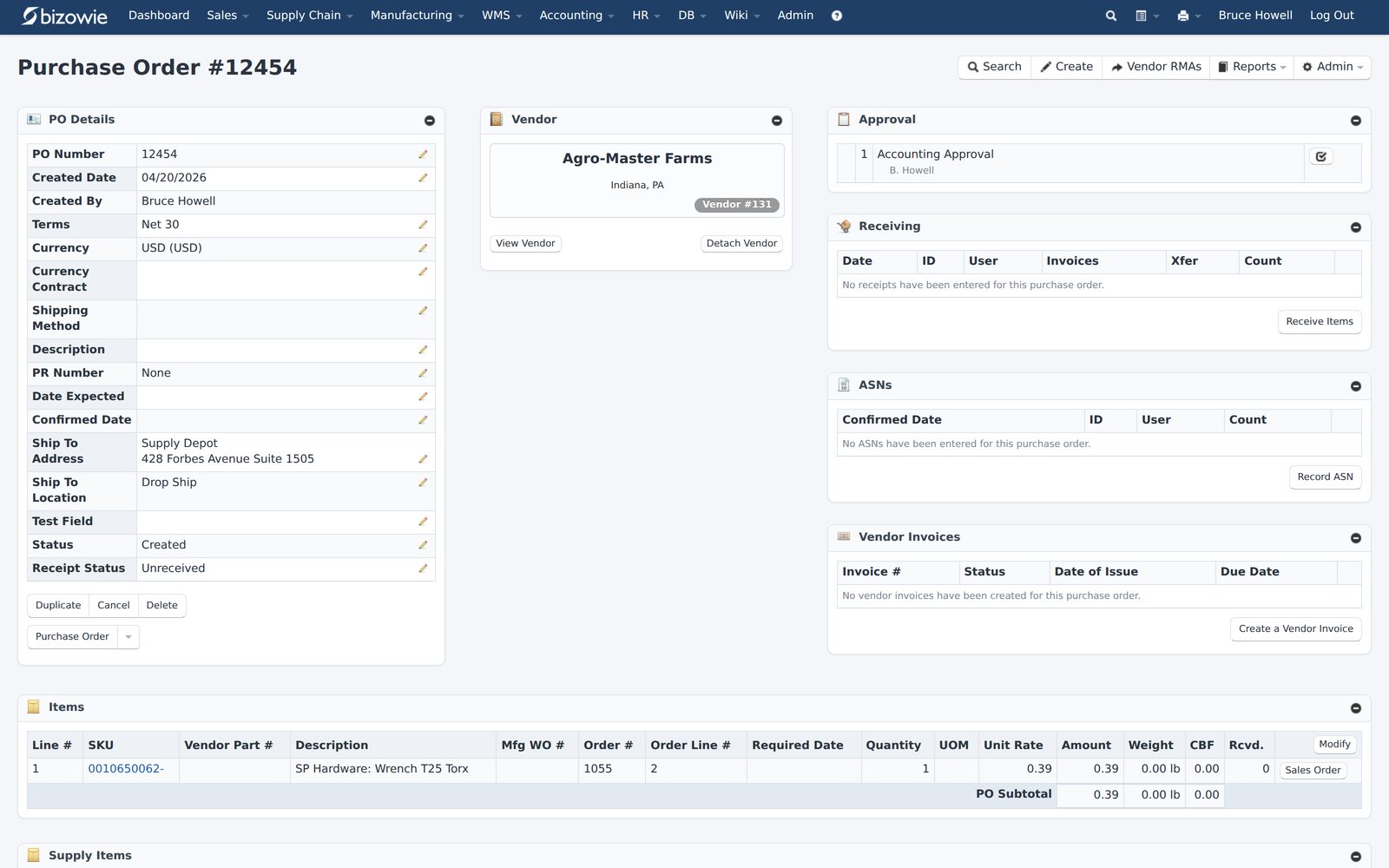
Purchase orders with approvals, receiving, ASNs, and vendor invoices on one screen.
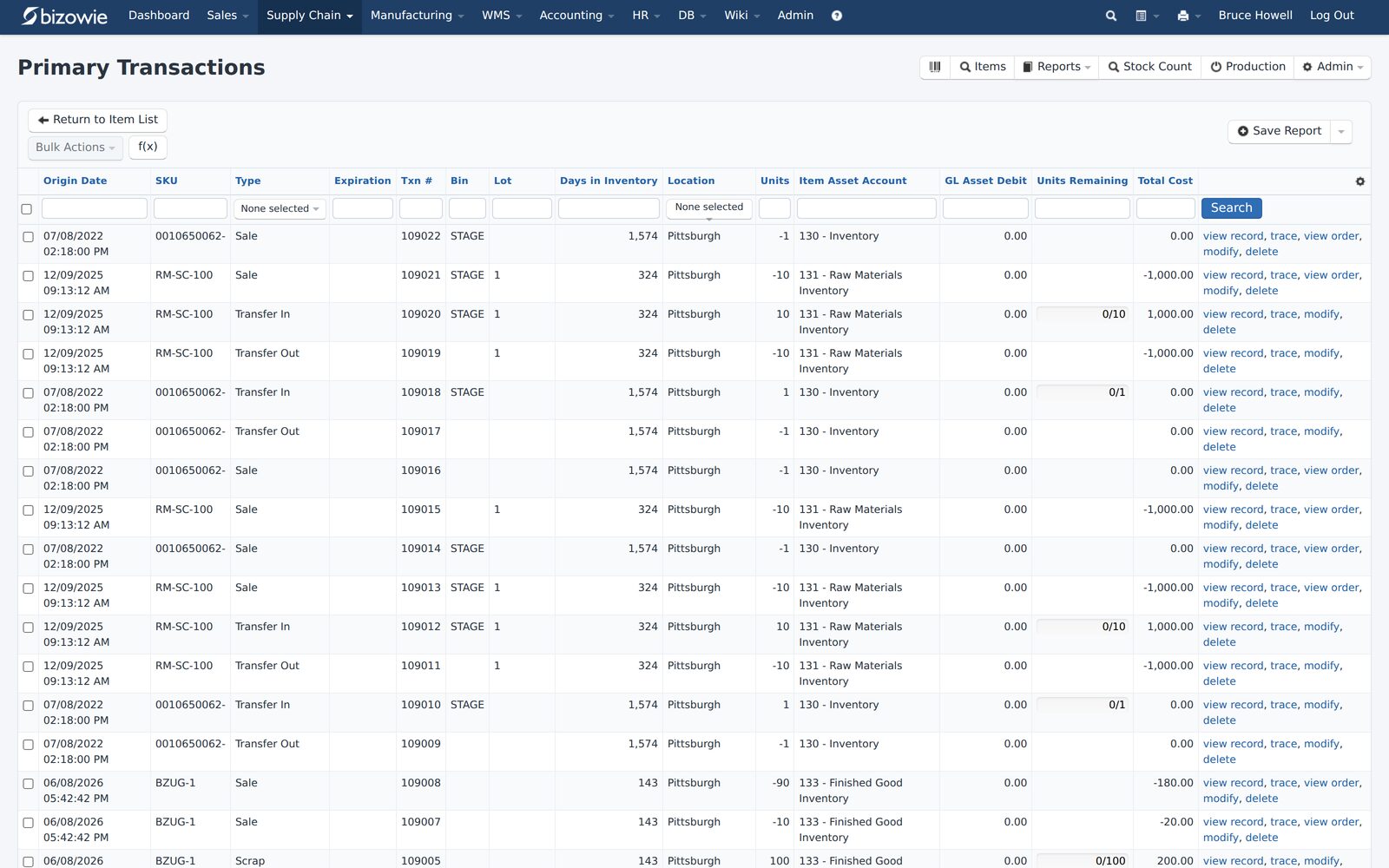
Every receipt, transfer, build, and quarantine move by SKU, lot, bin, and location.
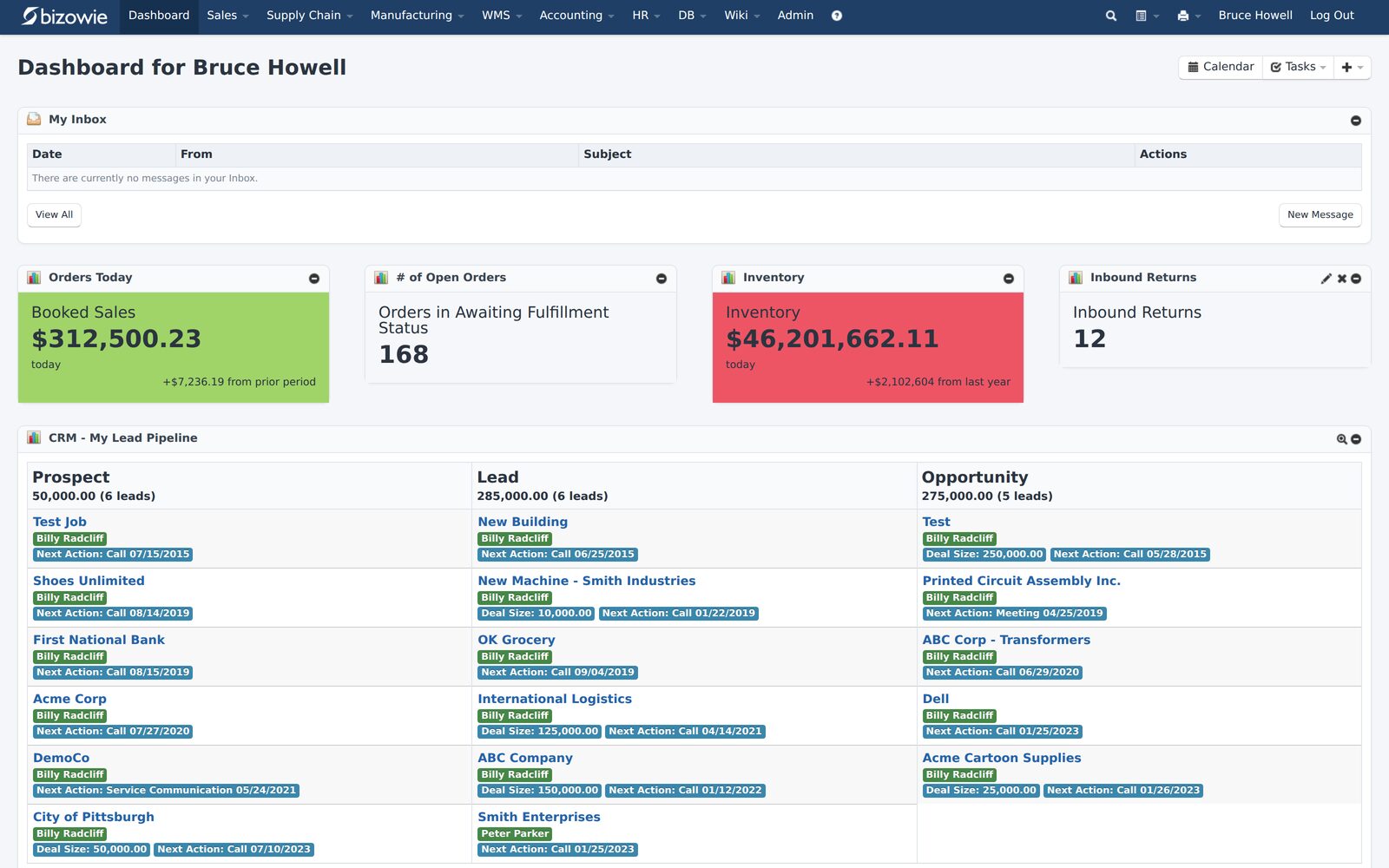
Bookings, open orders awaiting fulfillment, and inventory value at a glance.
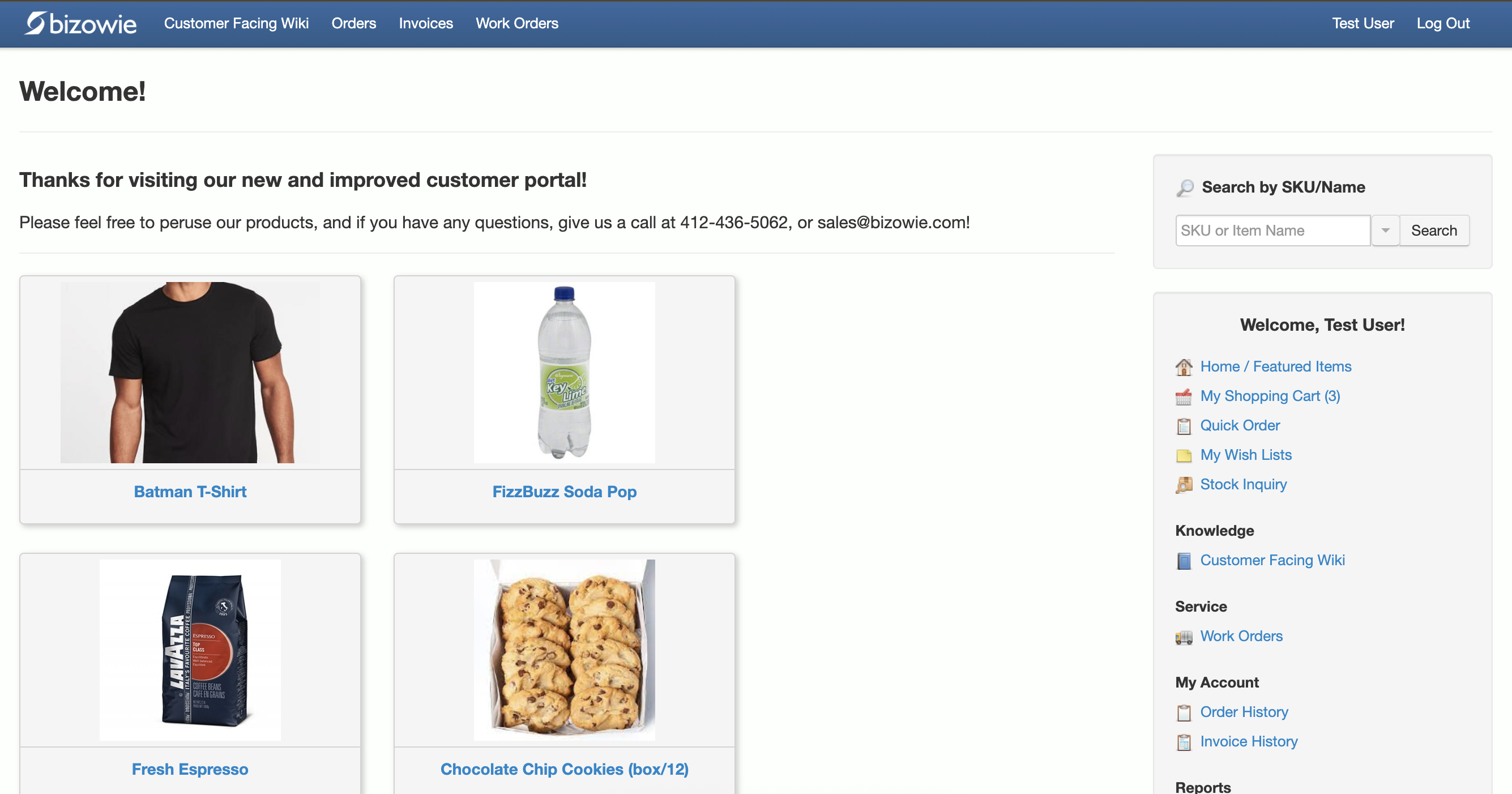
Customers search items, place orders, and check order and invoice history themselves.
Replenishment in Bizowie
In Bizowie, purchase orders can be entered manually or created automatically based on demand, with automatic PO creation or drafting on a scheduled or just-in-time basis. Item- and location-level min/max quantities can be user defined or set algorithmically by the system. Vendor reorder reporting takes into account EOQ, quantity discounts, and minimum unit or weight purchasing, and there is in-depth reporting on inventory demand and usage. Rule-based inter-warehouse and cross-dock transfers help reduce overbuying. Purchasing runs on the same real-time inventory as sales and the warehouse. For the wider evaluation, see our distribution ERP software buyer’s guide.
“We have seen immediate economic benefit for our business in terms of productivity from our warehouse staff, eliminated processing errors, and better stock control.”
Julius Hart — Managing Director, LensesOnline
Frequently Asked Questions
What are the main inventory replenishment methods?
The three core methods are reorder point, where a fixed quantity is ordered when stock reaches a trigger level, min/max, where stock is refilled to a maximum when it reaches a minimum, and periodic review, where stock is ordered up to a target on a fixed schedule.
What is the difference between min/max and reorder point?
Both order when inventory falls to a trigger level. A reorder point orders the same fixed quantity each time. Min/max orders whatever is needed to return to the maximum, so the quantity changes with how far stock has fallen.
When should you use periodic review?
Use it when ordering on a schedule has a clear benefit: a vendor with fixed order or delivery days, freight or purchase minimums that require combining items, or no reliable real-time inventory. Expect to carry more safety stock.
Where does EOQ fit?
EOQ is a way to set the order quantity. It can be the fixed quantity in a reorder point system or the gap between min and max. It does not decide when to order.
Do replenishment methods use on-hand inventory or inventory position?
Inventory position: on hand plus on order minus allocated. Using on-hand stock alone leads to duplicate orders while a purchase order is in transit.
Bring Us Your Reorder Report
Tell us how you decide what to buy and when. We’ll show you how Bizowie handles reorder reporting, min/max quantities, and automatic purchase orders, and if we are not the right fit, we will tell you.
See how Bizowie would handle your purchasing
Tell us a little about your operation and we’ll reply with an honest assessment of fit, not a sales pitch.
- A real person reviews your submission and replies within one business day.
- No automated email sequences.
- If we’re not the right fit, we’ll tell you.
Prefer to talk?
Call (888) 635-2517, Mon–Fri, 9 AM–5 PM Eastern