
Costed BOM: How to Roll Up Product Cost, With a Worked Example
A costed bill of materials is a bill of materials with a cost on every line. It takes the list of components, subassemblies, and operations that make up a product and rolls their costs up, level by level, into one number: what it should cost to make one unit.
That number drives quotes, standard costs, inventory valuation, and margin reports. When it is wrong, every decision built on it is wrong too, and the error is hard to see because the bill of materials itself still looks complete.
This guide explains what a costed BOM contains, shows a cost roll-up step by step with a multi-level worked example, and covers the choices that change the answer: which cost to use for purchased parts, how to treat scrap, and how to spread setup cost.
What Is a Costed BOM?
A costed BOM, also called a costed bill of materials or a cost roll-up, shows the extended cost of every component in a product and the total cost of the finished item. A full costed BOM combines two records:
- The bill of materials, which supplies the components and the quantity of each per unit
- The routing, which supplies the operations, the time each takes, and the work center where it is done
Material cost comes from the first. Labor and overhead come from the second. A costed BOM built from material alone is a material cost sheet, not a product cost. For the underlying records, see bill of materials management and routings in manufacturing.
The Cost Roll-Up Formulas
Extended material cost = Quantity per unit ÷ (1 − Scrap factor) × Unit cost
Labor cost = Standard hours per unit × Labor rate
Overhead cost = Standard hours per unit × Overhead rate
Rolled cost of an item = Extended cost of its components + Its own labor + Its own overhead
The roll-up runs from the bottom of the structure to the top. Each subassembly is costed first, and its rolled cost becomes the unit cost of that line in the parent. A purchased part has no roll-up. Its cost is whatever your costing method says it is.
Worked Example: A Two-Level Cost Roll-Up
A manufacturer builds a control box. It contains purchased parts and one subassembly made in house, a wiring harness. Labor is costed at $28 per hour and overhead is applied at $30 per labor hour.
Step 1: Cost the subassembly
| Wiring harness | Quantity | Unit cost | Extended |
|---|---|---|---|
| Connector | 2 | $0.90 | $1.80 |
| Terminal | 3 | $0.40 | $1.20 |
| Labor | 0.10 hr | $28.00 | $2.80 |
| Overhead | 0.10 hr | $30.00 | $3.00 |
| Rolled cost of harness | $8.80 |
Step 2: Cost the parent, using the rolled cost of the subassembly
| Control box | Quantity | Unit cost | Extended |
|---|---|---|---|
| Enclosure | 1 | $18.00 | $18.00 |
| Mounting bracket | 2 | $1.25 | $2.50 |
| Screw | 8 | $0.05 | $0.40 |
| Wire (feet), 4% scrap factor | 1.5 | $0.48 | $0.75 |
| Wiring harness (subassembly) | 1 | $8.80 | $8.80 |
| Assembly labor | 0.25 hr | $28.00 | $7.00 |
| Overhead | 0.25 hr | $30.00 | $7.50 |
| Rolled cost of control box | $44.95 |
The wire line shows the scrap factor at work: 1.5 ÷ (1 − 0.04) = 1.5625 feet, and 1.5625 × $0.48 = $0.75. Without the scrap factor the line would be $0.72, and the product would be undercosted by the wire that is always lost in cutting.
If the cost of a connector rises from $0.90 to $1.10, the harness rises by $0.40 to $9.20 and the control box rises by the same $0.40 to $45.35. That is the point of a roll-up: a change at the bottom carries through every level above it, in every product that uses the part.
Cost by Element
A single total is less useful than a total broken into cost elements. Most systems carry each element separately through the roll-up, so the labor inside a subassembly is still reported as labor at the top level and is not buried in material.
| Cost element | Where it comes from | Amount | Share |
|---|---|---|---|
| Material | $21.65 at the top level + $3.00 in the harness | $24.65 | 54.8% |
| Labor | $7.00 at the top level + $2.80 in the harness | $9.80 | 21.8% |
| Overhead | $7.50 at the top level + $3.00 in the harness | $10.50 | 23.4% |
| Total | $44.95 | 100% |
Common additional elements are outside processing, such as plating or heat treatment done by a supplier, and material burden, such as freight and receiving cost added to purchased parts. See outside processing and how to calculate a manufacturing overhead rate.
Choices That Change the Answer
Two people can cost the same BOM and get different totals. The differences usually come from these choices.
- Which cost for purchased parts. Standard cost, average cost, last purchase cost, and current quoted cost can all differ. Standard gives a stable number for the year. Last or current cost shows what the product would cost to build today. Decide which question you are answering. See inventory costing methods explained.
- Scrap and yield. A component scrap factor raises the quantity of that line. A yield on the parent raises the cost of everything in it. Leaving both out understates cost. See scrap rate and yield.
- Setup cost and lot size. Setup is a cost per run, so its cost per unit depends on how many units share it. If setting up the assembly cell takes 2 hours at $58 per hour for labor and overhead combined, the setup costs $116. Spread over a lot of 100 that is $1.16 per unit. Spread over a lot of 25 it is $4.64. A costed BOM that includes setup is only valid at the lot size it assumed.
- Which rates. Labor and overhead rates should be the current rates by work center. A plantwide rate that is years old distorts every product a little and some products a lot.
- Phantom and reference items. A phantom assembly passes its components’ costs straight through. Reference items, such as drawings or tooling listed on the BOM, should carry no cost.
- Single level or fully rolled. A single-level view uses the stored cost of each subassembly. A full roll-up recalculates every level. If the stored costs are stale, the two views disagree.
What a Costed BOM Is Used For
- Setting standard costs. The rolled cost becomes the standard that production is measured against. See manufacturing cost variances.
- Quoting and pricing. Price is built up from cost. To earn a 35% margin on the control box, the price is $44.95 ÷ (1 − 0.35) = $69.15. Multiplying by 1.35 gives $60.68, which is a 35% markup and only a 25.9% margin. See markup vs. margin.
- Valuing inventory. Finished goods and work in process are carried at manufactured cost.
- Make-or-buy decisions. The rolled cost of the harness, $8.80, is the number to compare with a supplier’s quote, after checking which overhead would actually go away.
- What-if analysis. A material price increase, a design change, or a new routing can be costed before it is released. See engineering change management.
- Margin review. Comparing rolled cost with selling price by item shows which products no longer earn what you think they do.
Keeping Rolled Costs Current
A cost roll-up is a snapshot. It is accurate on the day it is run and drifts from then on as prices, rates, and designs change. Three habits keep it useful:
- Roll on a schedule and on events. Many manufacturers roll standards once a year and run a what-if roll-up whenever a major material price or an engineering change comes through.
- Compare rolled cost with actual cost. If work orders for an item keep closing above the rolled cost, the BOM, the routing, or the rates are wrong. See job costing in manufacturing ERP.
- Fix the source, not the total. Correct the quantity, the time standard, or the rate. Overriding the rolled cost by hand hides the problem until the next roll-up brings it back.
Common Mistakes
- Costing material only and calling it product cost
- Leaving out scrap factors, so every unit is undercosted by the material that is always lost
- Rolling costs with labor and overhead rates that have not been reviewed in years
- Mixing cost types, with some parts at standard and others at last purchase cost
- Quoting from a rolled cost that assumed a much larger lot than the customer is ordering
- Updating a component cost and not re-rolling the parents that use it
- Costing an old revision of the BOM after the design has changed
- Applying a markup percentage when the target was a margin percentage
See Bizowie in Action
Real screens from Bizowie, not mockups. Click any screen to enlarge.
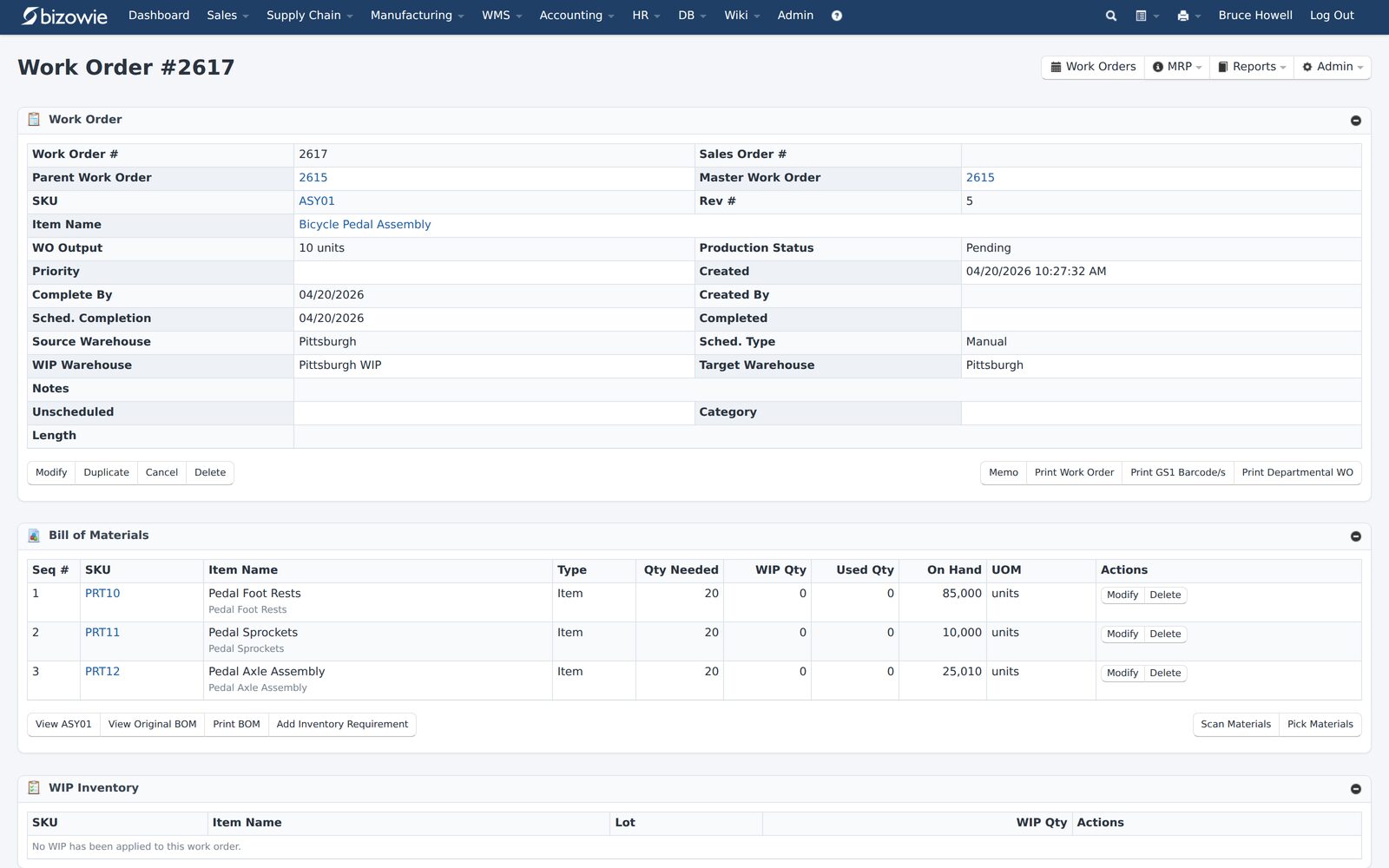
Each work order carries its multi-level bill of materials, batches, and live on-hand quantities.
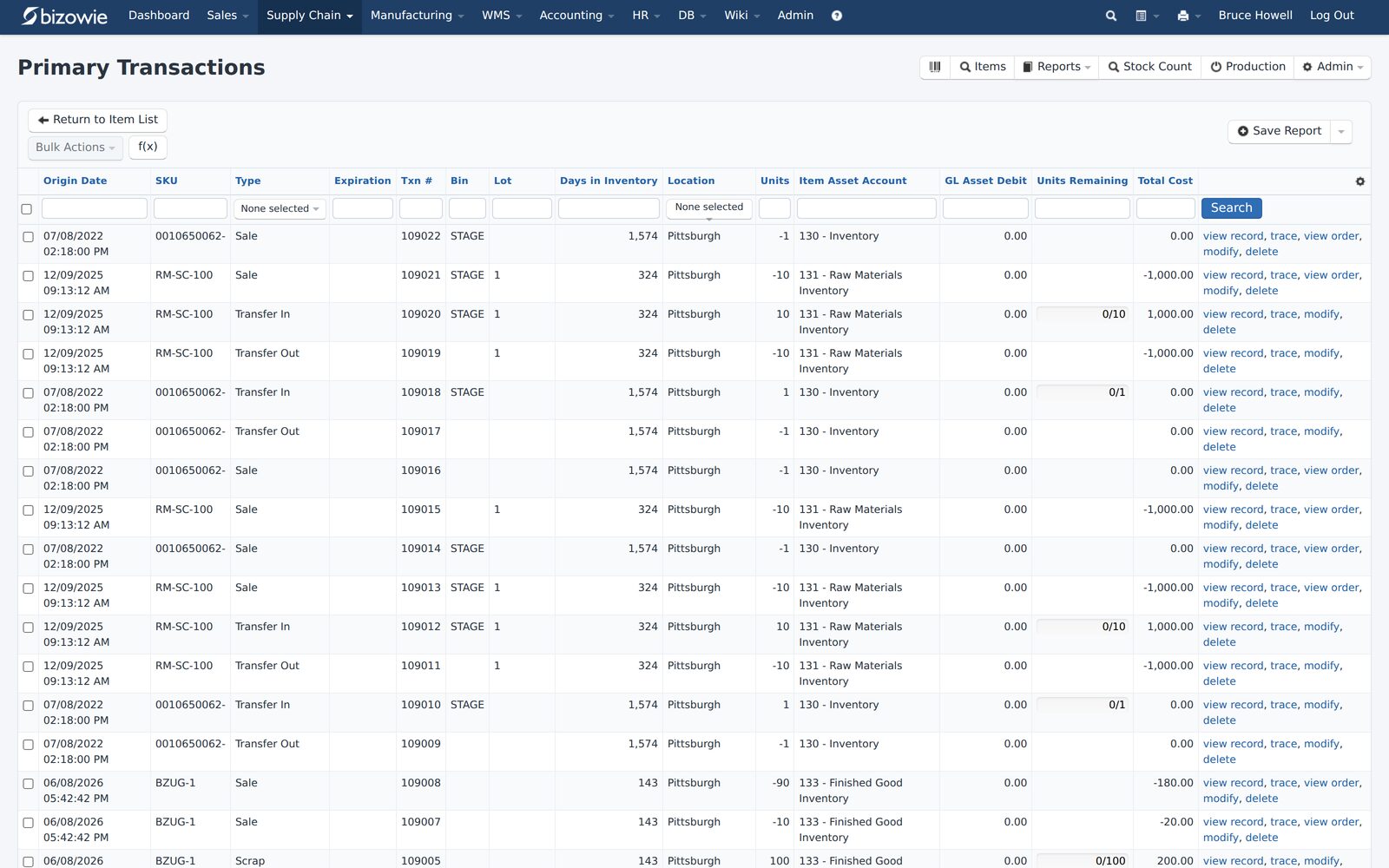
Every receipt, transfer, build, and quarantine move by SKU, lot, bin, and location.
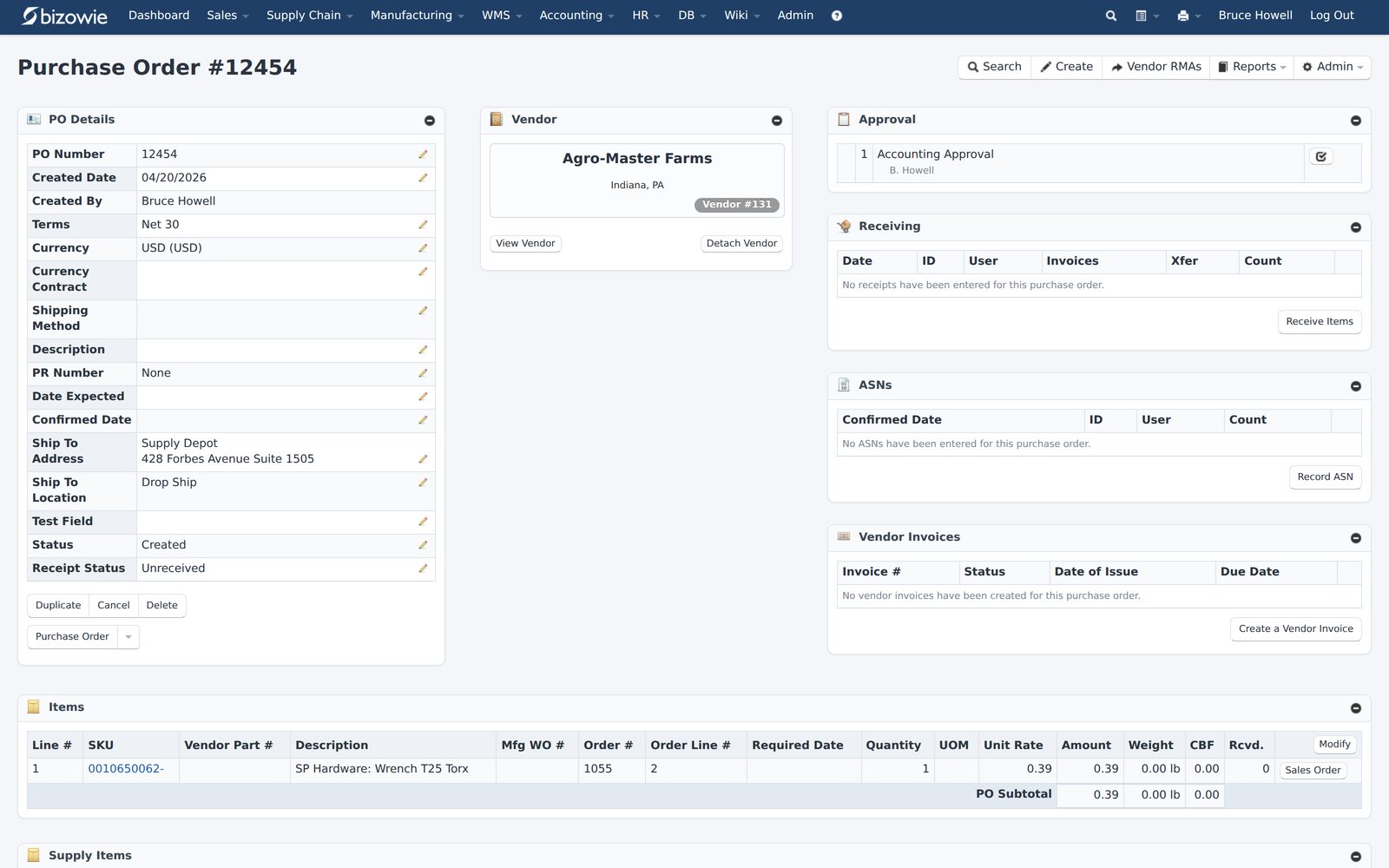
Purchase orders with approvals, receiving, ASNs, and vendor invoices on one screen.
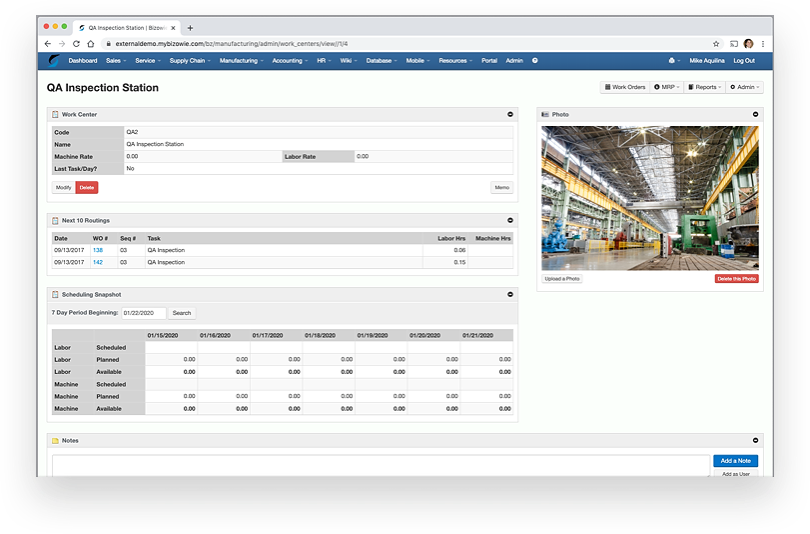
Routings, labor and machine rates, and a scheduling snapshot for every work center.
Bills of Materials and Product Cost in Bizowie
Bizowie supports true multi-level bills of materials with more than 1,000 levels, and its estimating tools build up cost from labor, materials, third-party services, and fees, with standard and custom markups and profitability targets. In production, work centers carry labor and machine rates, labor and machine time are recorded against the work order, and direct costs are applied to finished goods using actual or standard costs. Every production event updates inventory, costing, and the general ledger at the same time. For the wider evaluation, see our manufacturing ERP software buyer’s guide and the Bizowie Manufacturing Suite.
“From our first contact all the way through to our implementation, Bizowie has been a first class organization to work with… We strongly recommend the Bizowie software program.”
Alan Seymour — President, Cleveland Electric Labs
Frequently Asked Questions
What is a costed BOM?
A costed BOM is a bill of materials that shows the cost of each component and operation and rolls them up into the total cost of one unit of the finished product.
How do you calculate a costed BOM?
Multiply each component’s quantity per unit, adjusted for scrap, by its unit cost. Add labor and overhead from the routing. Cost subassemblies first and carry their rolled cost into the parent, working from the lowest level to the top.
What is a cost roll-up?
A cost roll-up is the calculation that builds a product’s cost from the bottom of its structure upward, so the cost of every component, subassembly, and operation is included in the finished item.
Does a costed BOM include labor and overhead?
A complete one does. Material comes from the bill of materials, and labor and overhead come from the routing. A BOM costed for material only understates the cost of the product.
How often should costs be rolled up?
At least once a year when standards are set, and again whenever a significant material price, labor rate, or design change occurs. Running a what-if roll-up before a change is released shows its effect in advance.
Bring Us Your Most Complicated Product
Tell us how you build up product cost today. We’ll show you how Bizowie handles multi-level bills of materials, estimates, and production costing, and if we are not the right fit, we will tell you.
See how Bizowie would cost your products
Tell us a little about your operation and we’ll reply with an honest assessment of fit, not a sales pitch.
- A real person reviews your submission and replies within one business day.
- No automated email sequences.
- If we’re not the right fit, we’ll tell you.
Prefer to talk?
Call (888) 635-2517, Mon–Fri, 9 AM–5 PM Eastern