
Cycle Counting: How to Set Up a Program That Keeps Inventory Accurate
The annual physical inventory has a predictable pattern: the warehouse shuts down, everyone counts, adjustments are posted, and within a few months the numbers drift again.
Cycle counting replaces that with small, frequent counts throughout the year. Done well, it keeps inventory accurate all the time, finds the causes of errors while they are still fresh, and often eliminates the full shutdown count altogether.
This guide explains how to set up a cycle counting program: choosing what to count and how often, running the counts, handling variances, and measuring accuracy.
What Is Cycle Counting?
Cycle counting is counting a small portion of inventory on a regular schedule, so that every item is counted at least once over a period, with more important items counted more often. Instead of verifying everything once a year, you verify something every day.
The goal is not just correct numbers. It is finding why numbers go wrong, such as unrecorded moves, receiving errors, or picks from the wrong bin, and fixing the process.
Cycle Counting Methods
- ABC cycle counting: count items by value or importance, with A items counted most often. The most common method. See ABC inventory analysis.
- Location-based counting: count every item in a set of aisles or bins, rotating through the warehouse. Good for finding misplaced stock.
- Opportunity-based counting: count when a location is low or empty, or when a picker reports a problem. Cheap, because there is little to count.
- Random sampling: count randomly selected items to measure overall accuracy.
Most programs combine ABC counting with opportunity counts.
How Often to Count: ABC Frequencies
| Class | Typical share of items | Typical share of value | Common count frequency |
|---|---|---|---|
| A | About 20% | About 80% | Monthly or more often |
| B | About 30% | About 15% | Quarterly |
| C | About 50% | About 5% | Twice a year or annually |
These are starting points. Raise the frequency for items with frequent errors, high theft risk, or critical importance to customers or production.
A Worked Example
A distributor has 5,000 active SKUs and about 250 working days a year.
- A items: 1,000 SKUs counted 12 times a year = 12,000 counts
- B items: 1,500 SKUs counted 4 times a year = 6,000 counts
- C items: 2,500 SKUs counted 2 times a year = 5,000 counts
That is 23,000 counts a year, or about 92 counts per working day. At a minute or two per count with a scanner, that is roughly one and a half to three hours of one person’s day, spread across the year instead of a weekend shutdown.
How to Run a Count
- Generate the day’s count list from the system, by item and location.
- Count blind: counters should not see the expected quantity, so they count instead of confirm.
- Scan the location and item, and enter the quantity on a mobile device.
- Handle in-flight transactions: count when the location is not being picked, or make sure open picks and put-aways are accounted for.
- Recount variances above a tolerance before adjusting.
- Post adjustments with a reason code.
Handling Variances and Root Causes
Set tolerances by class, for example a smaller percentage or dollar tolerance for A items, and investigate anything outside them. Common causes:
- Stock moved without a transaction
- Receiving counted wrong or put away to the wrong bin
- Picks from the wrong location or item
- Unit-of-measure errors, such as cases recorded as eaches
- Unrecorded damage, scrap, or samples
Track variances by reason. If most errors come from receiving, fix receiving. See how to fix inventory inaccuracy and phantom inventory.
Measuring Inventory Accuracy
The most useful measure is location-level accuracy: the percentage of counted locations where the system quantity matched the count, within tolerance.
Inventory accuracy = Locations counted within tolerance ÷ Total locations counted
If 92 of 100 counted locations are within tolerance, accuracy is 92%. Track it weekly, by class and by zone. Many distributors aim for 95% or better on A items.
See Bizowie in Action
Real screens from Bizowie, not mockups. Click any screen to enlarge.
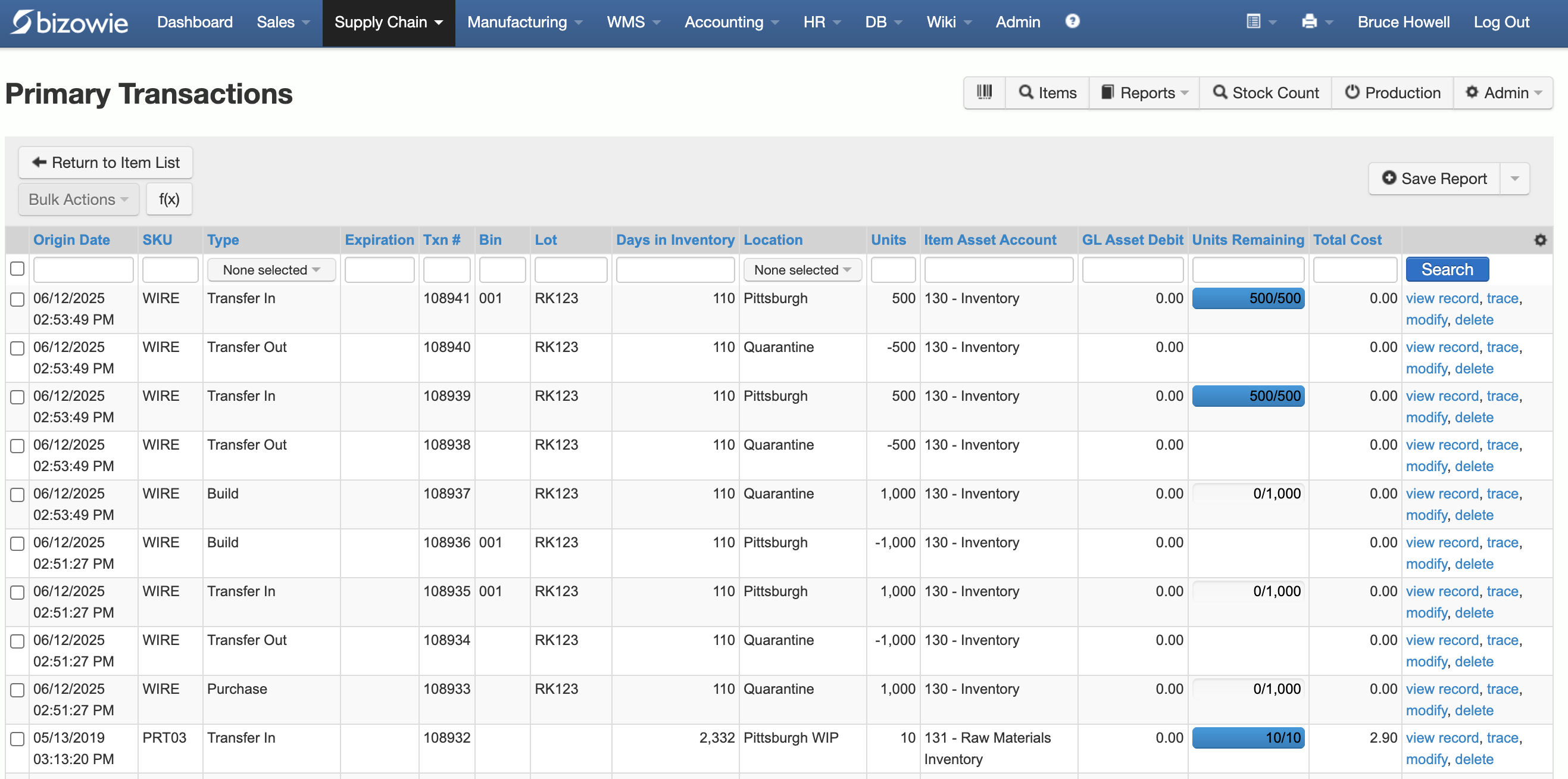
Inventory Transactions
Every receipt, transfer, build, and quarantine move by SKU, lot, bin, and location.
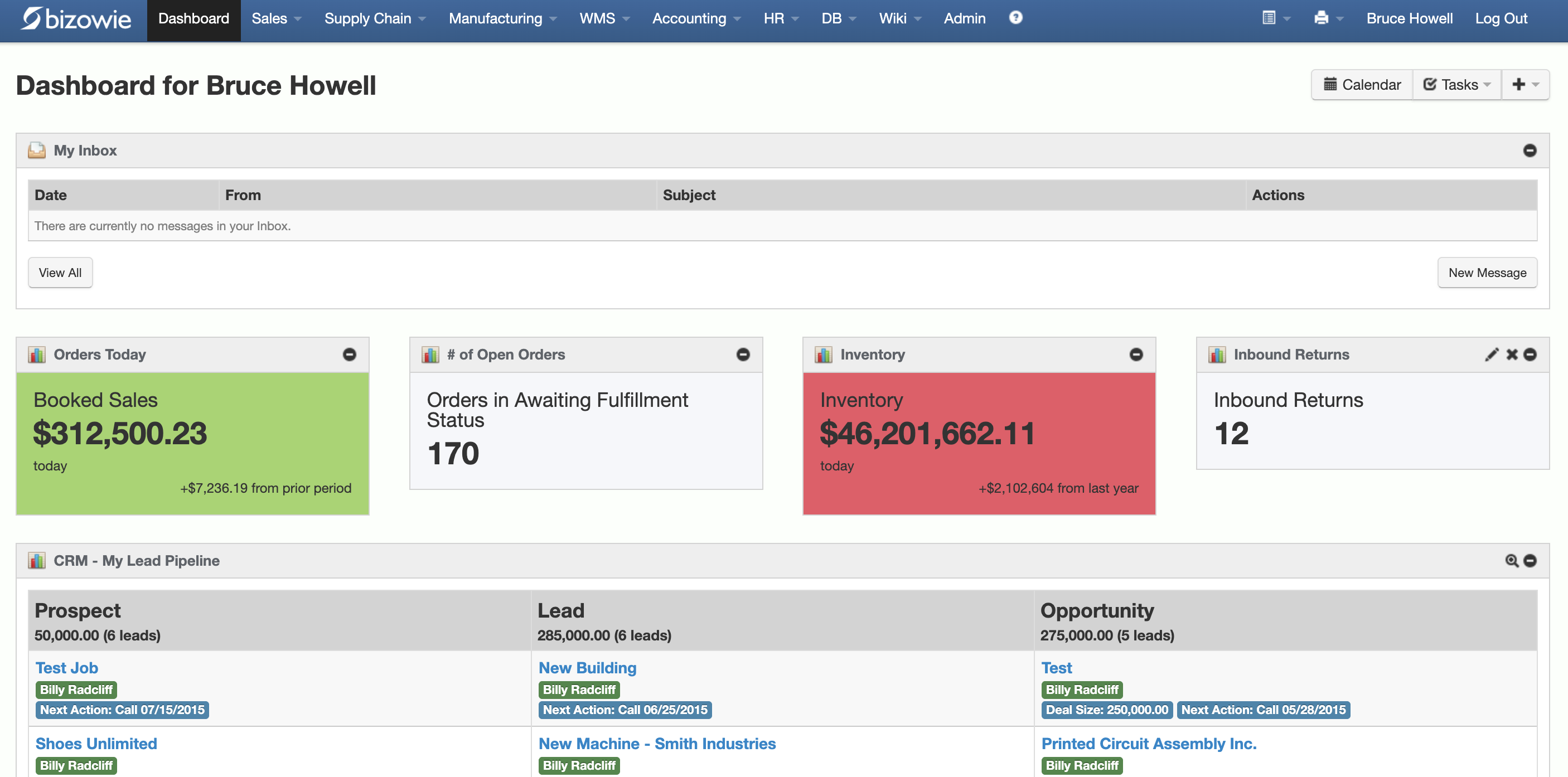
Live Dashboard
Bookings, open orders awaiting fulfillment, and inventory value at a glance.
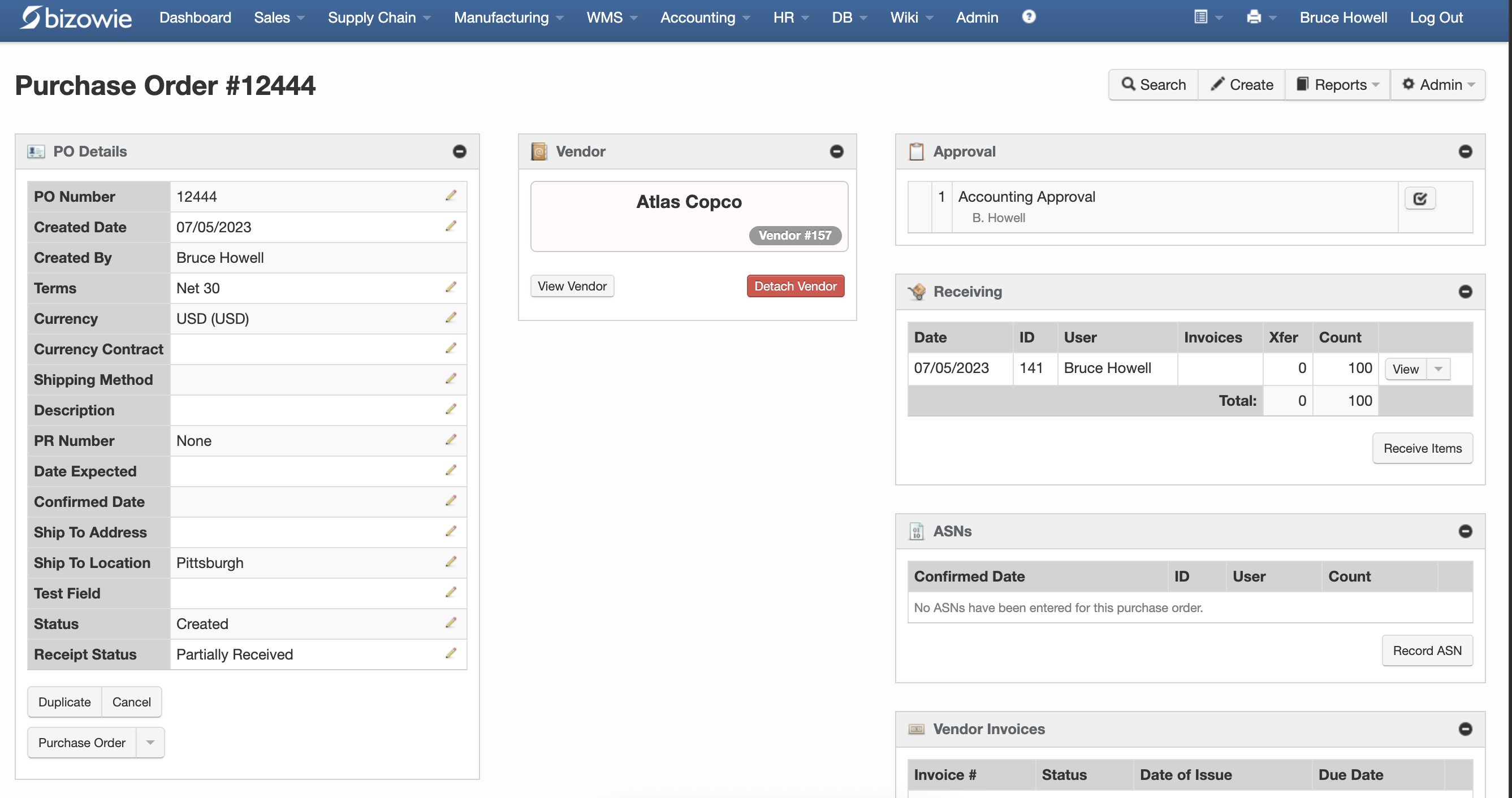
Purchasing & Receiving
Purchase orders with approvals, receiving, ASNs, and vendor invoices on one screen.
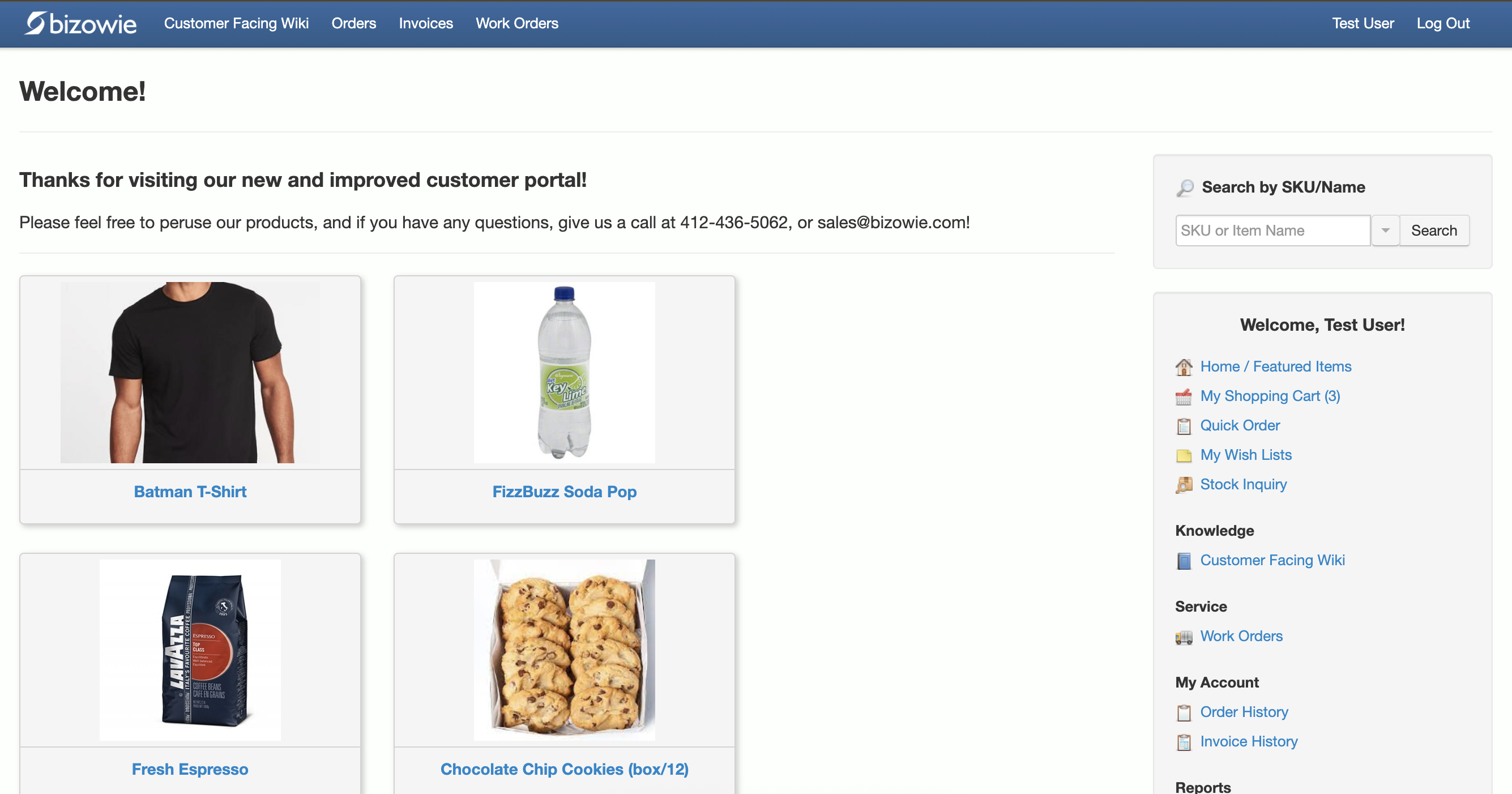
B2B Customer Portal
Customers search items, place orders, and check order and invoice history themselves.
Common Mistakes
- Adjusting without investigating, which hides the cause
- Counts that show the expected quantity
- Counting during active picking without accounting for open transactions
- Skipping days, so the schedule falls behind
- Counting only by item, never by location, so misplaced stock is never found
Cycle Counting in Bizowie
Bizowie’s warehouse management runs stock counts, inventory moves, receiving, put-away, and picking from mobile devices with barcode scanning, and updates inventory and the general ledger in real time. Inventory is tracked down to warehouse, zone, bin, and LPN, with lotted and serialized items, so counts can be done by location or by item.
“We have seen immediate economic benefit for our business in terms of productivity from our warehouse staff, eliminated processing errors, and better stock control.”
Julius Hart — Managing Director, LensesOnline
Frequently Asked Questions
What is the difference between cycle counting and physical inventory?
A physical inventory counts everything at once, usually with operations stopped. Cycle counting counts a small portion continuously, so operations keep running and errors are caught sooner.
How often should you cycle count?
Common practice is monthly for A items, quarterly for B items, and once or twice a year for C items, adjusted for items with frequent errors.
Can cycle counting replace the annual physical inventory?
Often, yes, if the program is consistent and accuracy is high. Check with your auditors, who may need to review the program first.
What is a good inventory accuracy rate?
Many distributors target 95% or better at the location level, and higher for A items.
See Counting Done Right
Tell us how you count inventory today. We’ll show you how it would work in Bizowie, and if we are not the right fit, we will tell you.
See how Bizowie keeps inventory accurate
Tell us a little about your operation and we’ll reply with an honest assessment of fit, not a sales pitch.
- A real person reviews your submission and replies within one business day.
- No automated email sequences.
- If we’re not the right fit, we’ll tell you.
Prefer to talk?
Call (888) 635-2517, Mon–Fri, 9 AM–5 PM Eastern