
Looking for a Prophet 21 Alternative? Compare Bizowie
Epicor Prophet 21 software has been a major ERP platform in wholesale distribution for years, and for many distributors it remains a capable option. But choosing your next ERP does not have to be a decision between upgrading Prophet 21 and preserving the status quo.
If your organization is evaluating a new ERP because of changing warehouse requirements, application sprawl, integrations, reporting limitations, growing transaction volume, manufacturing needs, or a broader modernization initiative, it makes sense to evaluate the market from a clean sheet.
Bizowie is a cloud ERP platform built for mid-market distributors and manufacturers. It brings ERP, inventory, warehouse operations, EDI, financials, reporting, and manufacturing together in one unified operating environment.
What Is Epicor Prophet 21?
Prophet 21 is an established distribution-focused ERP from Epicor. Epicor currently positions the platform for industries including industrial distribution, electrical supply, fasteners, HVAC, medical supply, paper and packaging, plumbing, safety supply, and related distribution markets.
The platform includes capabilities for inventory management, purchasing, order management, financials, warehouse management, reporting, CRM, ecommerce, service operations, and other distribution requirements. Epicor also describes Prophet 21 as providing cloud-based applications and technology intended to support modern and mobile operations.
That is important context. Prophet 21 is not simply an outdated system with no modern capabilities. The more useful question is whether its current architecture, ecosystem, implementation model, and operating approach are the best fit for where your company is going next.
Why Do Distributors Evaluate Prophet 21 Alternatives?
A distributor may evaluate alternatives even when its current ERP remains functional. Common reasons include:
- A company-wide ERP modernization initiative
- A desire to replace disconnected applications with a unified platform
- Changing warehouse and fulfillment requirements
- The need for stronger APIs and integrations
- Difficulty adapting current workflows as the company grows
- A preference for a different implementation and support relationship
- Acquisitions, new locations, or higher transaction volumes
- The addition of manufacturing or value-added operations
- Total-cost-of-ownership concerns
- A desire to determine which historical customizations are still necessary
The decision is not necessarily “Prophet 21 or nothing.” It is whether your organization should optimize its existing environment, modernize within the Epicor ecosystem, or move to a different ERP architecture entirely.
Bizowie vs. Prophet 21 at a Glance
| Area | Bizowie | Epicor Prophet 21 |
|---|---|---|
| Primary market | Mid-market distribution and manufacturing | Distribution-focused organizations |
| Platform approach | Unified cloud-native Bizowie platform | Established distribution ERP with cloud-based applications and the broader Epicor ecosystem |
| Inventory | Real-time, multi-location inventory within the same operating environment | Integrated inventory management, forecasting, replenishment, and multi-location capabilities |
| Warehouse management | Integrated barcode-driven WMS spanning receiving, put-away, picking, shipping, and inventory control | Cloud-enabled WMS supporting barcoding, receiving, cross-docking, put-away, picking, cycle counting, and related workflows |
| EDI | Direct ANSI X12 support, with the ability to work with existing third-party mapping services | EDI products and integration options available within the broader Epicor ecosystem |
| Manufacturing | Multiple manufacturing modes for organizations that both distribute and manufacture products | Distribution-centered ERP with supply-chain and value-added capabilities |
| Adaptability | Configuration, no-code platform capabilities, workflows, and integrations | Technology and extensibility tools within the Prophet 21 platform |
| Implementation | Vendor-direct implementation by the Bizowie team | Epicor implementation and services ecosystem |
| Potential best fit | Mid-market organizations seeking a unified platform across distribution, WMS, EDI, financials, and manufacturing | Distributors that value established Prophet 21 workflows, experience, and the Epicor ecosystem |
This comparison reflects publicly available vendor information reviewed in September 2026. Product capabilities, packaging, and deployment options can change. Buyers should validate their specific requirements directly with each vendor.
See Bizowie in Action
Real screens from Bizowie, not mockups. Click any screen to enlarge.
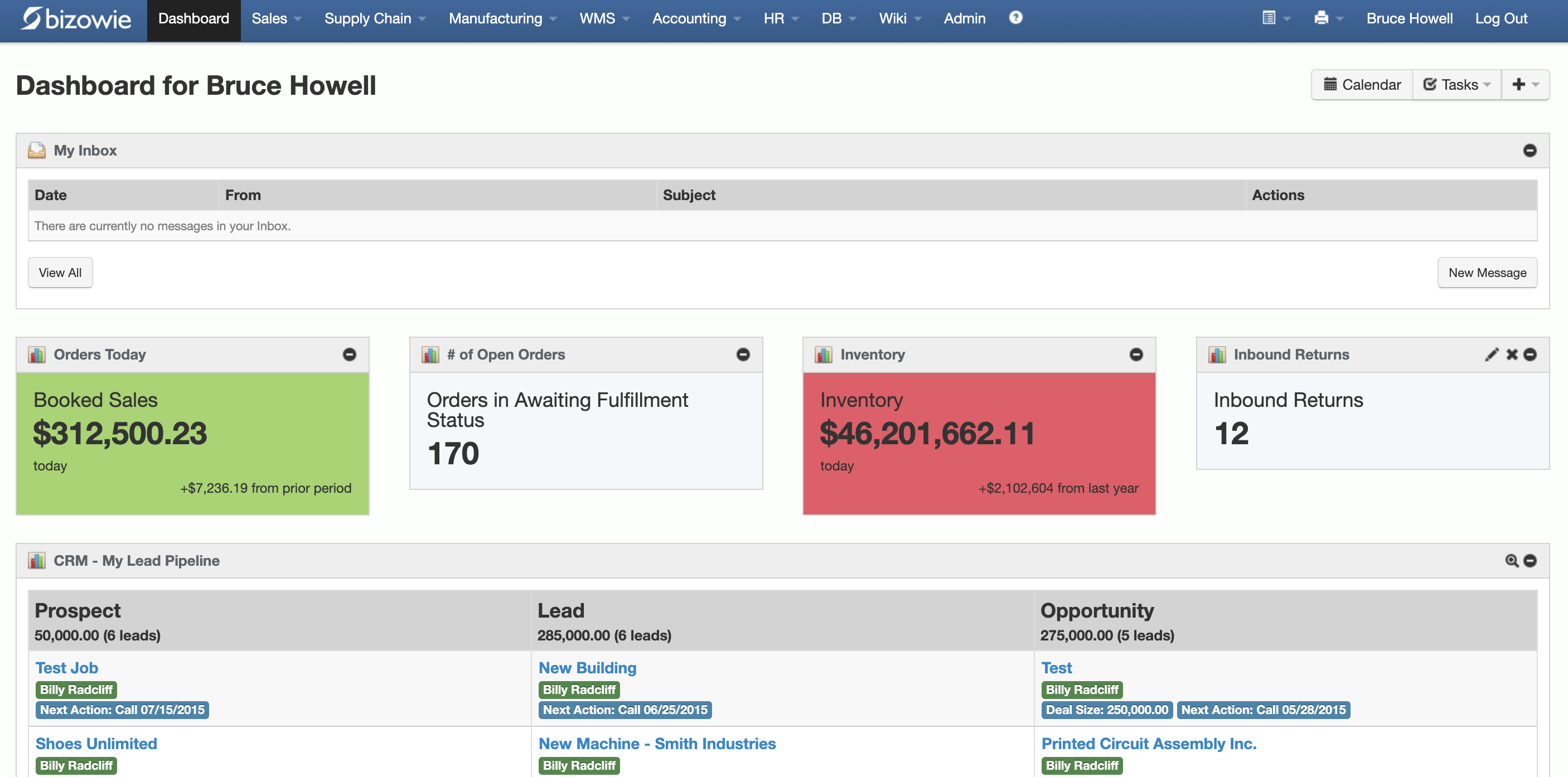
Live Dashboard
Bookings, open orders awaiting fulfillment, and inventory value at a glance.
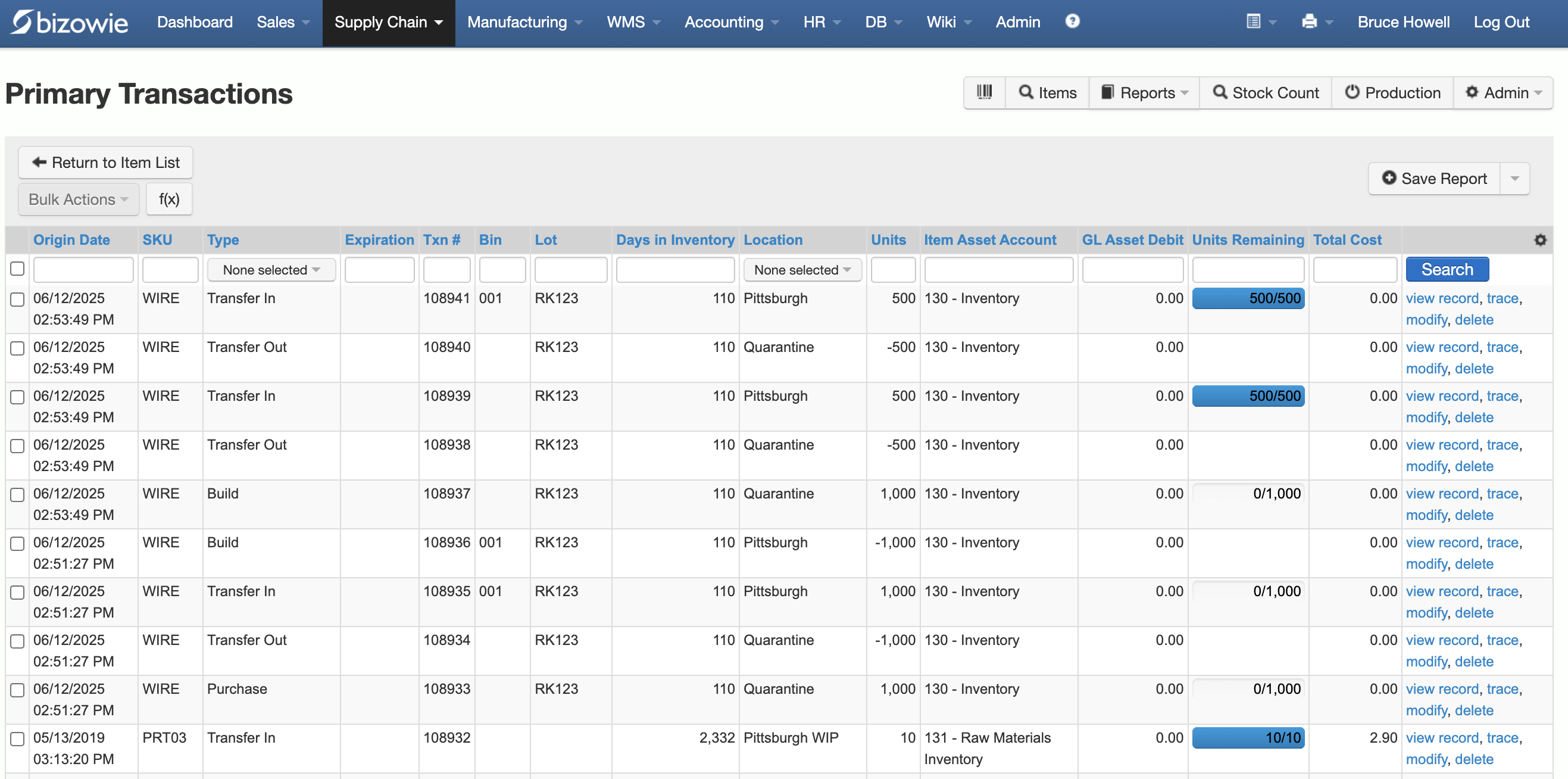
Inventory Transactions
Every receipt, transfer, build, and quarantine move by SKU, lot, bin, and location.
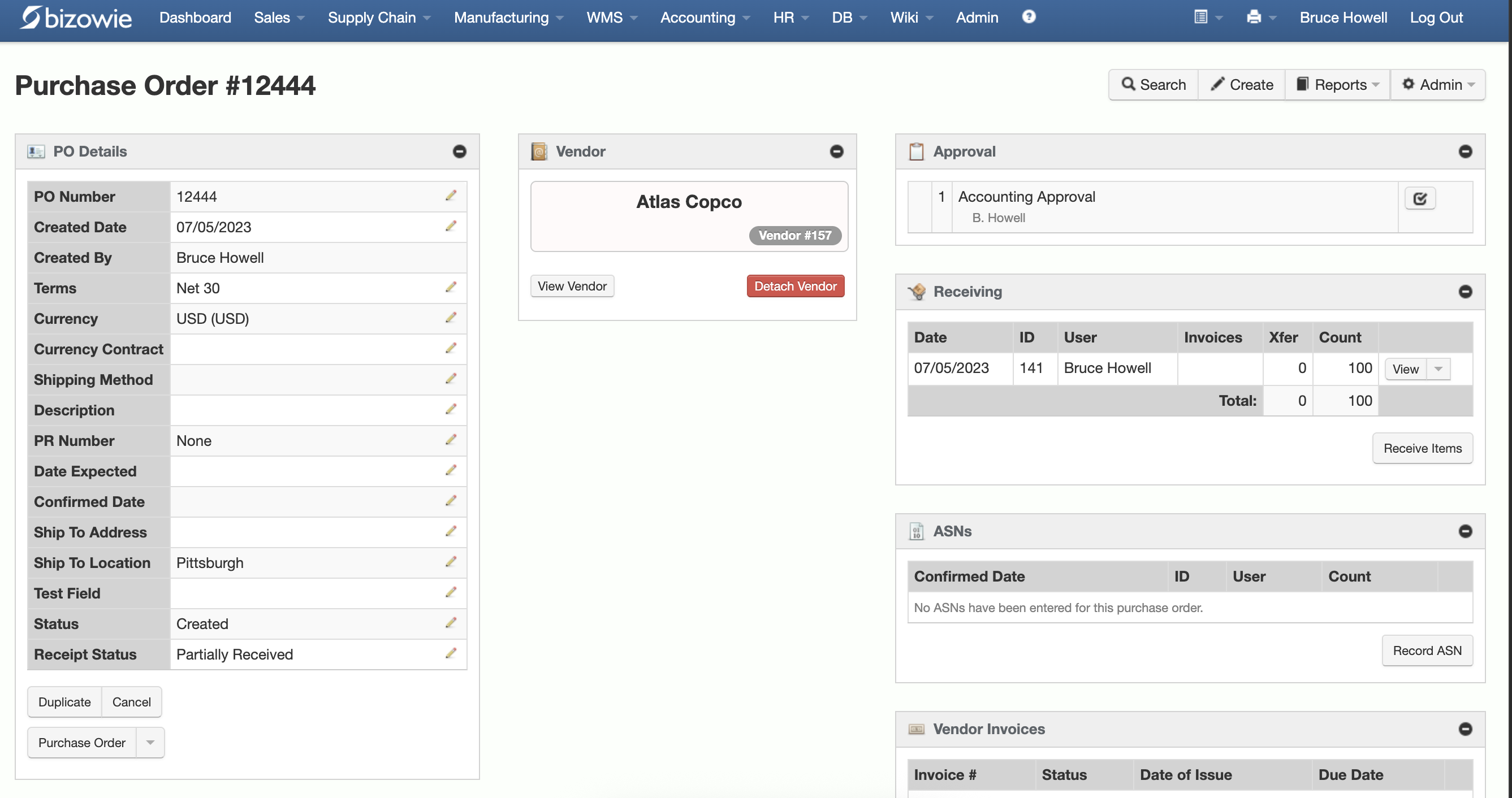
Purchasing & Receiving
Purchase orders with approvals, receiving, ASNs, and vendor invoices on one screen.
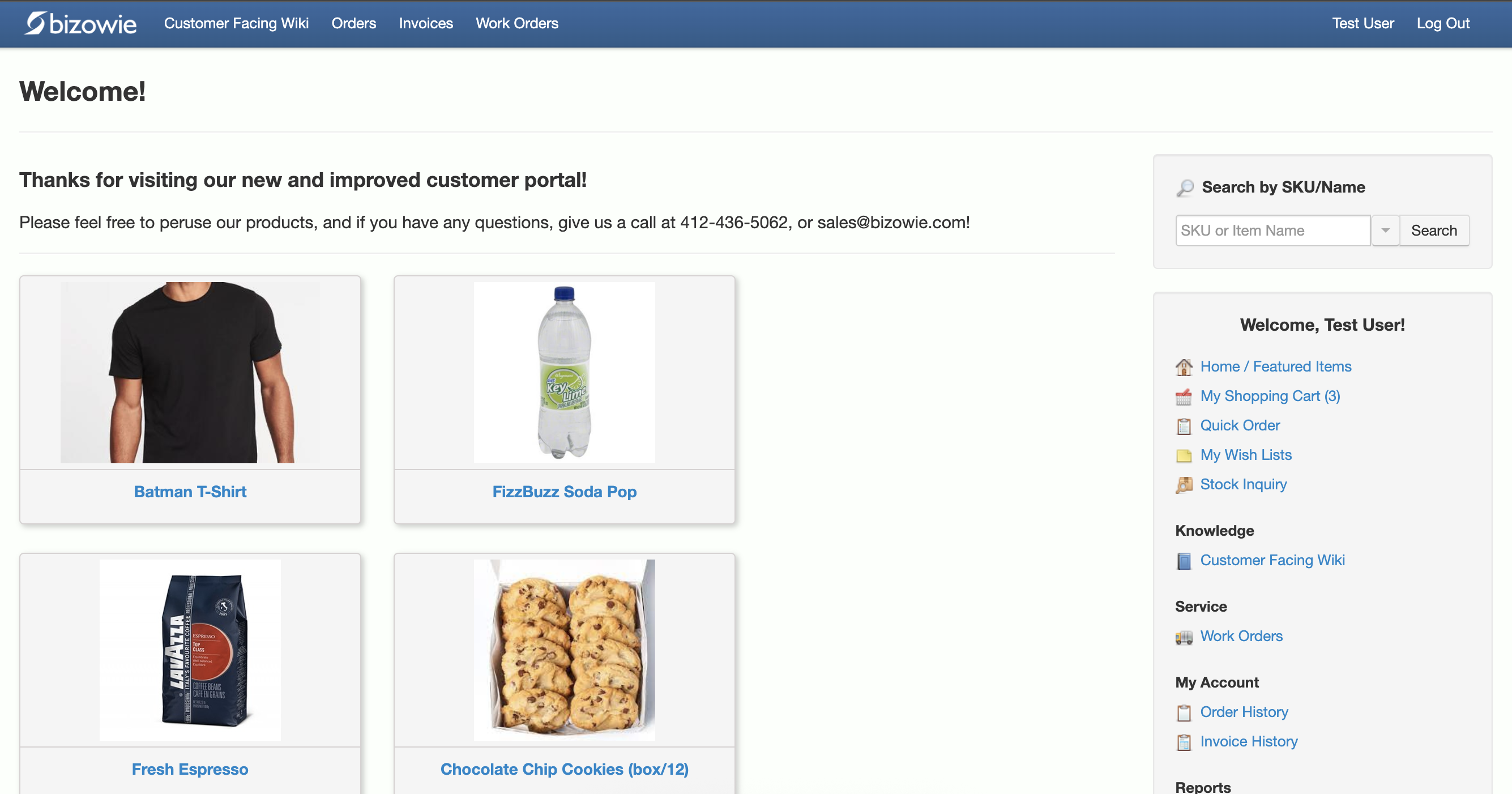
B2B Customer Portal
Customers search items, place orders, and check order and invoice history themselves.
Architecture: Two Different ERP Philosophies
The most useful architectural comparison is not “new versus old.” It is whether you want to modernize an established Prophet 21 environment or adopt a unified cloud platform designed around shared real-time operational data.
The Bizowie Approach
Bizowie is designed as a unified cloud platform where ERP, inventory, warehouse operations, EDI, financials, reporting, and related processes operate against the same environment. The objective is to reduce system-to-system handoffs and give departments a consistent, current view of the business.
The Prophet 21 Approach
Prophet 21 is a mature distribution ERP that Epicor continues to develop. Epicor currently presents it as a distribution-focused system supported by cloud-based applications, warehouse management, analytics, and a connected product ecosystem.
The strategic question is therefore:
Are you trying to modernize your current Prophet 21 environment, or do you want to rethink the ERP architecture your business runs on?
Warehouse Management
Both Bizowie and Prophet 21 offer warehouse-management capabilities. The comparison should not stop at whether a WMS exists.
Ask each vendor to demonstrate your actual workflows across:
- Purchase-order receiving
- Directed put-away
- Bin, cart, pallet, container, and dock visibility
- Order allocation
- Barcode-driven picking
- Cross-docking
- Packing and shipping
- Cycle counting
- Lot and serial traceability
- Inventory, costing, and financial updates
Do not evaluate a WMS from a feature checklist alone. Take one representative order from allocation through picking, packing, shipping, invoicing, and profitability reporting. Then receive a purchase order, put the product away, and verify that inventory and financial information update exactly where your team expects.
“We have seen immediate economic benefit for our business in terms of productivity from our warehouse staff, eliminated processing errors, and better stock control.”
Julius Hart — Managing Director, LensesOnline
Inventory and Purchasing
Inventory and purchasing are central strengths for any serious distribution ERP. The useful question is not which system “has inventory management,” but which inventory model fits your company without excessive modification or workarounds.
Demonstrate your requirements for:
- Available-to-promise inventory
- Multiple warehouses and stocking locations
- Warehouse and intercompany transfers
- Replenishment and demand planning
- Vendor purchasing and lead times
- Landed-cost calculation
- Lot, serial, and expiration tracking
- Order allocation and backorders
- Substitute and superseded items
- Drop shipments and special orders
- Customer- or project-specific inventory
“What used to take us 30 to 45 minutes can now be done in 3 to 5 minutes.”
Bridget Gaussa — Director of Program Development, Cribs for Kids
Complex Distribution Pricing
Distribution pricing rarely fits a simple price list. Your ERP may need to account for customer-specific contracts, quantity breaks, customer classes, product groups, cost-plus rules, promotions, negotiated agreements, and margin controls—sometimes within the same order.
Bring your five most complicated pricing scenarios to both demonstrations. Do not accept a screenshot of a price matrix. Ask the vendor to enter each order, explain which rule wins when conditions overlap, and show how users audit the final price and margin.
EDI: Look Beyond “Supported”
Nearly every serious distribution ERP has an EDI story. The important question is how many vendors, fees, handoffs, and failure points exist between a trading-partner document and a completed ERP transaction.
Bizowie supports ANSI X12 EDI directly with customers, suppliers, carriers, and other partners. The platform can handle documents such as sales orders, purchase orders, shipment notifications, and invoices, and it can also work with an existing third-party mapping provider.
Ask both vendors:
- Who creates and maintains each trading-partner map?
- How are 850, 855, 856, 810, and other documents handled?
- Where are failed or incomplete transactions surfaced?
- Are there document, transaction, or partner fees?
- How quickly can a new trading partner be onboarded?
- Who owns the support ticket when an EDI transaction fails?
- Can exceptions trigger workflows and notifications inside the ERP?
APIs and Integrations
Your ERP must connect with the rest of your technology environment. That may include ecommerce platforms, carriers, payment processors, CRM, tax engines, marketplaces, 3PL providers, supplier systems, customer portals, and business-intelligence tools.
Evaluate more than the existence of an API. Review:
- Coverage across ERP records and transactions
- Authentication and security
- Documentation quality
- Rate limits and transaction-volume constraints
- Webhooks or event-driven capabilities
- Error handling and monitoring
- Support for custom fields and configured processes
- Compatibility with ongoing platform updates
Reporting and Operational Visibility
Every ERP vendor promises real-time insights. Turn that promise into a practical test.
Ask both systems to produce:
- Margin by customer and product
- Inventory aging and turns
- Fill rate and on-time shipment performance
- Open orders by expected ship date
- Purchasing and replenishment requirements
- Warehouse productivity
- Order profitability after landed and fulfillment costs
- Accounts-receivable exposure
- Sales by representative, territory, and channel
- Branch or location profitability
Then ask whether one of your own employees can create or modify those reports without relying on specialized developers, consultants, or database expertise.
Configuration, Customization, and Long-Term Maintainability
Mature ERP environments often contain years of customizations. Some may still create meaningful competitive value. Others may preserve processes that employees follow simply because the current system requires them.
Bizowie emphasizes configuration, workflows, no-code platform capabilities, and integration rather than conventional modification of the core application. When comparing approaches, ask:
- Can business rules be changed through configuration?
- Can users add fields, records, workflows, reports, and dashboards?
- What requires conventional software development?
- Who must maintain each change?
- Will configured or customized processes survive platform updates?
- How much specialized technical knowledge will be required five years from now?
Manufacturing for Distributors That Also Make Products
If manufacturing is becoming a more important part of your operation, do not merely ask whether an ERP “supports manufacturing.” Define what manufacturing means to your business.
The requirement could range from kits and simple assembly to bills of material, routings, resource scheduling, make-to-order production, engineer-to-order work, mixed-mode manufacturing, or process and formula production.
Bizowie supports multiple production models on the same platform used for distribution, inventory, warehousing, fulfillment, and financial management. This can be particularly relevant for companies whose operations no longer fit neatly into either the “distributor” or “manufacturer” category.
Who Will Actually Implement Your ERP?
An ERP selection is also an implementation-team selection. Bizowie uses a vendor-direct implementation model: the Bizowie team configures and deploys the platform rather than handing the project to an unrelated implementation firm.
Regardless of which ERP you select, establish responsibility for:
- Process discovery
- System configuration
- Data extraction, cleanup, and migration
- Integrations and EDI
- User acceptance testing
- Role-based training
- Go-live preparation and cutover
- Post-launch stabilization and support
Ask this before signing: “Who are the actual people we will work with after the agreement is executed?”
When Prophet 21 May Be the Right Choice
Prophet 21 may remain a strong candidate when:
- Your organization is committed to the Epicor ecosystem.
- You are specifically looking for an established distribution ERP.
- Your requirements align closely with current Prophet 21 workflows.
- You value the product’s installed base and ecosystem.
- Your organization has substantial Prophet 21 knowledge or investments it wants to preserve.
- Your objective is to optimize or modernize your current environment rather than replatform.
When Bizowie Deserves Serious Consideration
Bizowie may be a strong fit when:
- You are replacing your ERP rather than simply upgrading it.
- You want ERP, WMS, EDI, financials, and related operations on one cloud platform.
- Complex pricing and multi-location inventory are central to your business.
- You distribute products and also perform meaningful manufacturing.
- You want direct involvement from the ERP vendor during implementation.
- You want to reduce dependence on disconnected applications.
- You need the platform to adapt through configuration, workflows, and no-code capabilities.
- You want to rethink your operating model instead of recreating every historical process.
12 Questions to Ask Before Replacing Prophet 21
- Which Prophet 21 capabilities do we actually use today?
- Which customizations are still necessary?
- Which workarounds exist in spreadsheets, email, or separate applications?
- How many third-party systems are required to run the operation?
- Which integrations must be recreated, replaced, or retired?
- What historical data must migrate, and what can remain in a read-only archive?
- What does our warehouse require at the transaction level?
- Which pricing scenarios are hardest to model and maintain?
- How much manufacturing do we perform today, and how might that change?
- How should each EDI relationship be mapped, monitored, and supported?
- Which reports must business users be able to create themselves?
- What is the five-year total cost of each option?
Frequently Asked Questions
What is the best alternative to Prophet 21?
There is no universal best alternative. The answer depends on distribution complexity, warehouse processes, pricing, EDI, integrations, manufacturing, internal expertise, implementation preferences, and total cost. Bizowie is a strong candidate for mid-market distributors and manufacturers seeking a unified cloud platform and direct vendor involvement.
Is Prophet 21 cloud-based?
Epicor describes Prophet 21 as providing cloud-based applications for modern and mobile operations. Buyers should confirm current deployment, hosting, licensing, upgrade, and technical options directly with Epicor for the specific offering under consideration.
Does Prophet 21 include warehouse management?
Yes. Epicor offers a cloud-enabled WMS for Prophet 21 with barcoding and workflows including receiving, cross-docking, put-away, picking, adjustments, cycle counting, and inventory operations. Buyers should compare each WMS using their own transaction-level requirements.
Can Bizowie replace Prophet 21?
Bizowie can be evaluated as a replacement when an organization’s requirements fit its distribution, warehouse, financial, EDI, integration, and manufacturing capabilities. The evaluation should include master data, pricing, inventory, open orders and purchase orders, financial balances, history, integrations, reports, EDI relationships, and custom processes.
How difficult is it to migrate from Prophet 21?
Migration difficulty depends on data quality, historical-data expectations, customizations, integrations, EDI relationships, warehouse processes, and the willingness to retire obsolete workarounds. Repeated test migrations, reconciliation, user acceptance testing, and a controlled cutover reduce risk.
What data should move from Prophet 21?
Most projects evaluate customer, vendor, and item masters; pricing; inventory; open sales and purchase transactions; receivables and payables; general-ledger balances; and selected history. Moving every historical transaction is not always necessary. Some information may be more appropriately retained in a secure read-only archive.
How should we compare ERP implementation costs?
Compare more than subscription or licensing fees. Include discovery, configuration, data migration, integrations, EDI, training, testing, project management, internal employee time, reporting, customization, hardware where applicable, partner fees, post-launch support, upgrades, and the ongoing cost of connected applications.
What should we ask to see in a Bizowie demonstration?
Bring your most difficult real workflows. Ask to enter an order with complex pricing, allocate inventory across locations, pick and ship through the WMS, process an EDI exception, receive and put away a purchase order, demonstrate a manufacturing scenario if relevant, and create or modify an operational report.
Evaluate Your Next ERP From a Clean Sheet
If you are reconsidering Prophet 21, the objective should not be to recreate every limitation, workaround, or customization from the existing environment. It should be to determine which operating model will serve your organization best over the next five to ten years.
Show us the workflows that make your distribution or manufacturing business complicated. We will help you determine—plainly—whether Bizowie fits.
See if Bizowie fits your operation
A real person will reply within one business day with an honest assessment, not a sales pitch.
- We review your submission personally.
- No automated email sequences.
- If we’re not the right fit, we’ll tell you.
Prefer to talk?
Call (888) 635-2517, Mon–Fri, 9 AM–5 PM Eastern