

FEFO vs. FIFO vs. LIFO: Stock Rotation Rules Explained
FEFO, FIFO, and LIFO are rules for deciding which stock leaves the warehouse first. FIFO ships the oldest receipt. FEFO ships whatever expires soonest. LIFO ships the newest. For most products the choice barely matters. For anything with a date on it, the choice decides how much product you write off and how many deliveries get refused.
The same three acronyms are also used for inventory costing, which causes a lot of confusion. Rotation is about which physical lot the picker pulls. Costing is about which cost the accountant assigns to the sale. The two do not have to match, and in many companies they do not.
This guide explains each rotation rule, works through an example with expiration dates and a customer shelf-life requirement, shows when each rule fits, and covers what it takes to make FEFO work in a real warehouse.
FEFO, FIFO, and LIFO Defined
| Rule | Stands for | Pick first | Sorted by |
|---|---|---|---|
| FIFO | First in, first out | The stock that was received earliest | Receipt date |
| FEFO | First expired, first out | The stock that expires soonest | Expiration or best-by date |
| LIFO | Last in, first out | The stock that was received most recently | Receipt date, newest first |
FIFO and FEFO give the same answer whenever product arrives in the order it was made. They diverge when a supplier ships an older production run after a newer one, when stock is transferred in from another warehouse, when a customer return goes back on the shelf, or when two suppliers of the same item give different shelf lives. In a food, beverage, health, or chemical warehouse, those are ordinary events.
Rotation Is Not Costing
As costing methods, FIFO and LIFO describe which purchase cost is matched to a sale. As rotation rules, they describe which pallet leaves the building. They are separate decisions:
- A distributor can pick by FEFO and cost inventory at weighted average.
- A company can use LIFO costing for tax purposes while physically rotating stock first in, first out.
- FEFO has no costing equivalent. It is purely a rotation rule.
The exception is lot-specific costing, where each lot carries its own cost and the cost of the lot actually picked follows it to the sale. Everything in this guide is about physical rotation. For the accounting side, see inventory costing methods explained.
Worked Example: One Order, Three Rules
A distributor has three lots of a refrigerated dressing in stock. Lot B arrived after lot A but came from an older production run, so it expires sooner.
| Lot | Received | Expires | Cases on hand |
|---|---|---|---|
| A | March 3 | June 30 | 40 |
| B | March 10 | May 15 | 60 |
| C | March 17 | August 20 | 80 |
An order for 70 cases is picked on April 1.
| Rule | Lots picked | Left on the shelf |
|---|---|---|
| FIFO | 40 from A, then 30 from B | 30 of B (May 15), 80 of C |
| FEFO | 60 from B, then 10 from A | 30 of A (June 30), 80 of C |
| LIFO | 70 from C | 40 of A, 60 of B (May 15), 10 of C |
FIFO looks disciplined and still leaves 30 cases that expire in six weeks. FEFO clears the shortest-dated lot completely. LIFO leaves all 60 cases of lot B aging at the back, which is what happens in practice when pickers take whatever is closest to the aisle.
Customer Shelf-Life Requirements
Plain FEFO has a flaw: the soonest-expiring lot is not always one the customer will accept. Retailers and institutional buyers commonly require a minimum remaining shelf life at delivery, so they have time to sell or use the product.
Suppose the 70-case order is for a customer that requires at least 60 days of remaining shelf life on delivery, and delivery is April 2.
- Lot B: April 2 to May 15 = 43 days. Not eligible.
- Lot A: April 2 to June 30 = 89 days. Eligible.
- Lot C: April 2 to August 20 = 140 days. Eligible.
The correct pick is FEFO among the eligible lots: 40 cases from A and 30 from C. Lot B is skipped for this customer and should go to customers with no shelf-life rule, where FEFO will pick it first.
This is why rotation has to be decided at allocation, per order, and not by a sign on the rack. The eligible lots depend on who the customer is and when the delivery will arrive. If lot B ships to this customer anyway, the likely result is a refused delivery, a return, and product that is now even closer to its date.
Remaining Shelf Life Formulas
Remaining shelf life (days) = Expiration date − Delivery date
Some customers state the requirement as a share of total shelf life:
Remaining shelf life % = Days remaining at delivery ÷ Total shelf life in days × 100
The dressing has a total shelf life of 180 days. For a customer that requires at least 50% remaining:
- Lot A: 89 ÷ 180 = 49.4%. Just short, so not eligible.
- Lot B: 43 ÷ 180 = 23.9%. Not eligible.
- Lot C: 140 ÷ 180 = 77.8%. Eligible.
Under the percentage rule, only lot C can ship to this customer. One more day in the warehouse changed the answer for lot A, which is why these checks belong in the system and not in someone’s head.
The same arithmetic applies in reverse at receiving. If your own customers need 60 days and product typically sits 30 days in your warehouse, you need at least 90 days of life when it arrives, and a receipt with less should be flagged before it is put away.
When to Use Each Rule
| Rule | Fits | Watch for |
|---|---|---|
| FEFO | Anything with an expiration, best-by, or retest date: food and beverage, pharmaceuticals, health and beauty, chemicals, adhesives, batteries | Needs an accurate date on every lot and a system that directs the pick |
| FIFO | Undated products that still age: packaging that yellows, items with revision or model-year changes, anything that collects dust or damage | Uses receipt date as a stand-in for age, which fails when older product arrives later |
| LIFO | Non-perishable bulk that is physically stacked or piled, where the newest stock is the only stock you can reach | Old stock can sit untouched indefinitely. Rarely a deliberate choice for packaged goods |
A warehouse does not need one rule for everything. Dated items should be on FEFO, and the rest can default to FIFO. The rule is normally set by item or item class.
What FEFO Requires
- Dates captured at receiving. Every lot needs its expiration date recorded when it arrives, ideally by scanning the supplier’s case or pallet label.
- Agreement on which date. Use-by, best-by, sell-by, and manufacture date are different things. Pick the one that drives rotation for each item and calculate it consistently when the label shows only a production date.
- Lot-level locations. The system must know which lot is in which bin. Two lots mixed in one pick face cannot be rotated.
- System-directed picking. The pick instruction names the lot and location, and a scan confirms the right lot was taken. See warehouse picking methods.
- Customer rules on the customer record. Minimum remaining shelf life, in days or percent, checked automatically at allocation.
- Dates that travel. Transfers, returns, and repacks must keep the original lot and date. A return put away as new stock is how expired product ends up on a truck.
- Replenishment that respects rotation. Moving the newest pallet down to the pick face because it was easiest to reach defeats the rule before the picker arrives.
Lot and date control is also the foundation of recall readiness. See product recall management and FSMA compliance for food distributors.
Managing Short-Dated Stock
FEFO reduces expired stock. It does not eliminate it, because some product will always outlast demand. A weekly review of remaining shelf life keeps the losses small:
- List lots by days remaining, with thresholds that match your customers’ rules
- Direct short-dated lots to customers with no shelf-life requirement
- Mark down or promote while the product can still be sold
- Transfer to a branch where the item moves faster
- Ask whether the supplier takes returns or gives credit on short-dated receipts
- Reduce order quantities or safety stock on items that repeatedly age out
Repeated write-offs on the same item are a purchasing problem more than a rotation problem. See dead stock and obsolete inventory and the reorder point formula.
Common Mistakes
- Assuming FIFO protects dated product, when receipt order and expiration order differ
- Confusing the costing method in the accounting system with the rotation rule in the warehouse
- Recording expiration dates on paper or on the pallet only, so the system cannot sort by them
- Mixing lots in one bin
- Applying FEFO without customer shelf-life rules, and shipping product the customer will refuse
- Letting pickers override the suggested lot with no scan check and no reason recorded
- Putting returns and transfers away with a new receipt date and no original expiration date
- Reviewing short-dated stock only after it has expired
See Bizowie in Action
Real screens from Bizowie, not mockups. Click any screen to enlarge.
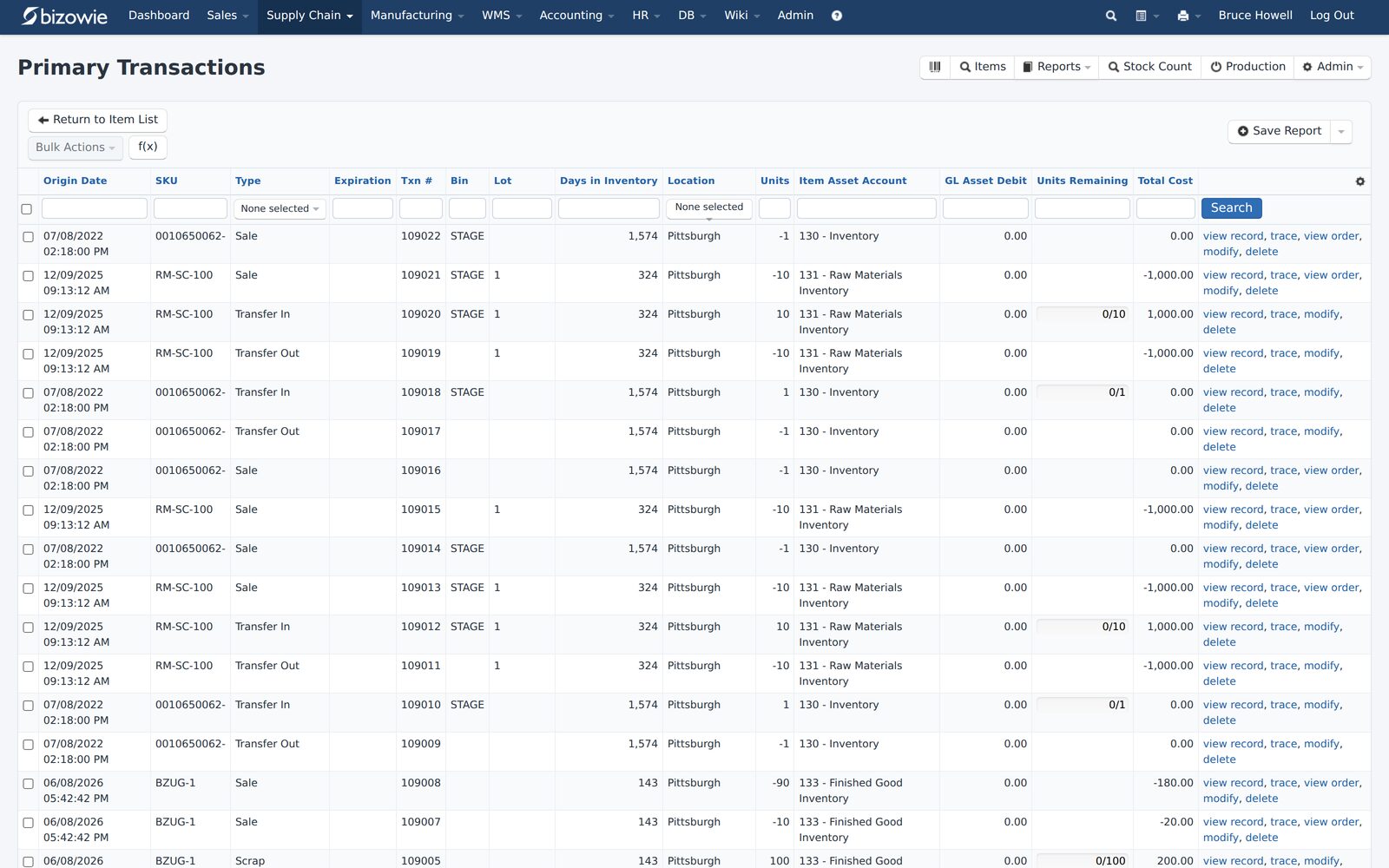
Every receipt, transfer, build, and quarantine move by SKU, lot, bin, and location.
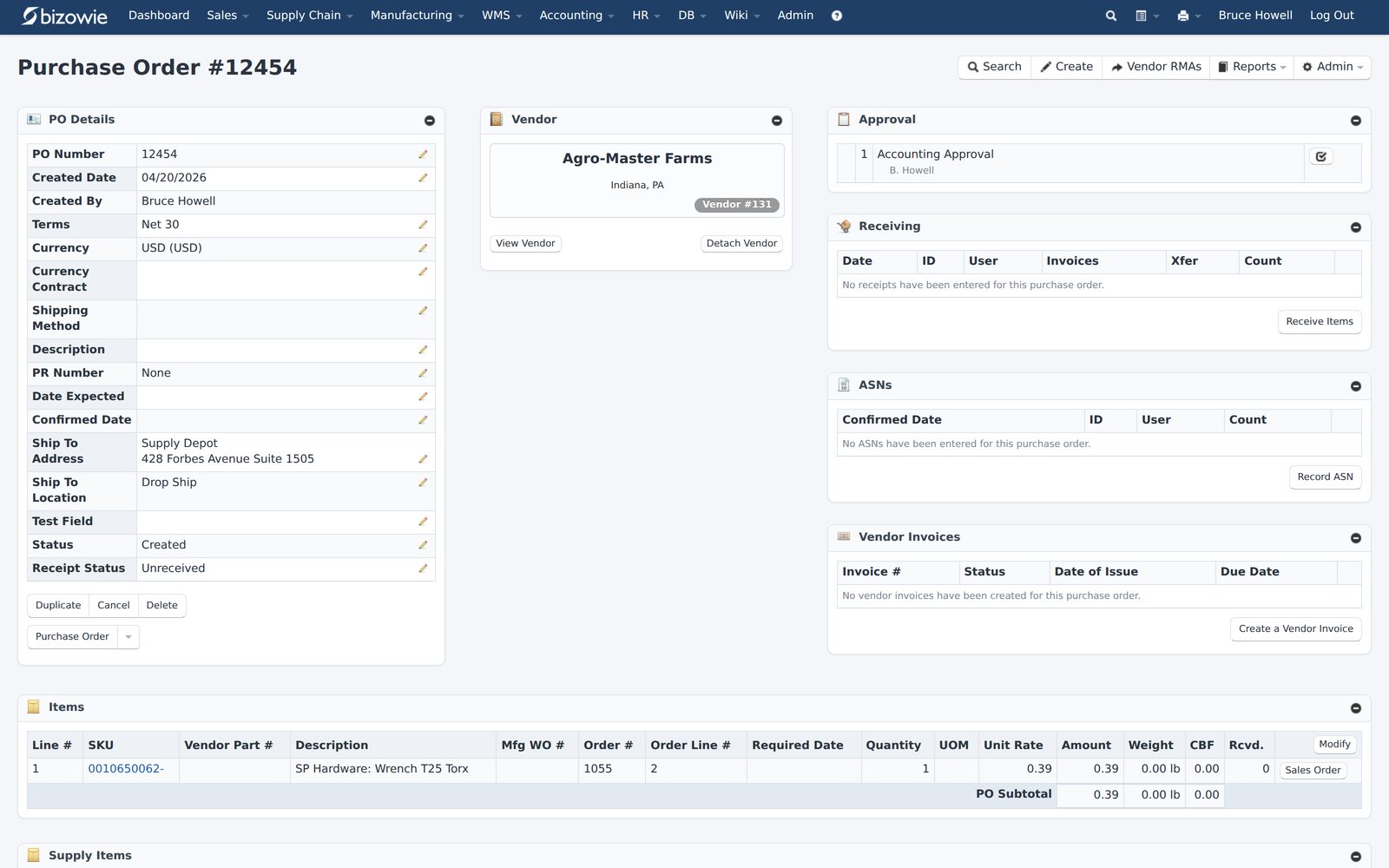
Purchase orders with approvals, receiving, ASNs, and vendor invoices on one screen.
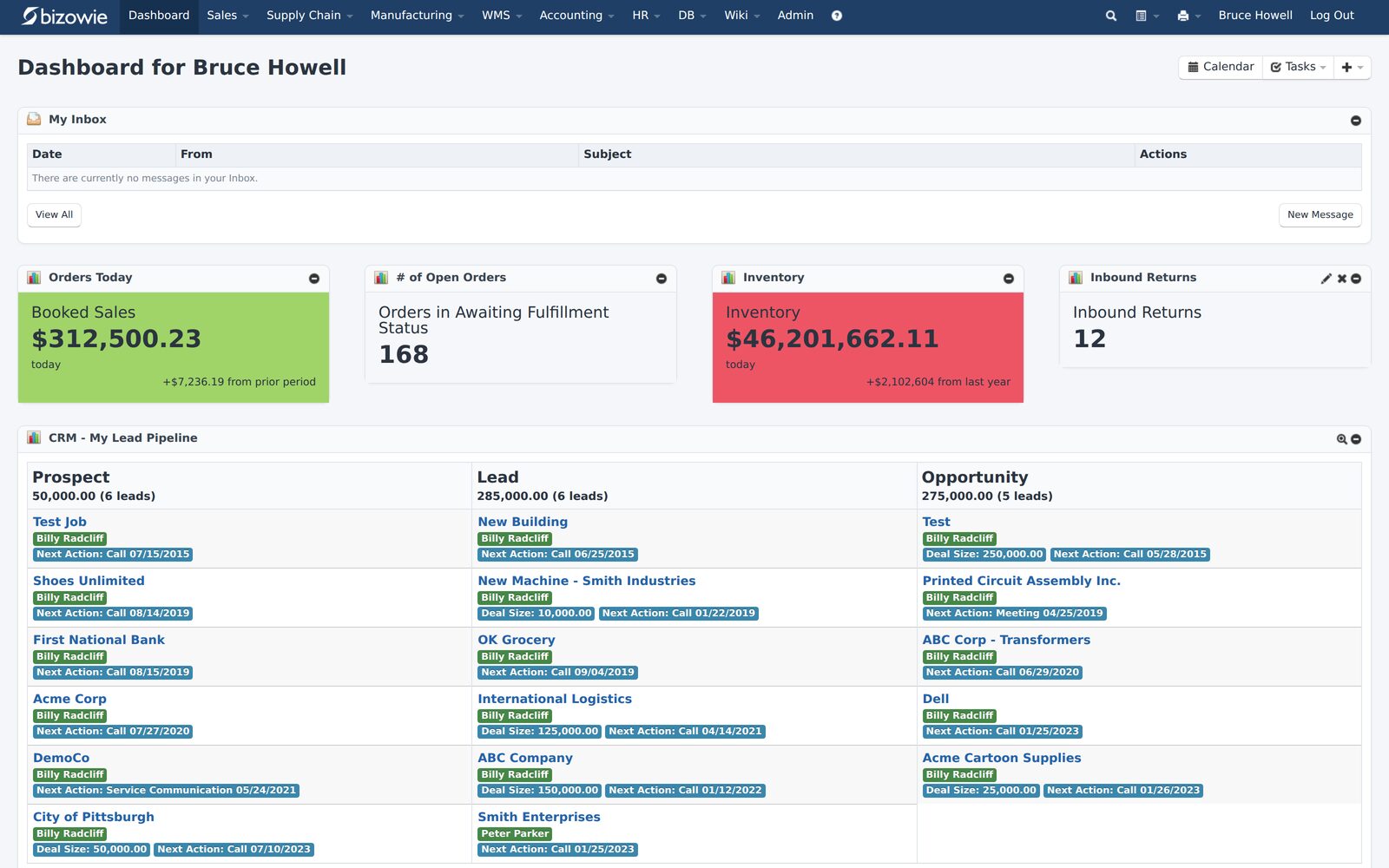
Bookings, open orders awaiting fulfillment, and inventory value at a glance.
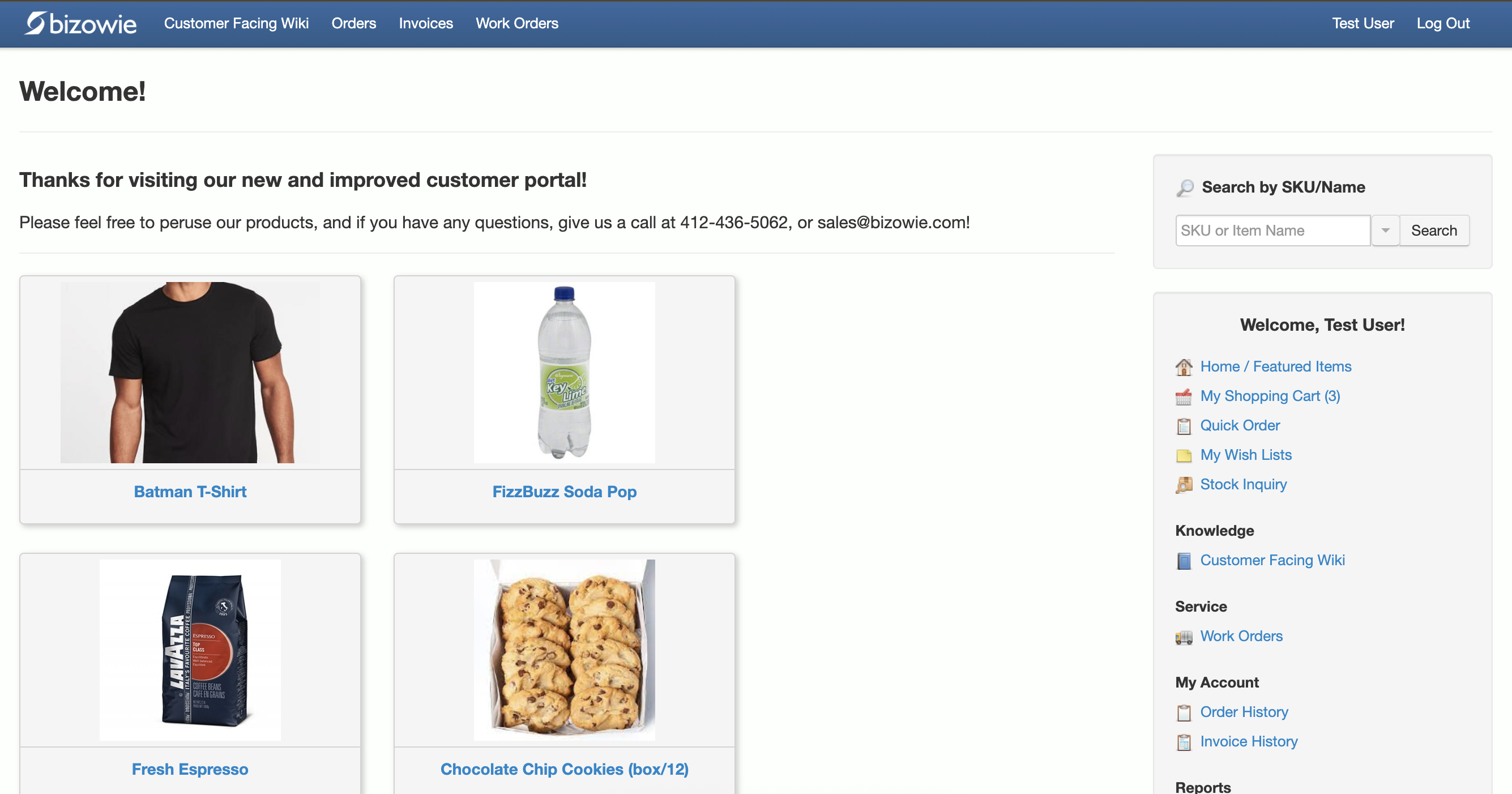
Customers search items, place orders, and check order and invoice history themselves.
Lots and Expiration Dates in Bizowie
Bizowie Inventory Control supports lotted and serialized inventory and expiration dates, across multiple distribution centers and within each warehouse by zone, bin, and LPN. Lot numbers are recorded on received materials, and barcode scans or manual entry record shipments, transfers, and manufacturing picks. Lot trace reports follow a lot across transfers, production, sales, and returns. For food and beverage companies, the platform adds expiration management and quality triage, and inbound receipts can be quarantined for QA checks. Picking, packing, receiving, and put-away run from mobile devices with barcode scanning. For the wider evaluation, see our distribution ERP software buyer’s guide and food and beverage ERP guide.
“We have seen immediate economic benefit for our business in terms of productivity from our warehouse staff, eliminated processing errors, and better stock control.”
Julius Hart — Managing Director, LensesOnline
Frequently Asked Questions
What is the difference between FEFO and FIFO?
FIFO ships the stock that was received first. FEFO ships the stock that expires first. They give the same result only when product arrives in the same order it expires.
When should a warehouse use FEFO instead of FIFO?
Whenever items carry an expiration, best-by, or retest date. FEFO sorts by the date that actually matters, so older production that arrives late is still shipped first.
Is FEFO a costing method?
No. FEFO is a stock rotation rule only. FIFO and LIFO are used both as rotation rules and as inventory costing methods, and the two uses are independent of each other.
What is a minimum remaining shelf life requirement?
It is a customer rule that product must have at least a set number of days, or a set share of its total shelf life, left when it is delivered. Lots that fall short cannot be allocated to that customer.
Is LIFO ever used for stock rotation?
Occasionally, for non-perishable bulk material that is stacked or piled so that only the newest stock can be reached. For packaged or dated goods it is usually an accident, not a policy.
Bring Us Your Short-Dated List
Tell us how you track lots and dates and how you decide what ships today. We’ll show you how Bizowie manages lots and expiration dates through the warehouse, and if we are not the right fit, we will tell you.
See how Bizowie would track your lots
Tell us a little about your operation and we’ll reply with an honest assessment of fit, not a sales pitch.
- A real person reviews your submission and replies within one business day.
- No automated email sequences.
- If we’re not the right fit, we’ll tell you.
Prefer to talk?
Call (888) 635-2517, Mon–Fri, 9 AM–5 PM Eastern