
Warehouse Picking Methods: Discrete, Batch, Zone, and Wave
Picking is usually the most labor-intensive job in a distribution warehouse, and often the largest single share of warehouse labor cost.
How you pick, one order at a time, many orders at once, by zone, or in scheduled waves, decides how far pickers walk, how many errors reach customers, and how many orders ship on time. There is no single best method. The right one depends on your order profile, your SKU count, and your building.
This guide explains the main warehouse picking methods, when each one works best, how to choose, and what your system needs to support them.
Discrete (Order) Picking
One picker picks one order at a time, start to finish.
- Works best for: lower order volumes, large orders with many lines, or small warehouses.
- Strengths: simple, easy to train, few handoffs, and accuracy is easy to trace to a picker.
- Weaknesses: the most walking per line picked, which becomes expensive at high volume.
Batch Picking
One picker picks several orders at once, collecting the total quantity of each item in one trip, then sorting by order.
- Works best for: many small orders that share items, such as ecommerce and parts orders.
- Strengths: far less walking per order.
- Weaknesses: needs a sort step, either at the cart (pick-and-sort) or afterward, which adds handling and a chance for sorting errors.
Zone Picking
The warehouse is divided into zones, and each picker stays in a zone, picking the lines for that zone. Orders are passed from zone to zone, or picked in parallel and consolidated.
- Works best for: large warehouses, high SKU counts, or areas with special requirements such as cold storage, hazmat, or bulk.
- Strengths: pickers learn their zone, travel less, and specialized areas stay controlled.
- Weaknesses: orders need consolidation, and an overloaded zone becomes a bottleneck.
Wave Picking
Orders are released for picking in scheduled groups, or waves, often timed to carrier pickups or delivery routes. Within a wave, picking may be discrete, batch, or zone.
- Works best for: operations with fixed carrier cutoffs, routes, or shipping schedules.
- Strengths: work is planned around when orders need to leave, and labor can be balanced across the day.
- Weaknesses: requires planning, and urgent orders that miss a wave need a way through.
Picking Methods Compared
| Method | Best order profile | Travel | Complexity |
|---|---|---|---|
| Discrete | Fewer, larger orders | Highest | Lowest |
| Batch | Many small orders with shared items | Low | Medium (sorting) |
| Zone | Large buildings, many SKUs, special areas | Low | Medium to high (consolidation) |
| Wave | Fixed cutoffs and routes | Depends on method within the wave | Medium (planning) |
How to Choose a Picking Method
Start with your data:
- Lines per order: few lines per order favors batch picking; many lines favors discrete or zone.
- Orders per day: higher volume makes travel reduction more valuable.
- SKU count and building size: large buildings and catalogs favor zones.
- Shipping schedule: fixed carrier pickups and routes favor waves.
- Special handling: cold, hazmat, high-value, or bulk areas often become their own zones.
Many warehouses use more than one: batch for small parcel orders, discrete for large pallet orders, waves timed to carrier cutoffs.
Improving Pick Accuracy and Speed
- Scan to confirm every location and item, so wrong picks are caught at the shelf.
- Slot fast movers close to packing and at comfortable heights.
- Sequence pick paths so pickers walk the aisles in order.
- Keep locations accurate with regular counts. See cycle counting.
- Measure lines picked per hour and errors per thousand lines, by method and by picker.
See barcode scanning for warehouses and mobile warehouse management features.
See Bizowie in Action
Real screens from Bizowie, not mockups. Click any screen to enlarge.
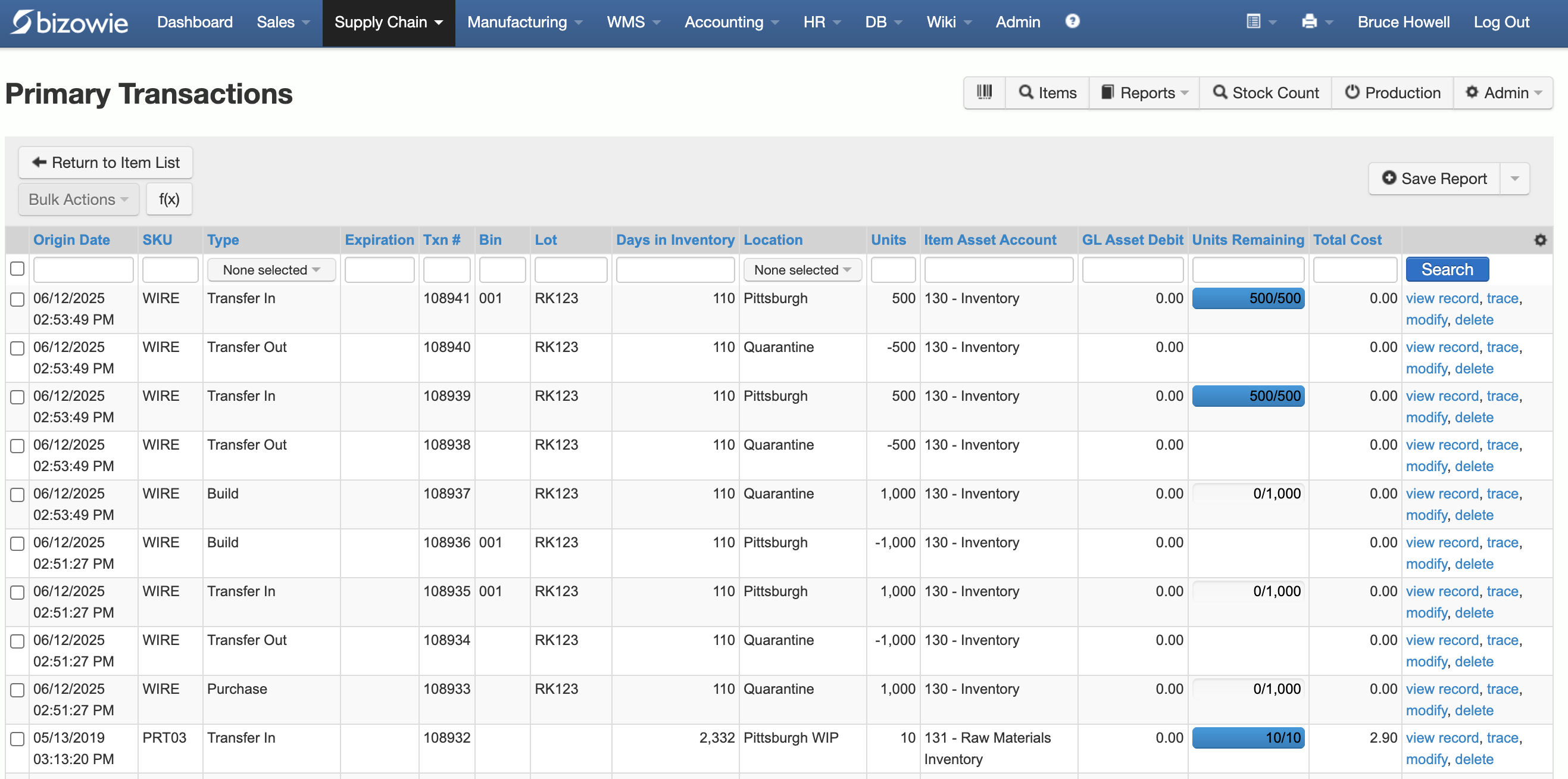
Inventory Transactions
Every receipt, transfer, build, and quarantine move by SKU, lot, bin, and location.
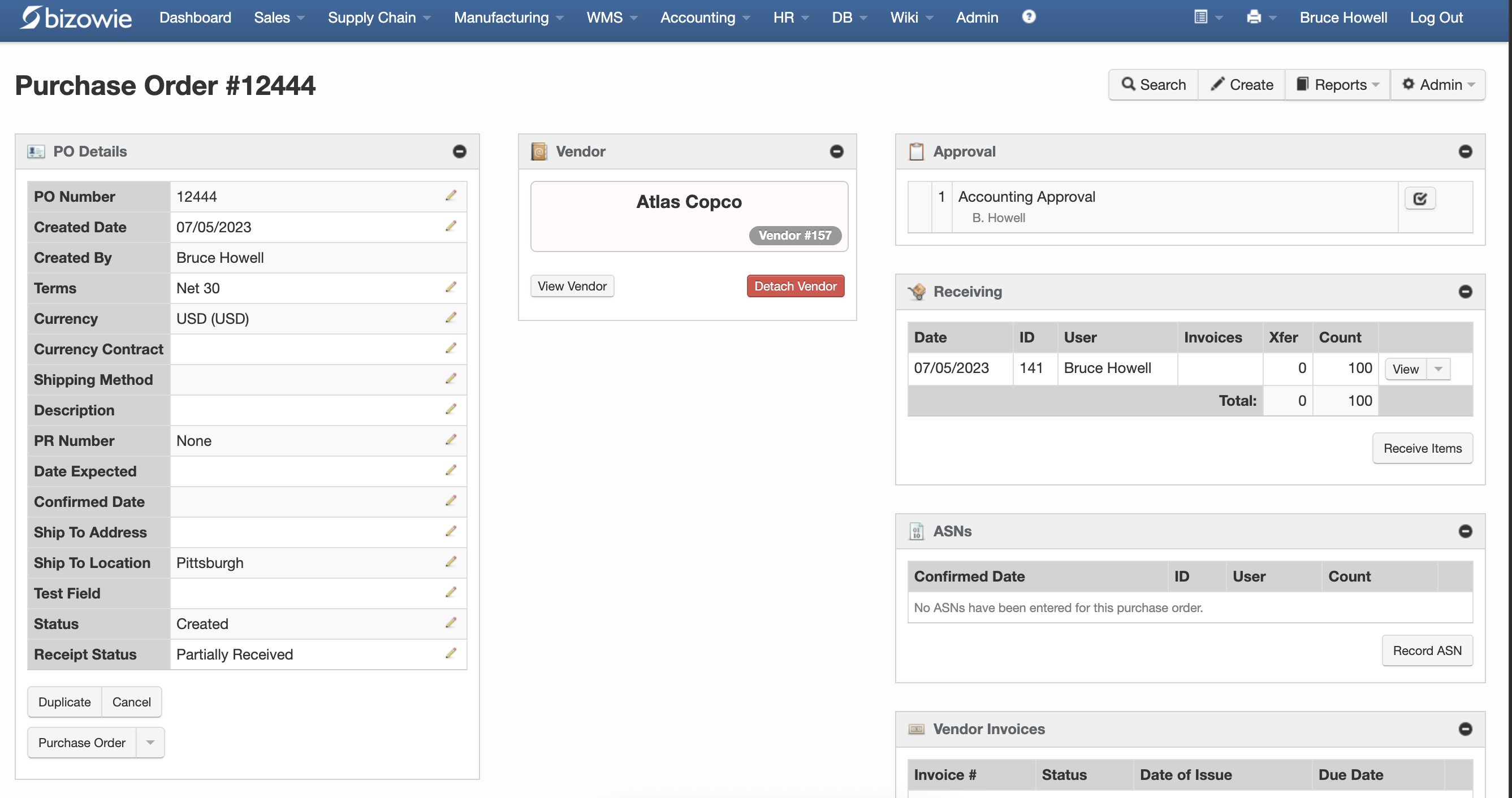
Purchasing & Receiving
Purchase orders with approvals, receiving, ASNs, and vendor invoices on one screen.
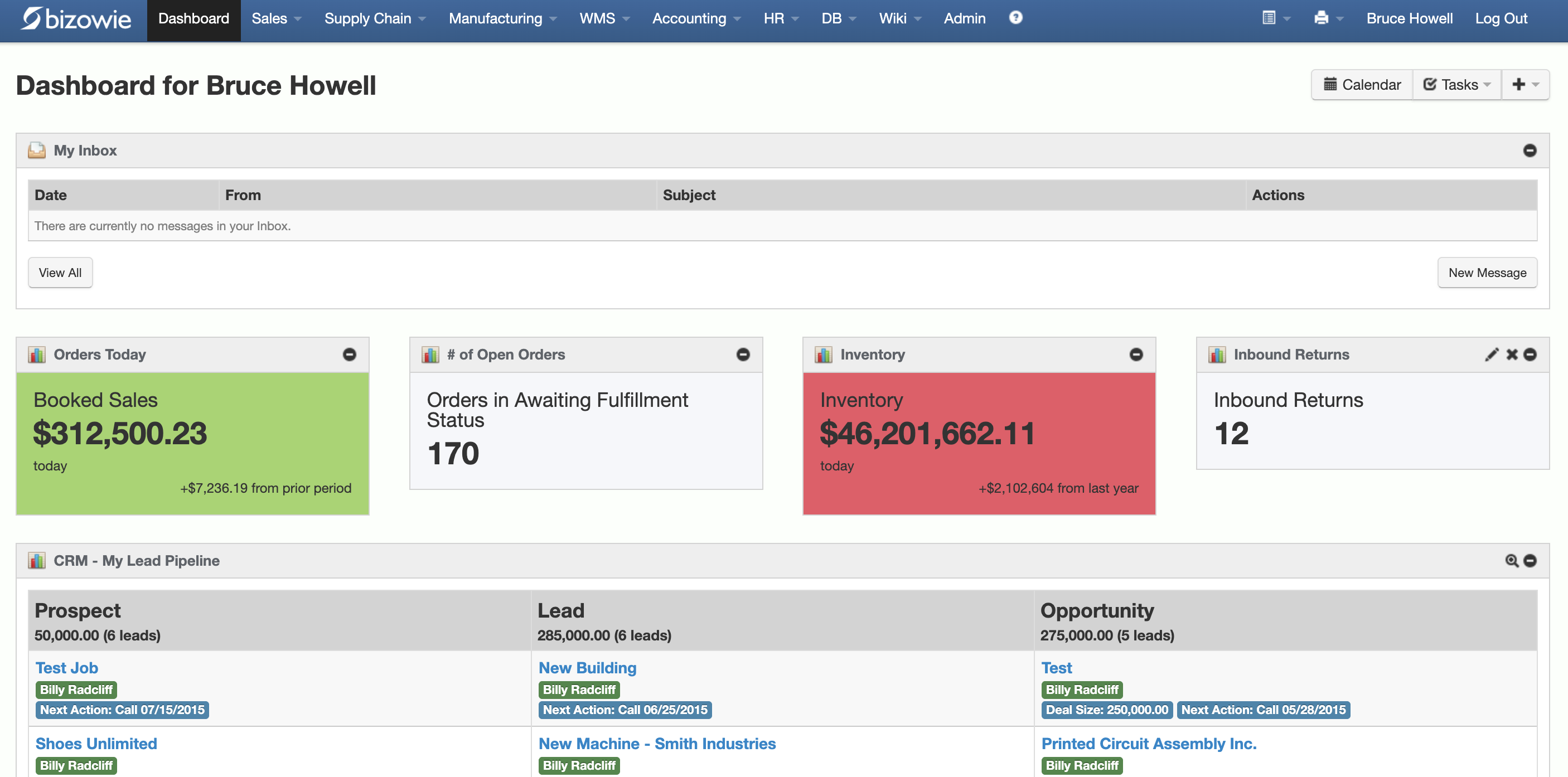
Live Dashboard
Bookings, open orders awaiting fulfillment, and inventory value at a glance.
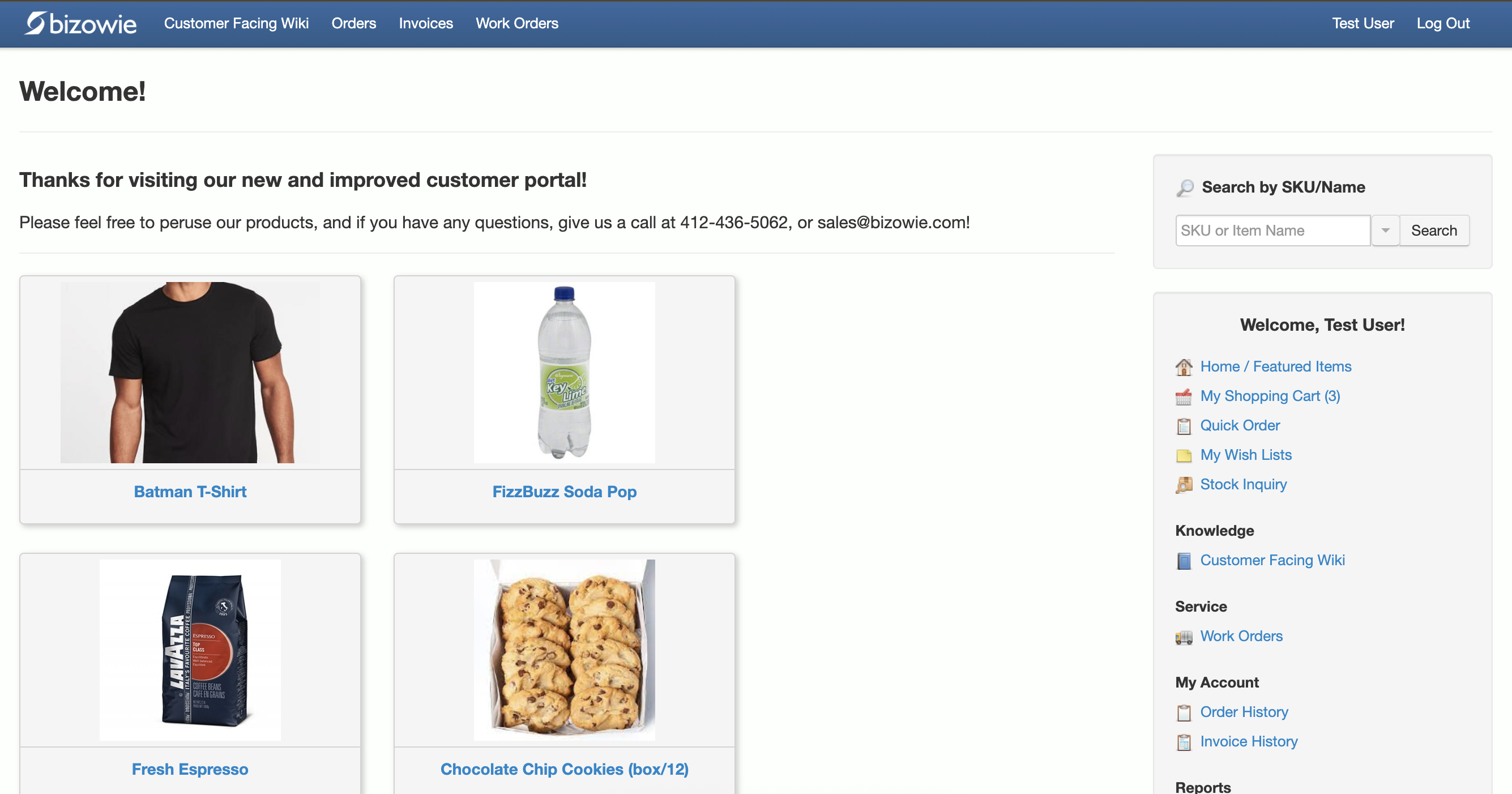
B2B Customer Portal
Customers search items, place orders, and check order and invoice history themselves.
Picking in Bizowie
Bizowie’s warehouse management supports discrete and wave picking, packing, shipping and loading, receiving, put-away, stock counts, and inventory moves from mobile devices, with barcode scanning to reduce pick time and increase accuracy. Inventory is tracked across warehouses, zones, bins, staging areas, and LPNs, and picking updates orders, inventory, and shipping in real time. Pick lists, pack slips, UCC labels, bills of lading, and manifests are generated as part of the shipping workflow.
“We have seen immediate economic benefit for our business in terms of productivity from our warehouse staff, eliminated processing errors, and better stock control.”
Julius Hart — Managing Director, LensesOnline
Frequently Asked Questions
What are the main warehouse picking methods?
Discrete (one order at a time), batch (several orders at once), zone (pickers assigned to areas), and wave (orders released in scheduled groups).
What is the difference between batch and wave picking?
Batch picking groups orders so one picker collects items for several orders in one trip. Wave picking schedules when groups of orders are released, often around carrier cutoffs, and can use batch, zone, or discrete picking within each wave.
Which picking method is most efficient?
It depends on your orders. Batch picking is usually most efficient for many small orders; zone picking for large buildings and catalogs; discrete picking for fewer, larger orders.
See Picking Run on Your Orders
Tell us how your warehouse picks today. We’ll show you how it would run in Bizowie, and if we are not the right fit, we will tell you.
See how Bizowie would run your warehouse
Tell us a little about your operation and we’ll reply with an honest assessment of fit, not a sales pitch.
- A real person reviews your submission and replies within one business day.
- No automated email sequences.
- If we’re not the right fit, we’ll tell you.
Prefer to talk?
Call (888) 635-2517, Mon–Fri, 9 AM–5 PM Eastern