

Catch Weight: What It Is and How to Manage It
Catch weight is the practice of selling, costing, and stocking a product by its actual weight when that weight differs from one case or piece to the next. A case of cheese is still one case on the shelf, but no two cases weigh exactly the same, and the customer pays by the pound.
That creates a problem most inventory systems were not built for. The warehouse counts cases. The price list is in pounds. The invoice cannot be finished until someone knows what the cases on the truck actually weighed. If the system carries only one unit of measure per item, one of those numbers ends up in a spreadsheet or on a clipboard.
This guide explains what catch weight is, how the two units of measure work together, how to price and invoice by actual weight with a worked example, how inventory and margin are valued, and where the process usually goes wrong.
What Is Catch Weight?
A catch weight item is one whose weight varies naturally from unit to unit, so the exact weight has to be “caught” at the scale instead of assumed. It is also called variable weight or random weight. Typical examples:
- Meat, poultry, and seafood, sold by the case or the piece and priced per pound
- Cheese wheels, blocks, and deli loaves
- Whole produce such as melons and squash
- Outside food: coils of wire or steel, rolls of film, and some building materials
The opposite is a fixed weight (or standard weight) item. A case of twelve 16-ounce jars always weighs the same, so cases and pounds convert with a fixed factor and one unit of measure is enough.
The Two Units of Measure
Every catch weight item is carried in two units at once:
| Term | Meaning | Used for |
|---|---|---|
| Handling unit | The case, piece, or box that is ordered, picked, and counted | Order quantities, picking, cycle counts, truck loading |
| Weight unit | Pounds or kilograms | Pricing, costing, invoicing, inventory value |
| Nominal weight | The expected average weight of one handling unit | Estimating an order before it is weighed, planning, purchasing |
| Actual weight | What the unit weighed on the scale | The invoice, the vendor bill, and the inventory balance |
The important point is that the two units do not convert with a fixed ratio. Ten cases might be 398 pounds today and 411 pounds tomorrow. A system that stores only cases and multiplies by a standard weight is estimating. A system that stores only pounds cannot tell the picker how many cases to pull. For how this fits with other unit-of-measure problems, see ERP for businesses with complex units of measure.
Catch Weight Pricing Formulas
At order entry, before anything is weighed, the order is extended at the nominal weight:
Estimated line amount = Quantity ordered × Nominal weight per unit × Price per pound
After picking, the invoice uses what was actually shipped:
Invoice line amount = Actual weight shipped × Price per pound
And the average weight, which is worth tracking by item and by supplier:
Average weight per unit = Total actual weight ÷ Number of units
Worked Example: Order to Invoice
A customer orders 12 cases of cheddar. The item has a nominal weight of 40 lb per case and sells for $4.25 per lb.
Estimated line amount = 12 × 40 × $4.25 = $2,040.00
The picker pulls 12 cases and records the weight printed on each case label:
39.2, 41.5, 40.8, 38.9, 42.1, 40.3, 41.0, 39.7, 40.6, 41.9, 40.4, 41.2
Actual weight shipped = 487.6 lb
Invoice line amount = 487.6 × $4.25 = $2,072.30
Average weight per case = 487.6 ÷ 12 = 40.63 lb
The invoice is $32.30 higher than the estimate, because the cases ran 7.6 lb over nominal. A distributor that bills at nominal weight gives that product away on this order. On an order where the cases run light, the customer is overcharged and a credit request follows. Either way, billing by estimate is wrong on nearly every order, and the errors do not reliably cancel out.
Inventory Value and Margin
The same logic applies on the cost side. Suppose the distributor received 60 cases of that cheddar at a cost of $3.10 per lb, and the receiving scale showed 2,430.0 lb.
- Receipt value at actual weight: 2,430.0 × $3.10 = $7,533.00
- Receipt value at nominal weight: 60 × 40 × $3.10 = $7,440.00
The supplier’s invoice will be for the actual weight, so the receipt and the inventory value should be too. Otherwise every vendor bill produces a variance.
After the 12-case shipment:
- Inventory on hand: 60 − 12 = 48 cases and 2,430.0 − 487.6 = 1,942.4 lb
- Inventory value: 1,942.4 × $3.10 = $6,021.44
- Cost of goods sold on the order: 487.6 × $3.10 = $1,511.56
- Gross margin on the order: $2,072.30 − $1,511.56 = $560.74, or 27.1%
Both balances have to move on every transaction. If only the case count is relieved, the pounds on hand drift away from reality, and so do inventory value and margin. For the difference between the two percentages people quote, see markup vs. margin.
Where and How Weight Is Captured
There are three common levels of precision. The right one depends on the value of the product and how much the weight varies.
| Method | How it works | Trade-off |
|---|---|---|
| Case-level weight | Each case carries its own weight, usually on a barcode label, and is scanned at receiving and picking | Most accurate. Needs labels the scanner can read and a system that stores weight per case or per license plate |
| Lot or pallet weight | The total weight of a lot or pallet is recorded at receipt and an average is used when cases are picked from it | Less scanning. Each pick is an estimate until the lot is used up and trued up |
| Weigh at shipment | The order is weighed on a scale as it is picked or staged | Accurate invoices. Inventory by weight is only as good as the receiving weight |
Many suppliers print the net weight in the case barcode along with the item number, the lot, and a date. Capturing all of that in one scan at receiving is far more reliable than keying it. See our barcode scanning implementation guide.
Catch Weight Through the Order Cycle
- Purchasing. The purchase order is placed in cases with a price per pound. The expected total is an estimate at nominal weight.
- Receiving. Record cases and actual weight, by lot. Compare the actual weight with the supplier’s paperwork before the truck leaves.
- Vendor invoice. Match the bill to received weight, not ordered weight. See the procure-to-pay process.
- Order entry. The customer orders in cases, or sometimes in pounds (“about 200 lb”). The order shows an estimated amount, and credit checks use the estimate.
- Picking. Capture the actual weight of what was picked, by lot, so traceability and weight stay tied together.
- Invoicing. The invoice is produced from picked weight. If the truck leaves before the weights are entered, the invoice waits, and so does the cash.
- Returns and credits. A returned case comes back at its own weight, not at the average.
Catch weight items are usually also lot-tracked and dated, so weight capture, lot capture, and rotation happen in the same step. See FSMA compliance for food distributors and our food and beverage ERP guide.
Tolerances and Shrink
A tolerance check catches keying and scale errors. If the item’s nominal weight is 40 lb and the tolerance is 10%, any case entered below 36 lb or above 44 lb should be stopped and confirmed. A case keyed as 4.1 lb or 410 lb is then caught at the dock, not by the customer.
Shrink is the other issue. Fresh product loses moisture, and trimmed or repacked product loses weight in the process. The pounds on hand in the system will slowly exceed what is physically there unless shrink is recorded as an adjustment and reviewed by item. Cycle counts on catch weight items should verify weight as well as case count. See how to set up a cycle counting program.
Common Mistakes
- Invoicing at nominal weight because the actual weights were not available in time
- Keeping actual weights on paper and re-keying them into invoices
- Relieving inventory in cases only, so pounds on hand and inventory value drift
- Paying vendor bills against ordered weight instead of received weight
- Nominal weights that were set once and never compared with actual averages
- No tolerance check, so a misplaced decimal reaches the customer
- Recording weight without the lot, which breaks traceability on exactly the products that need it most
- Ignoring shrink until the year-end count
See Bizowie in Action
Real screens from Bizowie, not mockups. Click any screen to enlarge.
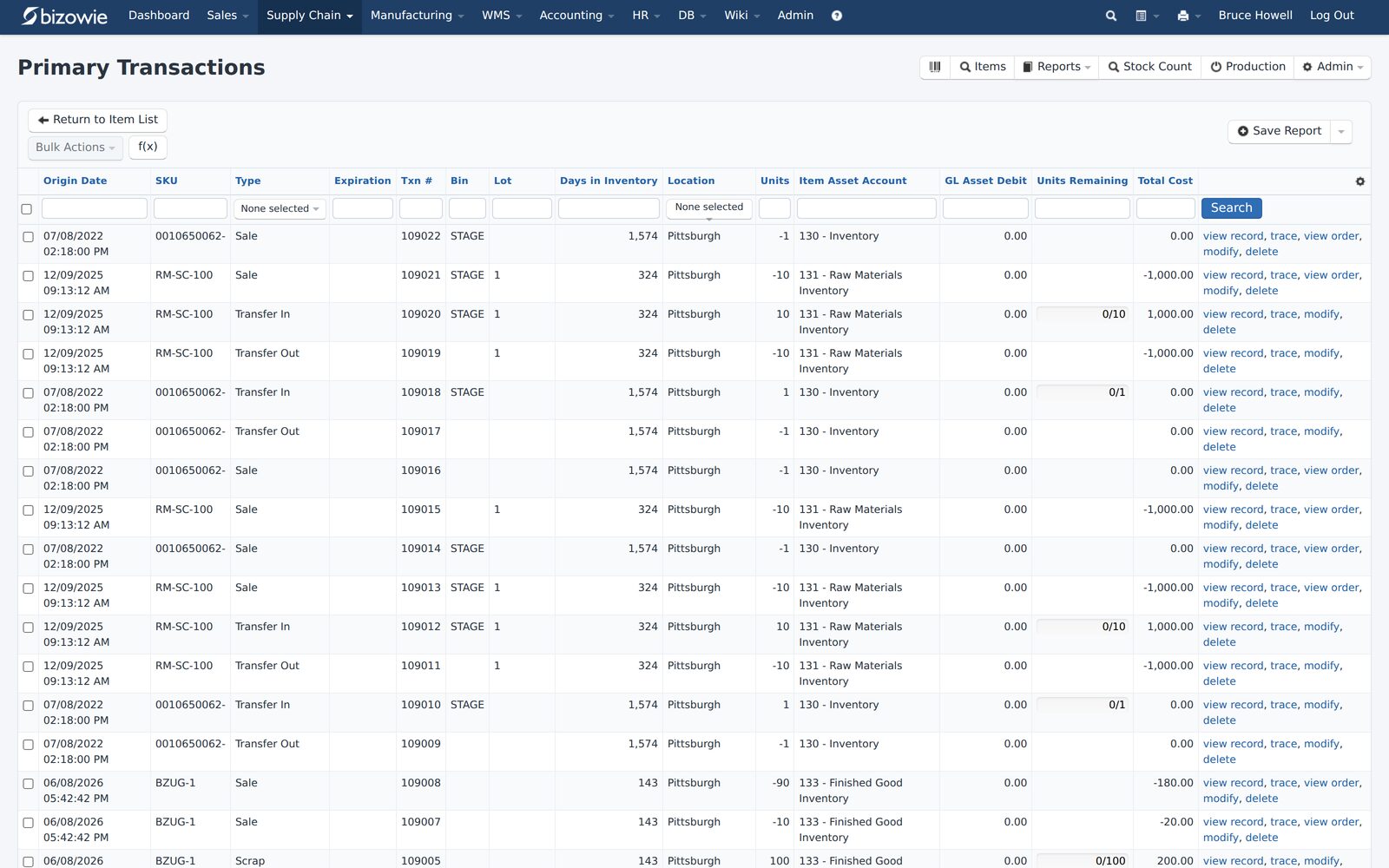
Every receipt, transfer, build, and quarantine move by SKU, lot, bin, and location.
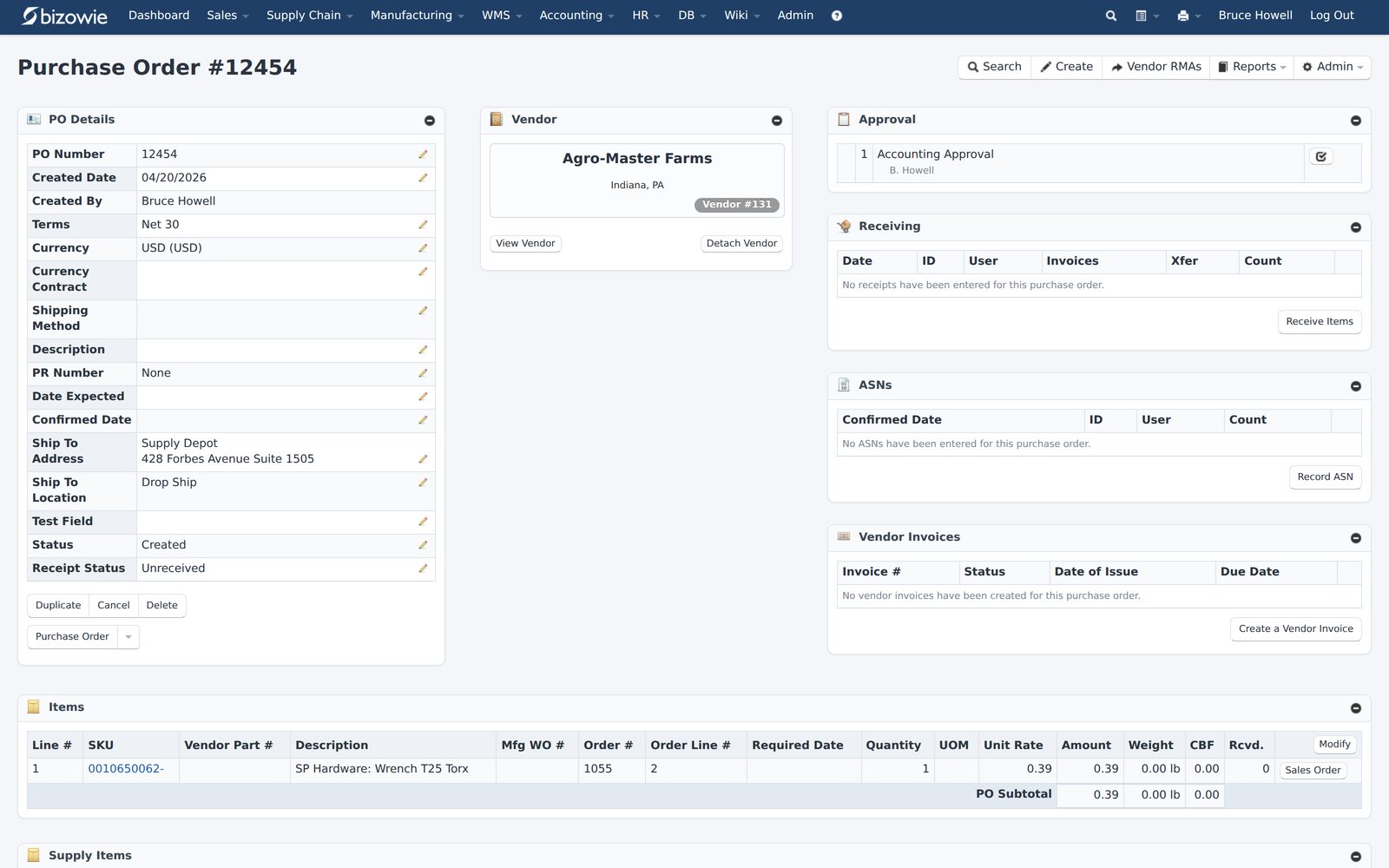
Purchase orders with approvals, receiving, ASNs, and vendor invoices on one screen.
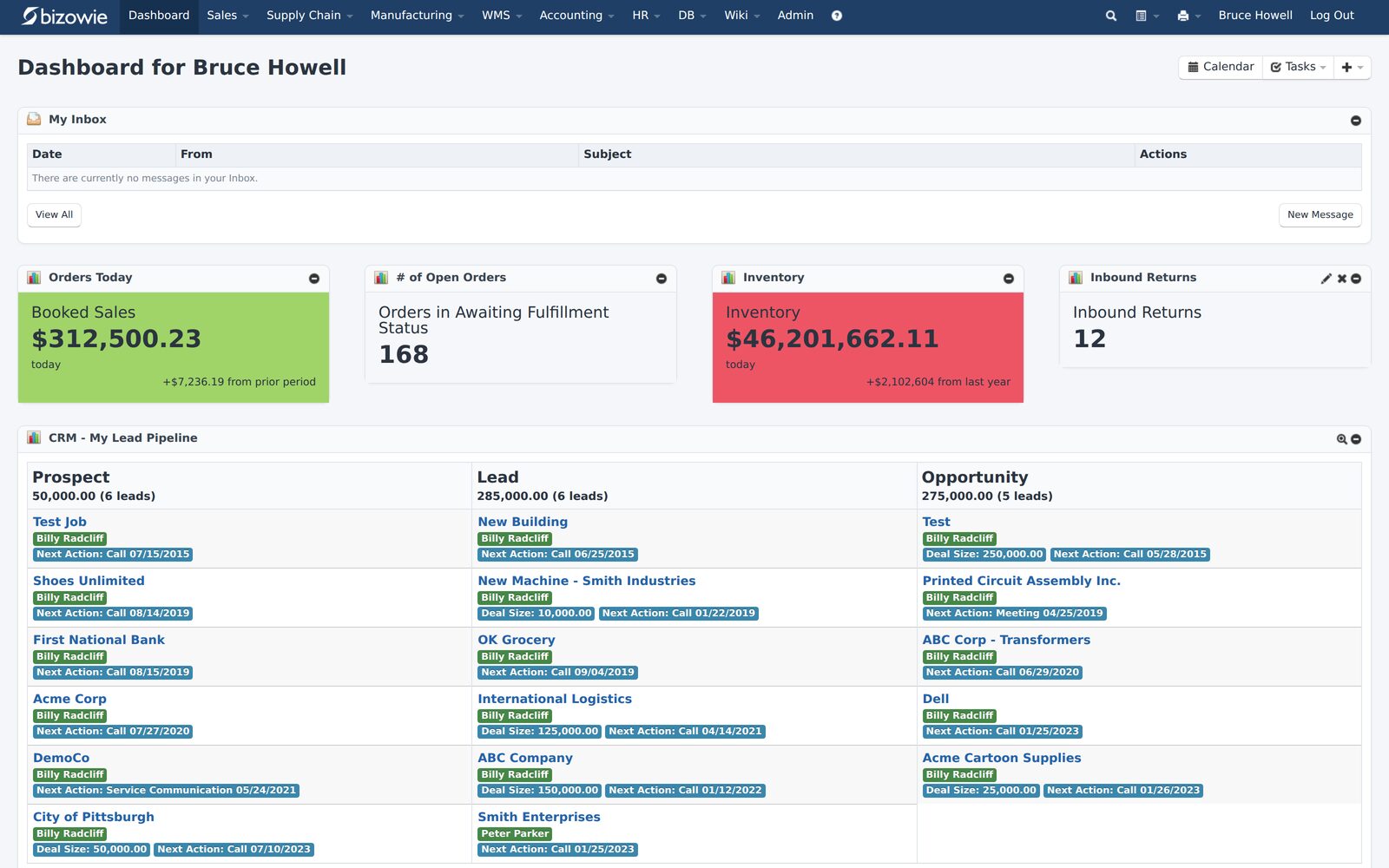
Bookings, open orders awaiting fulfillment, and inventory value at a glance.
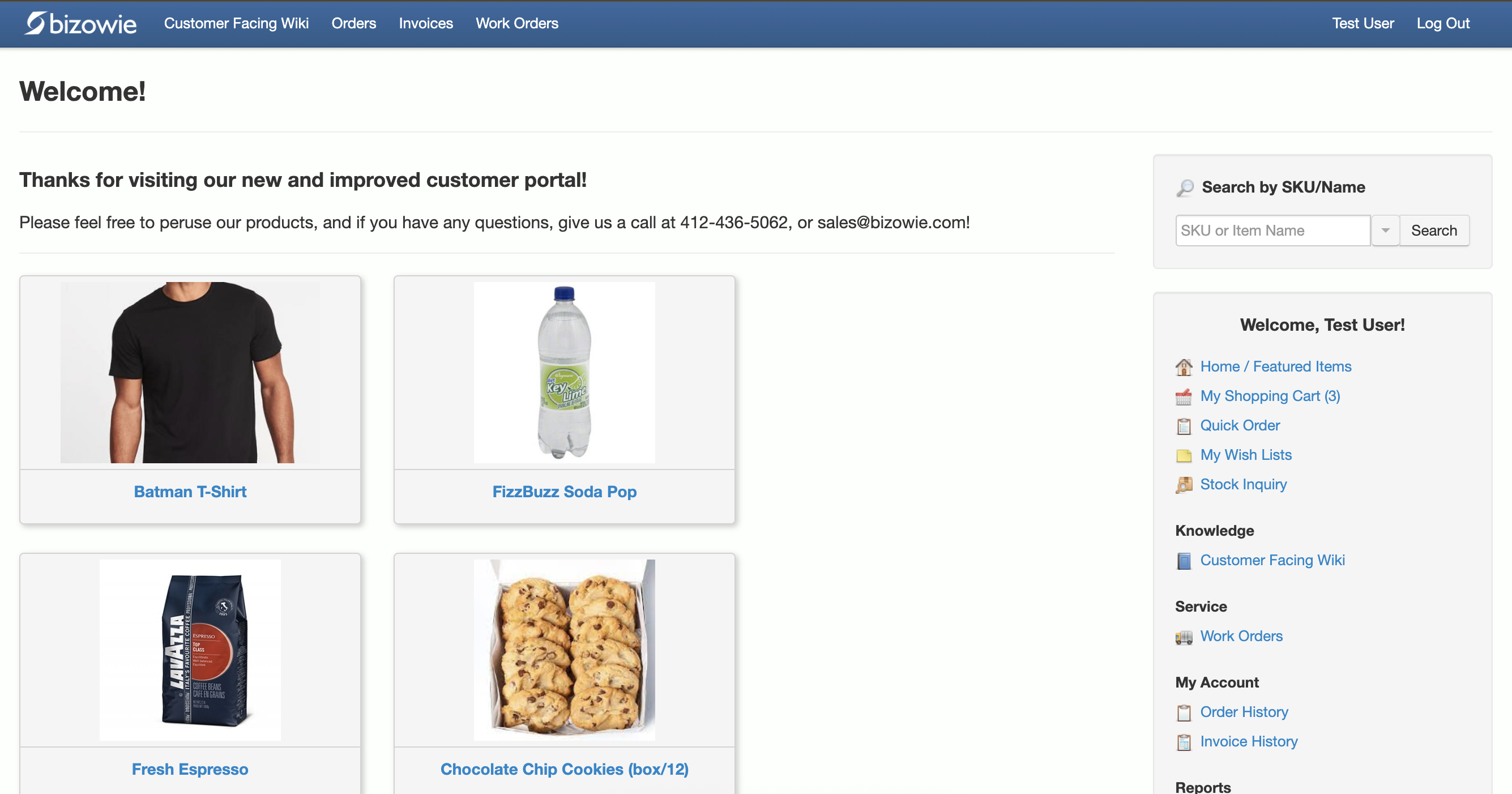
Customers search items, place orders, and check order and invoice history themselves.
Food and Beverage Distribution in Bizowie
Bizowie runs inventory, orders, purchasing, the warehouse, shipping, and financials in one system, with no batch updates between them. For food and beverage companies, the platform provides full traceability from receipt to sale with barcoding, expiration management, and quality triage, and inbound receipts can be quarantined for QA checks. Products can be sold individually, by the case, or by the pallet, and lot numbers are recorded at receiving and carried through shipments and transfers by barcode scan. Variable weight handling differs a great deal from one operation to the next, so bring us your actual items and process, and we will tell you plainly whether Bizowie is a fit. For the wider evaluation, see our distribution ERP software buyer’s guide and the guide to food distribution software features.
“We have seen immediate economic benefit for our business in terms of productivity from our warehouse staff, eliminated processing errors, and better stock control.”
Julius Hart — Managing Director, LensesOnline
Frequently Asked Questions
What does catch weight mean?
Catch weight means an item is stocked and handled by the case or piece but priced, costed, and invoiced by its actual weight, because the weight varies from one unit to the next.
What is the difference between catch weight and fixed weight?
A fixed weight item weighs the same every time, so cases convert to pounds with a set factor. A catch weight item varies, so the actual weight has to be captured for each receipt and shipment.
How is a catch weight invoice calculated?
Multiply the actual weight shipped by the price per pound or kilogram. The amount shown at order entry is only an estimate based on the nominal weight.
What is nominal weight?
Nominal weight is the expected average weight of one case or piece. It is used to estimate orders, plan purchases, and set tolerance limits, but not to bill the customer.
How is catch weight inventory valued?
By weight. Inventory value is the actual pounds or kilograms on hand multiplied by the cost per unit of weight, while the case count is kept alongside it for picking and counting.
Bring Us Your Hardest Catch Weight Item
Tell us how you receive, pick, and invoice variable weight products today. We’ll show you how Bizowie would handle them, and if we are not the right fit, we will tell you.
See how Bizowie would handle your products
Tell us a little about your operation and we’ll reply with an honest assessment of fit, not a sales pitch.
- A real person reviews your submission and replies within one business day.
- No automated email sequences.
- If we’re not the right fit, we’ll tell you.
Prefer to talk?
Call (888) 635-2517, Mon–Fri, 9 AM–5 PM Eastern