
Freight and Carrier Management for Distributors
Freight is one of the largest costs in distribution that rarely shows up where it should.
It is paid on inbound purchases, outbound shipments, transfers between locations, and returns. Some of it is billed to customers and much of it is not. When freight lives in carrier websites and separate shipping software, nobody can say which customers, orders, or products it is really eating into.
This guide explains how distributors can manage freight and carriers better: rate shopping, labels and documents, LTL and parcel, inbound freight, charging freight to customers, and seeing the real cost in your margins.
Where Freight Cost Hides
- Inbound freight that is expensed instead of added to inventory cost
- Free freight promised to customers without tracking what it costs
- Partial shipments that double the freight on one order. See backorder management.
- Expedited shipping to recover from stockouts
- Transfers between your own locations
- Returns paid by you
See why distributors lose money on their fastest-moving products.
Rate Shopping
Rate shopping compares carriers and service levels for each shipment and picks the best option by cost and delivery time. Done inside the ERP at the moment of shipping, with the real weight and dimensions, it saves money on every package instead of relying on a default carrier.
Parcel, LTL, and Truckload
- Parcel: small packages, rated by weight, dimensions, and zone, with labels printed at packing.
- LTL (less than truckload): palletized freight, rated by weight, freight class, and distance, with bills of lading and pickup scheduling. Accessorial charges, such as liftgate or residential delivery, add up quickly.
- Truckload: full loads, often contracted or brokered, for large shipments and transfers.
Labels and Shipping Documents
Every shipment needs some combination of carrier labels, packing slips, bills of lading, manifests, and, for many retail customers, UCC-128 labels and advance ship notices. Generating them from the ERP at packing, with data from the order and the pack, eliminates rekeying and the errors that cause chargebacks. See selling to retail chains: EDI and retailer requirements.
Inbound Freight and Landed Cost
Inbound freight, duty, brokerage, and handling belong in the cost of the inventory they bring in. When they are expensed separately, product margins look better than they are, and pricing decisions are made on the wrong cost. See landed cost tracking.
Charging Freight to Customers
Common approaches include charging actual cost, cost plus a handling fee, flat rates by order size or zone, or free freight above a minimum order. Whatever the policy, apply it automatically at shipping and report freight cost against freight charged by customer, so free-freight thresholds and policies can be adjusted with real numbers.
Your Own Trucks and Routes
Distributors with their own trucks need delivery routes, stop sequences, loading by route, and proof of delivery, with route cost included in customer profitability. Integrated route shipping keeps those deliveries in the same system as the orders.
Freight Metrics
- Freight cost as a percentage of sales, by customer and product line
- Freight charged versus freight paid
- Cost per shipment and per pound, by carrier and service
- Percentage of orders shipped partially, and the extra freight they caused
- Expedited shipping spend and its causes
See Bizowie in Action
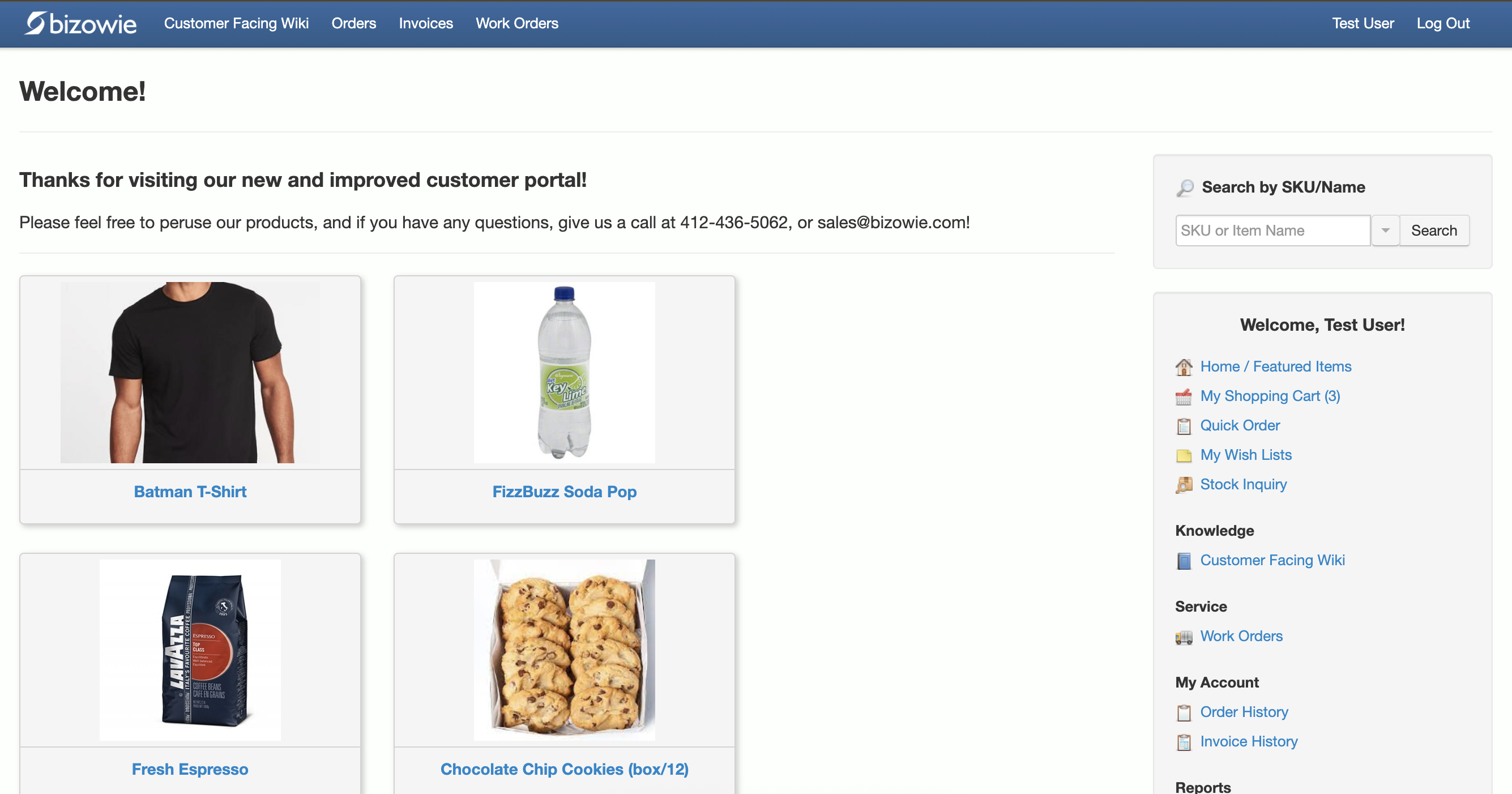
Real screens from Bizowie, not mockups. Click any screen to enlarge.
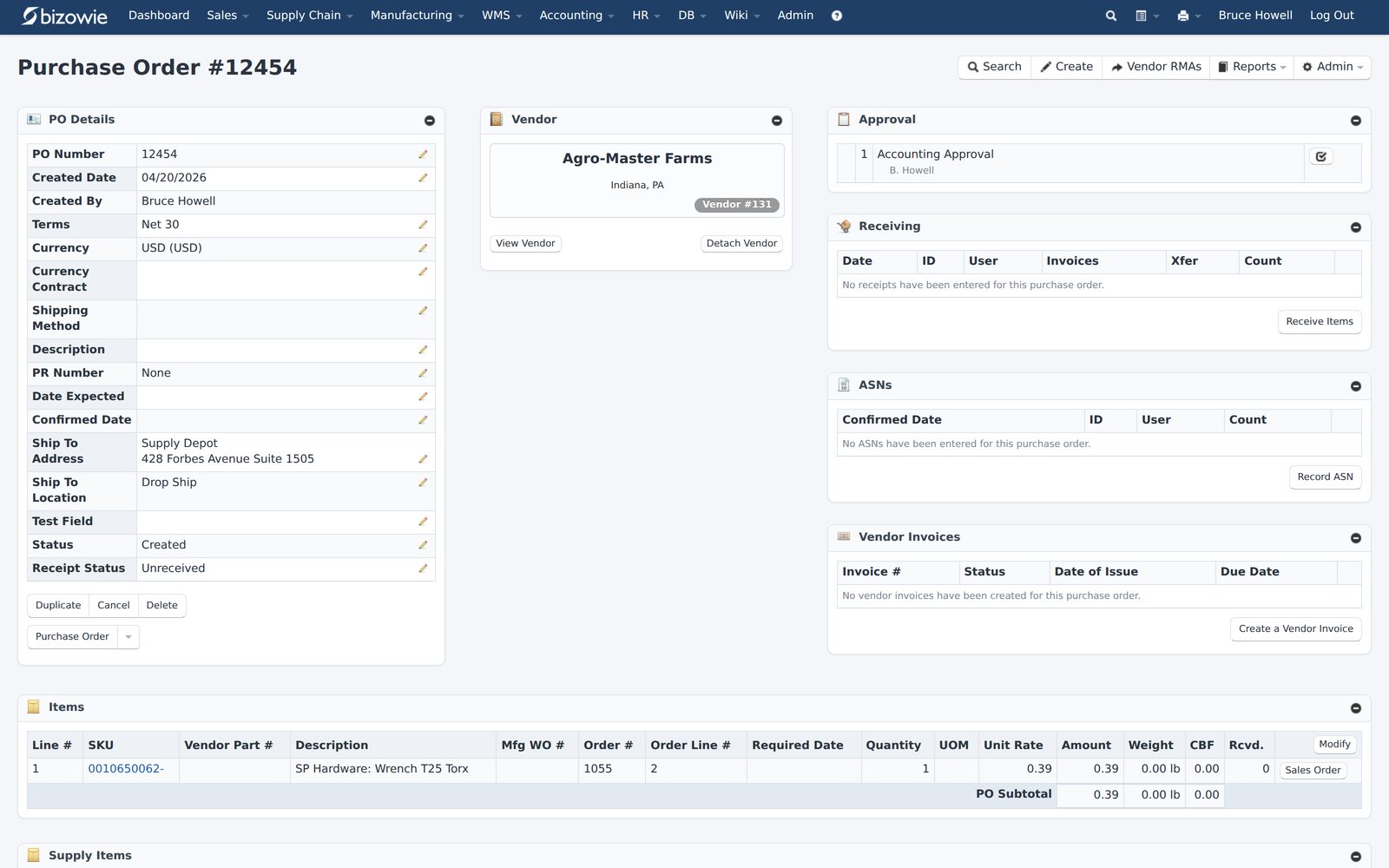
Purchase orders with approvals, receiving, ASNs, and vendor invoices on one screen.
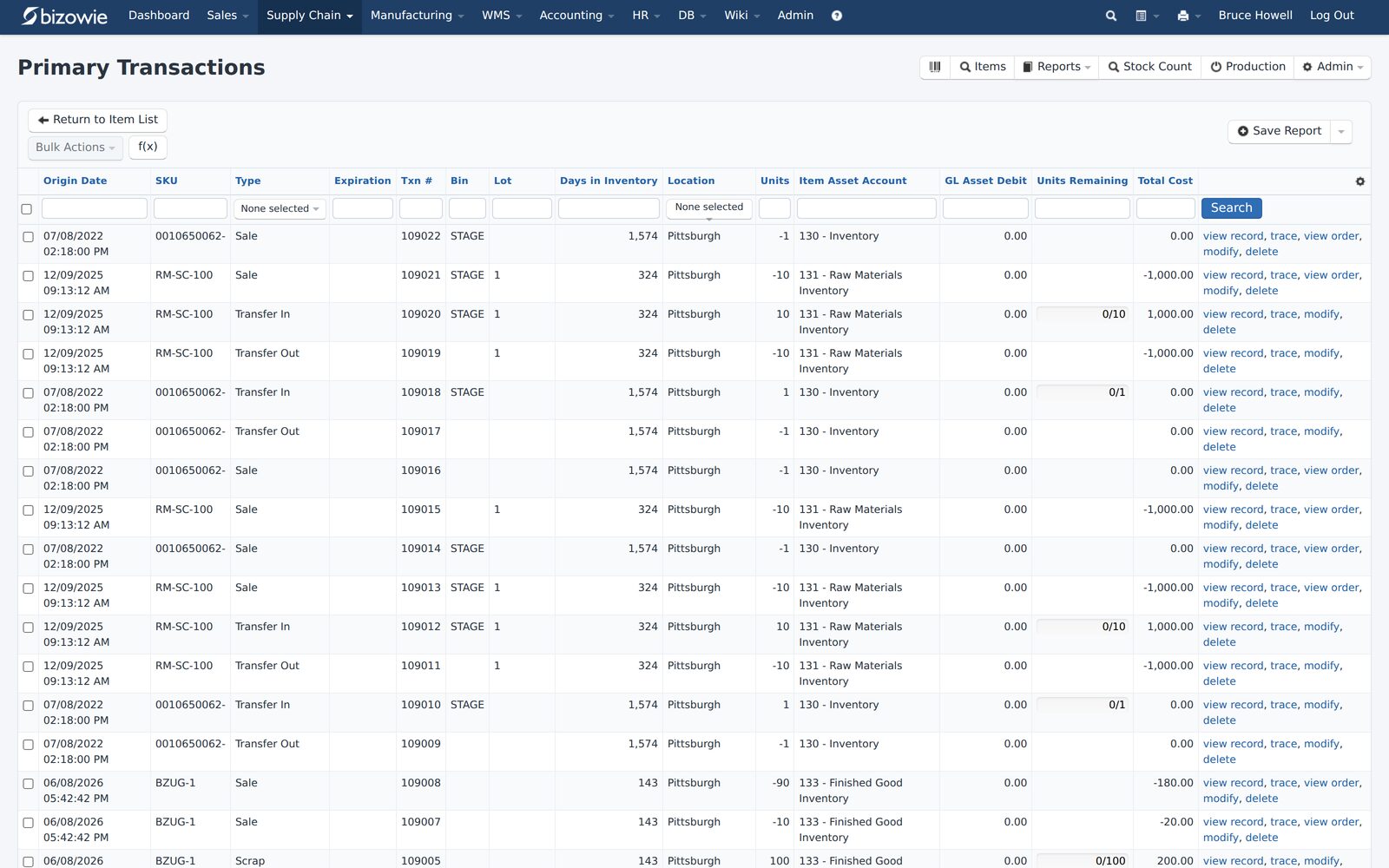
Every receipt, transfer, build, and quarantine move by SKU, lot, bin, and location.
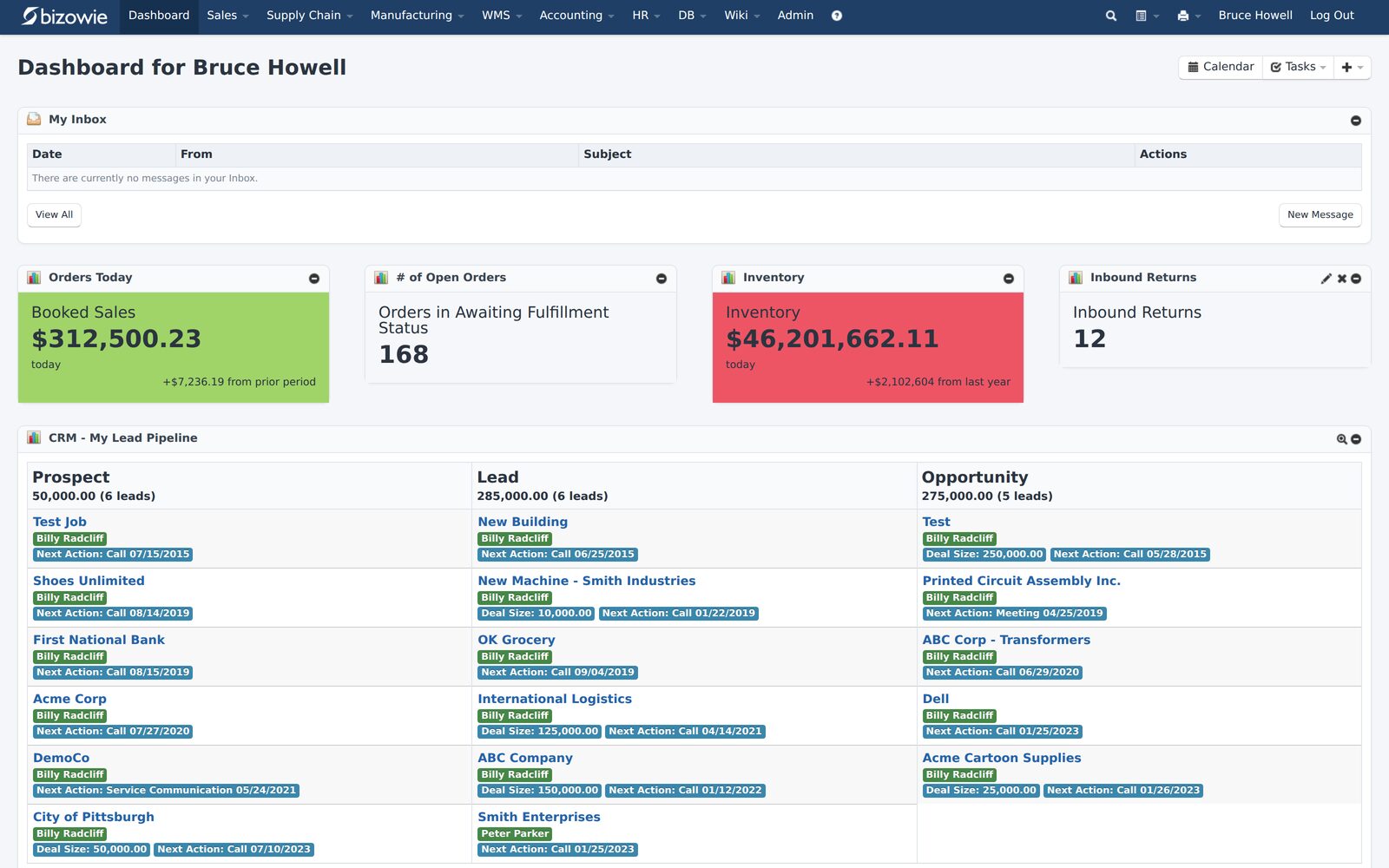
Bookings, open orders awaiting fulfillment, and inventory value at a glance.
Customers search items, place orders, and check order and invoice history themselves.
Freight and Shipping in Bizowie
Bizowie Cloud Shipping manages shipping for sales orders, transfers, and ad-hoc fulfillments, tracking the carrier, weight and dimensions, multi-box and multi-pallet configurations, and customs details. Pack slips, pick lists, UCC labels, bills of lading, and manifests are generated with a click. Out-of-the-box integrations with major U.S. and Canadian small-package carriers cover quoting, label printing, electronic manifests, and package tracking, with no third-party software required. LTL and truckload carriers can be connected through Bizowie’s EDI framework, 3PL warehouses are managed through a 3PL framework, and integrated route shipping keeps your own deliveries in the ERP. Direct, indirect, and landed costs give you true margins after shipping.
“We have seen immediate economic benefit for our business in terms of productivity from our warehouse staff, eliminated processing errors, and better stock control.”
Julius Hart — Managing Director, LensesOnline
Frequently Asked Questions
What is freight management for distributors?
Managing how goods move in and out: choosing carriers and services, rating and booking shipments, producing labels and documents, recording freight cost, and charging customers correctly.
What is rate shopping?
Comparing carrier rates and delivery times for each shipment, using its actual weight, dimensions, and destination, and choosing the best option.
Should inbound freight be included in inventory cost?
Generally yes. Including freight and other acquisition costs in landed cost gives an accurate picture of product cost and margin. Your accountant should confirm the treatment for your business.
Bring Us a Week of Shipments
Tell us how you ship and charge for freight today. We’ll show you how it would work in Bizowie, and if we are not the right fit, we will tell you.
See how Bizowie would handle your shipping and freight
Tell us a little about your operation and we’ll reply with an honest assessment of fit, not a sales pitch.
- A real person reviews your submission and replies within one business day.
- No automated email sequences.
- If we’re not the right fit, we’ll tell you.
Prefer to talk?
Call (888) 635-2517, Mon–Fri, 9 AM–5 PM Eastern