
ERP Contract Negotiation: The Terms to Agree Before You Sign
Most ERP buyers spend months comparing software and a few days reading the contract.
That is backwards. The software you choose will run your business for a decade, and the contract decides what it costs over that decade, what happens when you grow or shrink, what you get if the system goes down, and whether you can leave with your data. Many of the most important terms are easiest to change before you sign and hardest to change afterward.
This guide covers the ERP contract terms worth negotiating: subscription pricing and renewals, user and module flexibility, implementation scope, service levels, data ownership and exit, and the questions to ask before you sign. It is practical guidance, not legal advice; have your attorney review any contract.
Before You Negotiate
- Have a defined scope: users by role, modules, locations, entities, integrations, and data to migrate. Vague scope produces vague prices and change orders later. See the ERP RFP template.
- Compare five-year cost, not year one. See what cloud ERP really costs.
- Keep more than one option open until terms are agreed.
- Know who signs: the software vendor, a reseller, an implementation partner, or several of them. Each contract needs review.
Subscription Pricing and Renewals
- Price protection: a cap on annual increases at renewal, such as a fixed percentage or an index
- Term length: multi-year terms can buy better pricing, but understand what happens if your needs change
- Auto-renewal: notice periods long enough for you to act, and a reminder before renewal
- Pricing for future additions: locked prices for additional users, modules, and entities you expect to add
- Payment terms: annual vs. monthly billing, and what is prepaid
Users, Modules, and Flexibility
- How users are defined and counted: named, concurrent, full, limited, or occasional
- Whether warehouse, shop floor, and occasional users need full licenses
- Whether you can reduce users or modules at renewal, not just add them
- What happens to pricing after an acquisition or divestiture
- Transaction or usage limits, and what happens if you exceed them
Implementation Scope and Cost
Implementation is where budgets most often grow. Negotiate:
- A written statement of work with deliverables, assumptions, and what is out of scope
- Fixed fee vs. time and materials: fixed fees shift risk to the provider; time and materials needs estimates and caps
- Data migration: exactly which data, how much history, and who cleans it
- Integrations: each one named, with who builds and maintains it
- Training: format, hours, and who is trained
- Change orders: how they are priced and approved
- Milestones and acceptance: payments tied to completed, accepted deliverables
- The team: named key people, and your right to approve replacements
See ERP implementation by the numbers.
Service Levels and Support
- Uptime commitment and how it is measured, including what counts as downtime. See what ERP SLAs actually mean.
- Service credits when the commitment is missed
- Support response times by severity, and hours of coverage
- Who provides support after go-live, and whether it is included
- Maintenance windows and notice for updates
- Backup and disaster recovery commitments
Data Ownership and Exit
- You own your data, stated plainly
- Export rights: the ability to export all data at any time, in a usable format, at no or defined cost
- Transition assistance at the end of the contract
- Retention and deletion: how long data is kept after termination, and confirmation of deletion
- Termination rights for serious or repeated failures to meet commitments
Security and Compliance
- Security practices, independent audit reports, and how often they are updated
- Where data is hosted, and who can access it
- Breach notification commitments
- Any industry or regulatory requirements your business has
Liability and Other Legal Terms
Limitation of liability, indemnification, confidentiality, governing law, and assignment clauses all matter, especially if a provider is acquired. These are areas for your attorney.
See Bizowie in Action
Real screens from Bizowie, not mockups. Click any screen to enlarge.
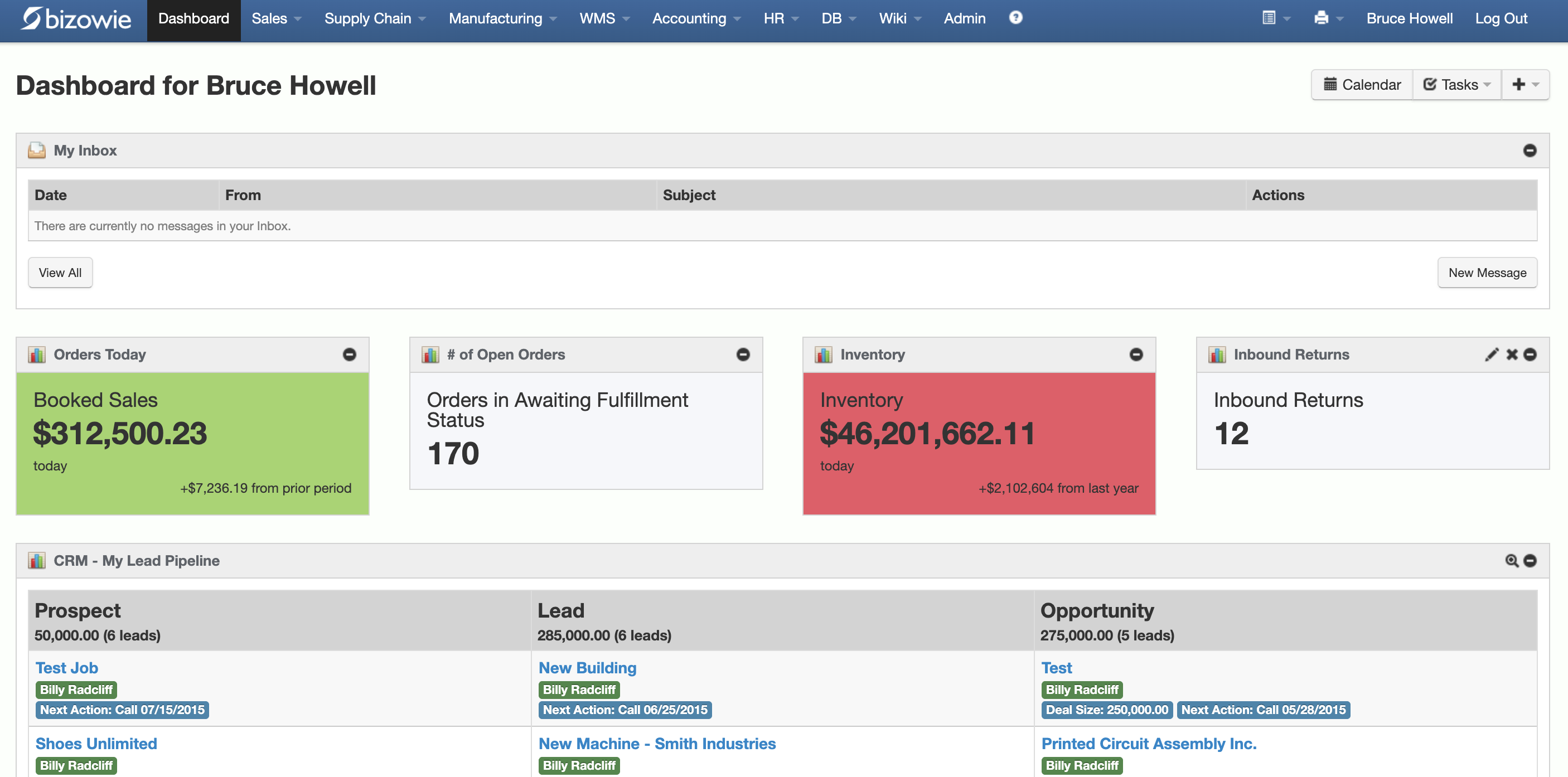
Live Dashboard
Bookings, open orders awaiting fulfillment, and inventory value at a glance.
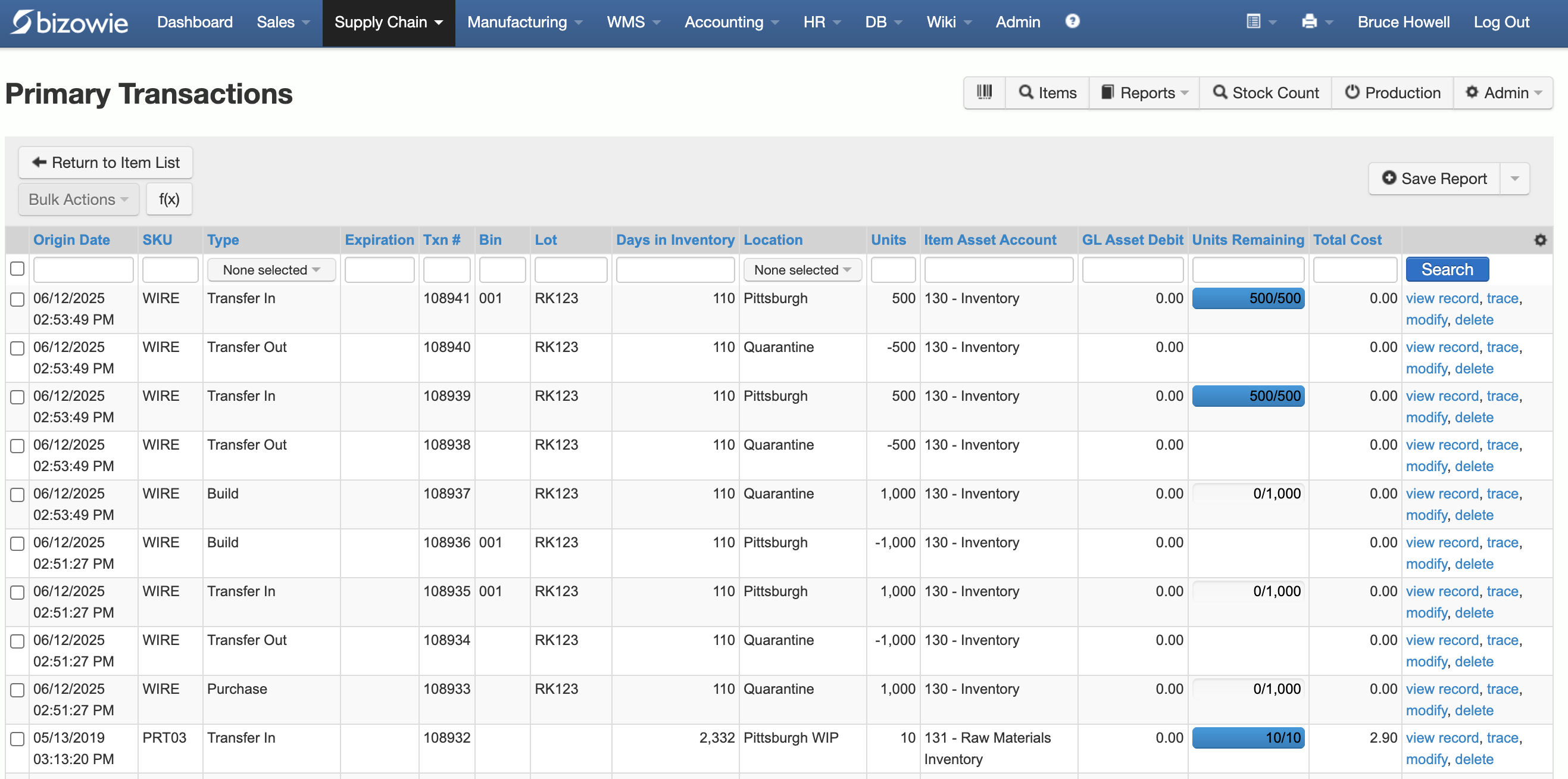
Inventory Transactions
Every receipt, transfer, build, and quarantine move by SKU, lot, bin, and location.
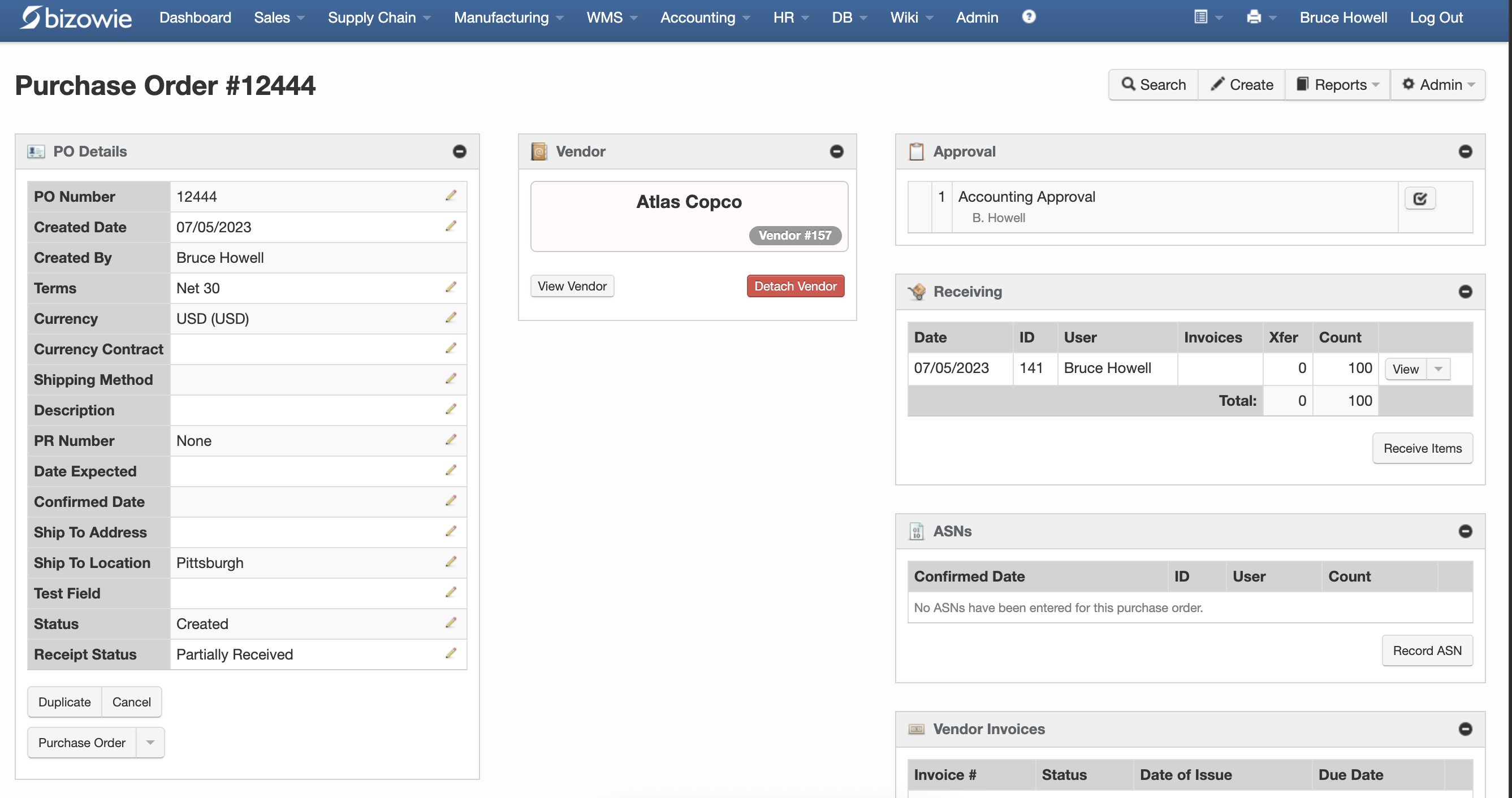
Purchasing & Receiving
Purchase orders with approvals, receiving, ASNs, and vendor invoices on one screen.
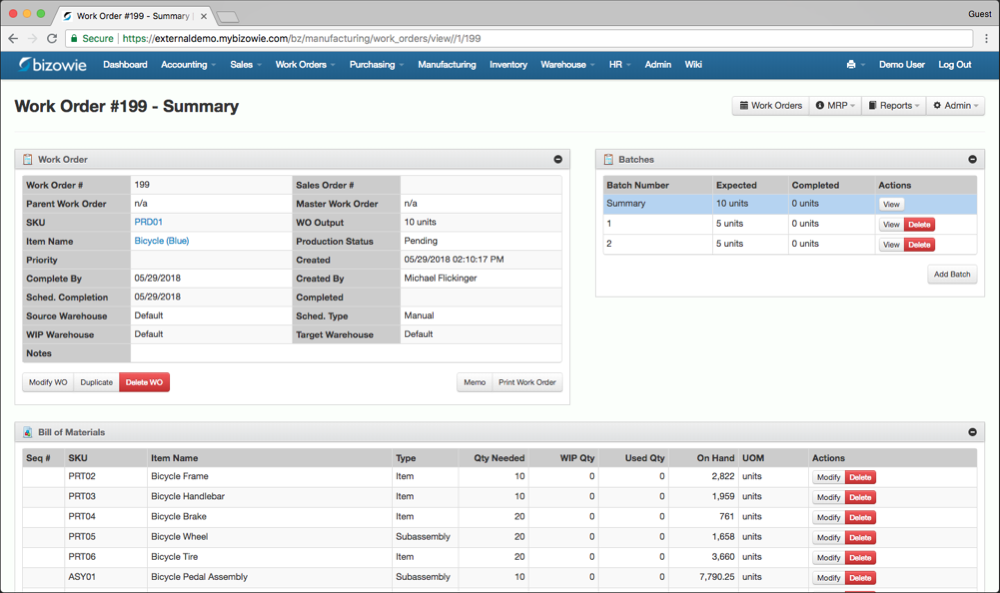
Work Orders & BOMs
Each work order carries its multi-level bill of materials, batches, and live on-hand quantities.
Contract Checklist
- Scope defined in writing: users, modules, entities, integrations, data
- Five-year cost compared on the same scope
- Renewal increase cap
- Prices locked for expected additions
- Ability to reduce at renewal
- Statement of work with assumptions and exclusions
- Payments tied to accepted milestones
- Uptime commitment with service credits
- Support response times and coverage
- Data ownership, export, and transition assistance
- Security commitments and breach notification
- Attorney review of liability, indemnity, and termination
For questions to ask the vendor alongside the contract, see the cloud ERP checklist: 25 questions to ask before you sign.
“From our first contact all the way through to our implementation, Bizowie has been a first class organization to work with… We strongly recommend the Bizowie software program.”
Alan Seymour — President, Cleveland Electric Labs
How Bizowie Approaches Contracts
Bizowie is sold and implemented directly by the team that builds and supports the software, so there is one company accountable for the software, the implementation, and support, and one contract relationship to manage. Pricing is a subscription quoted against your actual scenario: your users, locations, and the functionality you need. Ask us to price your scope, and compare it on a five-year basis.
Frequently Asked Questions
What should you negotiate in an ERP contract?
Renewal price caps, pricing for future additions, user and module flexibility, a detailed implementation statement of work, milestone-based payments, uptime and support commitments, data ownership and export rights, and transition assistance.
Can you negotiate SaaS ERP pricing?
Often, yes, especially on term length, renewal increases, pricing for future additions, and implementation services.
What is a renewal cap?
A contract term limiting how much the subscription price can increase at renewal, such as a fixed percentage each year.
What happens to our data if we leave an ERP vendor?
It depends on the contract. Make sure it states that you own your data, can export it in a usable format, and will receive transition assistance and confirmed deletion at the end.
Get a Proposal You Can Compare
Send us your scope. We’ll price Bizowie against your real scenario and walk you through it, and if we are not the right fit, we will tell you.
Get a Bizowie proposal for your scope
For manufacturers and distributors. Tell us a little about your operation and we’ll reply with an honest assessment of fit, not a sales pitch.
- A real person reviews your submission and replies within one business day.
- No automated email sequences.
- If we’re not the right fit, we’ll tell you.
Prefer to talk?
Call (888) 635-2517, Mon–Fri, 9 AM–5 PM Eastern