
Outside Processing in Manufacturing: Tracking, Scheduling, and Costing Subcontracted Work
Almost every manufacturer sends work out at some point: plating, heat treating, powder coating, machining overflow, or a specialized process nobody in-house can do.
Outside processing is where jobs quietly go missing. Parts leave the building on a packing slip, sit at a vendor, and come back, sometimes short, sometimes late, and often with a vendor invoice that arrives weeks later and never reaches the job’s cost.
This guide explains how to manage outside processing and subcontracting: putting outside steps on the routing, tracking material at the vendor, scheduling around vendor lead times, and costing it correctly.
What Is Outside Processing?
Outside processing, also called subcontracting or outside operations, is any manufacturing step performed by a vendor on your material, as part of your job. The vendor provides a service; you still own the material and the job.
Put Outside Steps on the Routing
The most important rule: an outside step should be an operation on the routing like any other, with a sequence number, a vendor, a lead time, and an expected cost. That puts it in the schedule, the capacity plan, and the job cost from the beginning, instead of being remembered by whoever happens to be working on the job. See routings in manufacturing.
The Outside Processing Flow
- The job reaches the outside operation, after the preceding in-house steps are complete.
- A purchase order for the service is created, tied to the job and operation.
- Material is shipped to the vendor with a packing slip, and recorded as being at the vendor.
- The vendor processes and returns the parts.
- Parts are received back, inspected if required, and the job moves to its next operation.
- The vendor invoice is matched to the service purchase order, and the cost lands on the job.
Tracking Material at the Vendor
While parts are out, they are still your inventory and still part of the job’s work in process. The system should show what is at each vendor, for which job, since when, and when it is due back. Counting what went out against what came back catches shortages before they become late shipments. See WIP inventory.
Scheduling Around Vendor Lead Times
A three-day turnaround at a coater is part of the job’s lead time, just like a machining operation. Include the vendor’s lead time and transit in the schedule, batch shipments to vendors sensibly, and watch for vendors whose actual turnaround is longer than the routing assumes. See production scheduling.
Costing Outside Processing
The vendor’s charge, any freight to and from the vendor, and any rework caused by vendor quality problems all belong in the job cost. When the service purchase order is tied to the job, the cost flows there automatically when the invoice is matched. Compare actual outside processing costs with what the quote assumed. See job costing in manufacturing ERP.
Quality and Traceability
Many customers require certifications for outside processes, such as heat treat or plating certs. Record them against the job and lot when the parts come back, and inspect returned parts before they move on. If the material is lot-controlled, keep lot identity through the trip to the vendor. See lot traceability for manufacturers.
See Bizowie in Action
Real screens from Bizowie, not mockups. Click any screen to enlarge.
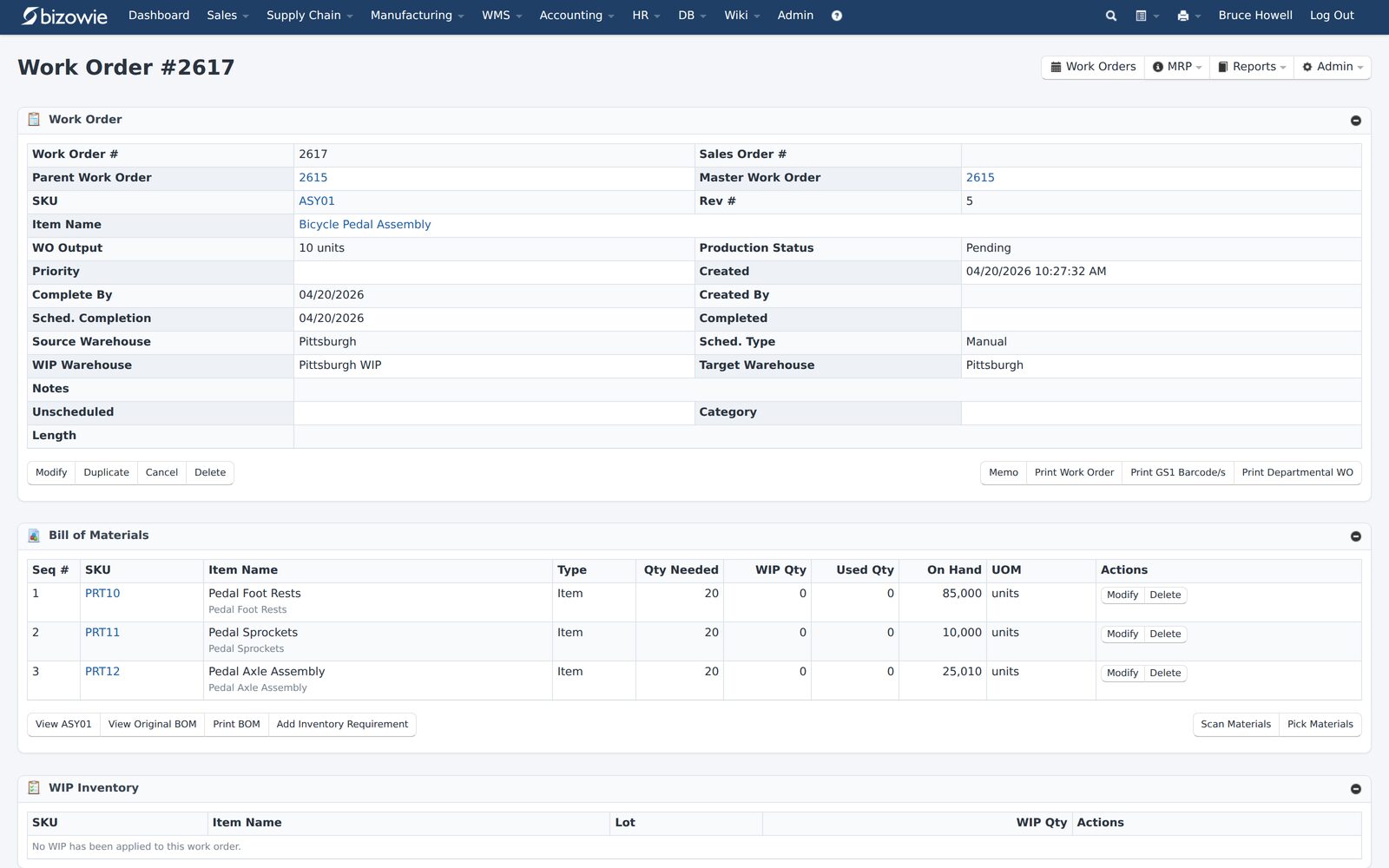
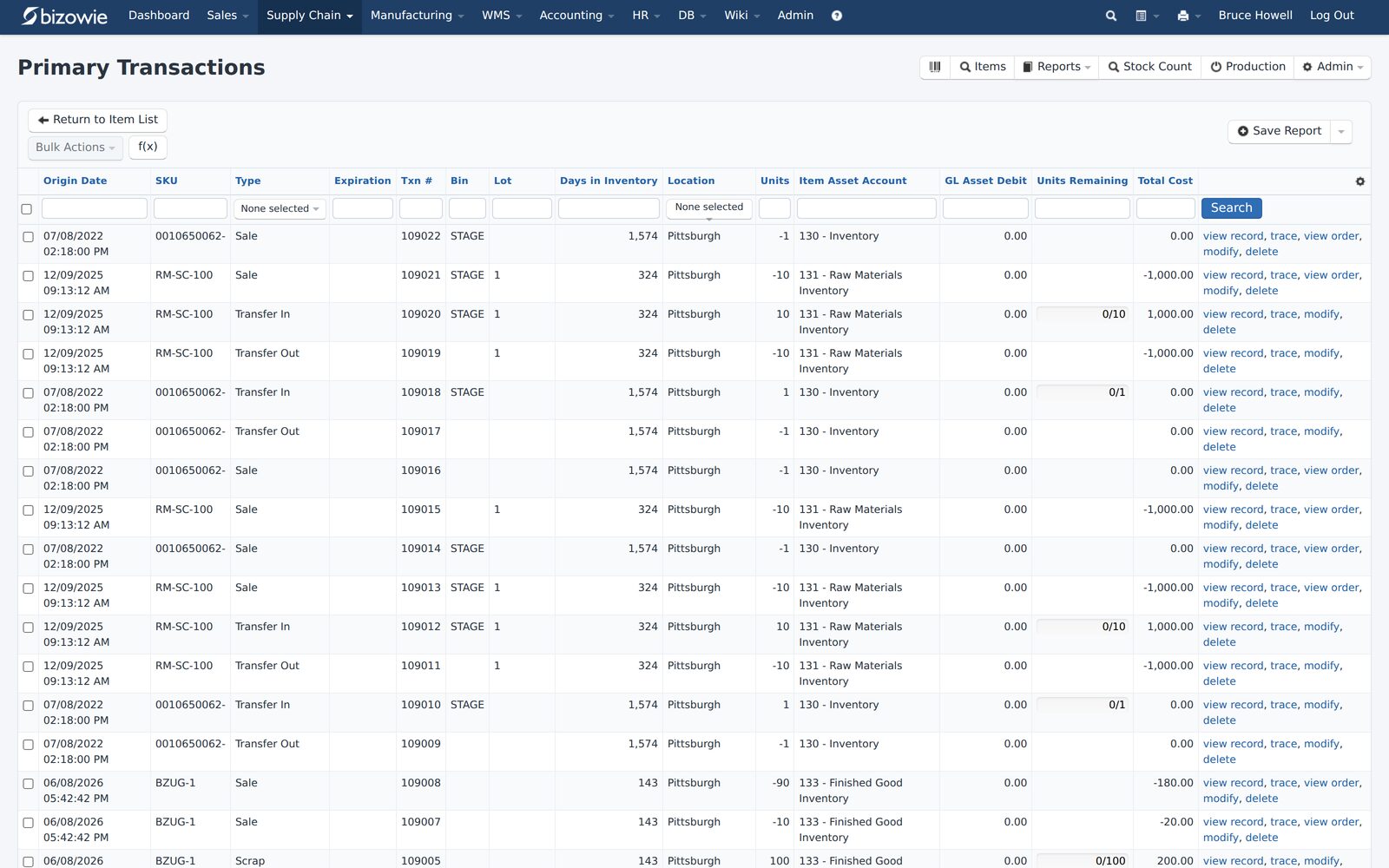
Each work order carries its multi-level bill of materials, batches, and live on-hand quantities.
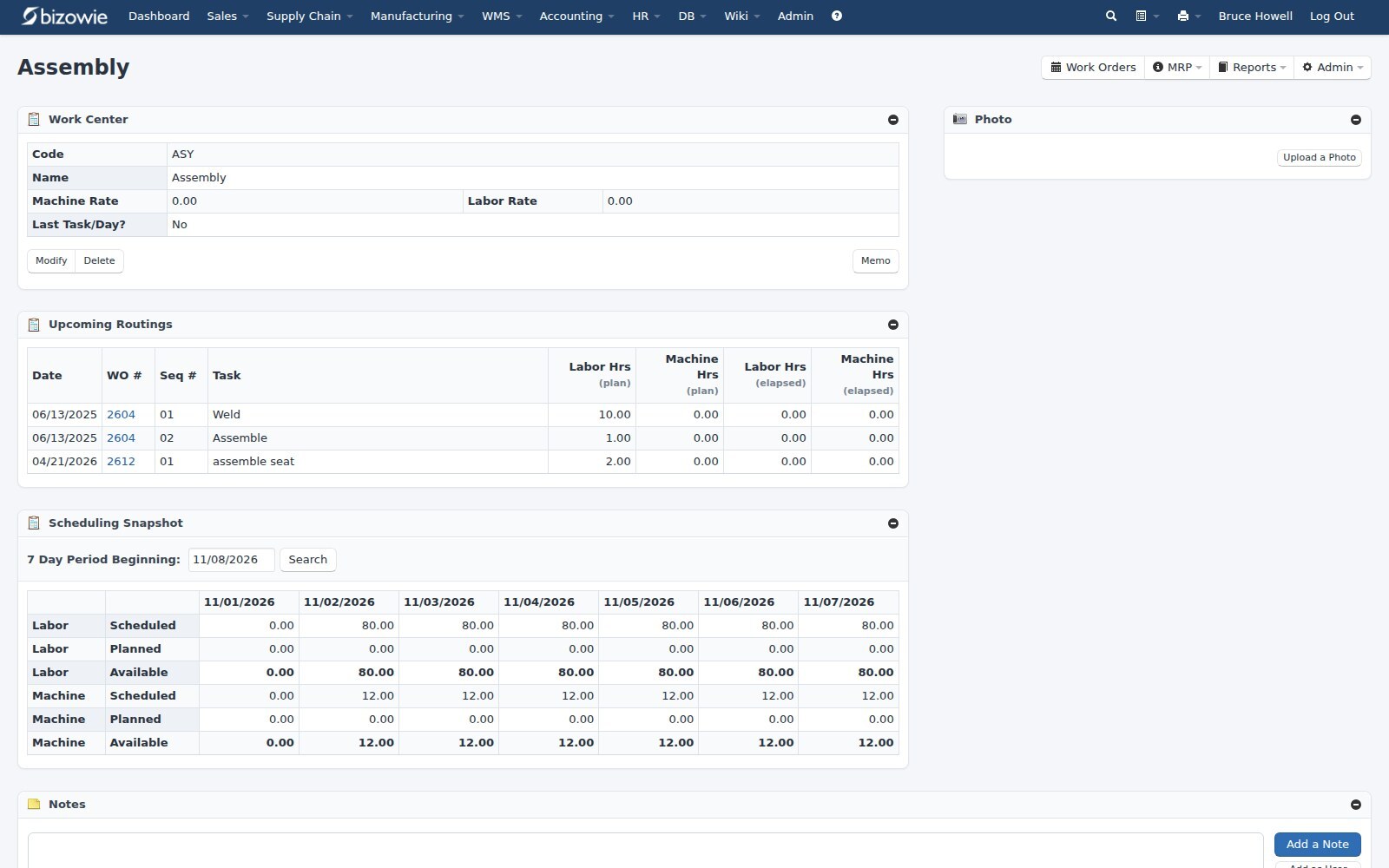
Routings, labor and machine rates, and a scheduling snapshot for every work center.
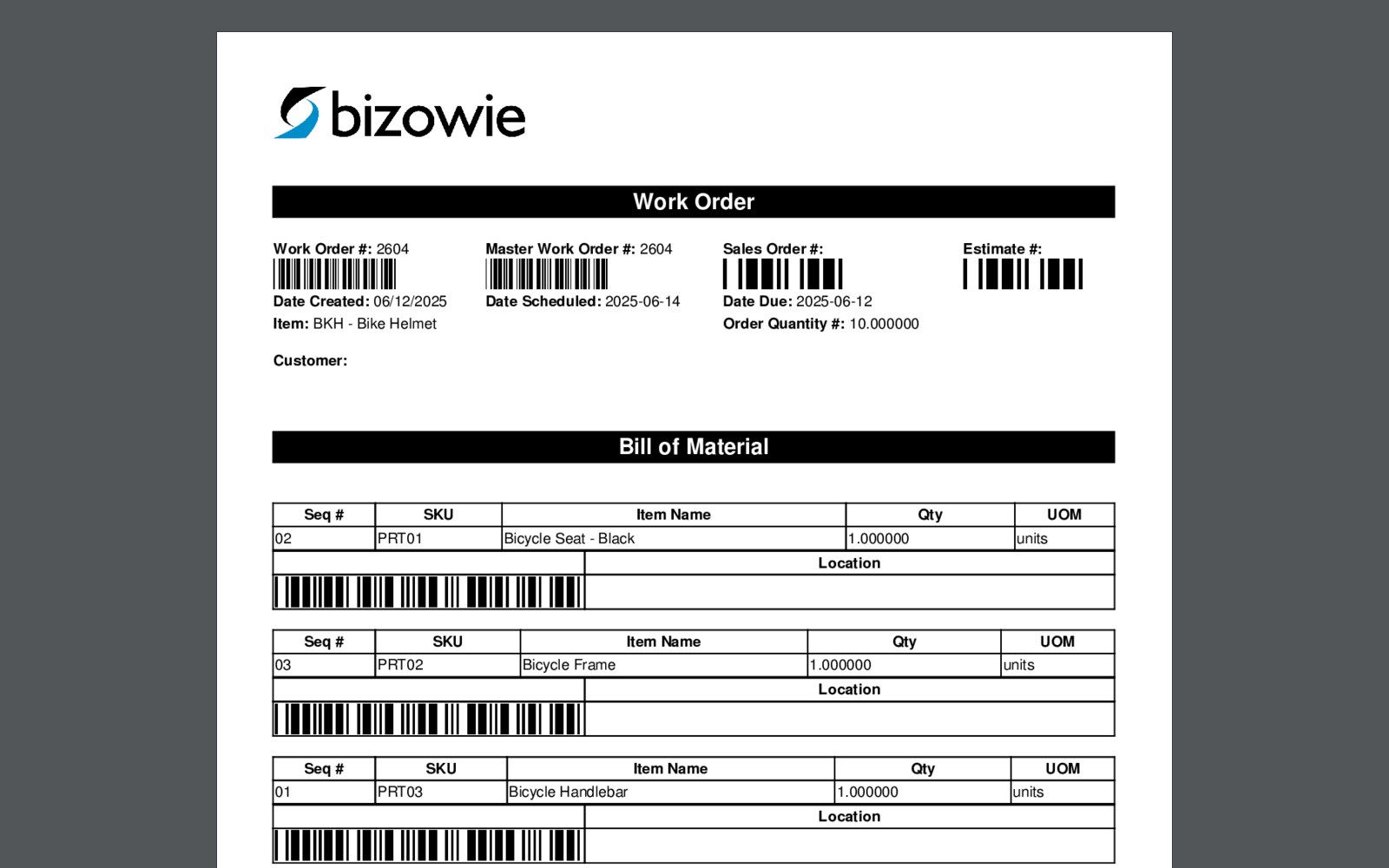
Printed work orders with barcoded BOM lines, so the shop floor scans instead of writing.
Every receipt, transfer, build, and quarantine move by SKU, lot, bin, and location.
Common Mistakes
- Outside steps not on the routing, so they are missing from the schedule and the cost
- Parts shipped without any record in the system
- Vendor invoices expensed instead of charged to the job
- Vendor turnaround times that are never measured
- Certifications kept in a filing cabinet instead of with the job
Outside Processing in Bizowie
Bizowie manages third-party processes and work in progress within the work order, records labor and machine time as direct costs, and lets you develop estimates that include third-party services alongside labor, materials, and fees. Purchasing tracks activity from requisition to invoice with three-way matching, and lot and serial traceability is maintained end to end, from purchase order through production to sale.
“From our first contact all the way through to our implementation, Bizowie has been a first class organization to work with… We strongly recommend the Bizowie software program.”
Alan Seymour — President, Cleveland Electric Labs
Frequently Asked Questions
What is outside processing in manufacturing?
A manufacturing step performed by an outside vendor on your material as part of your job, such as plating, heat treating, or coating.
How should outside processing be costed?
Charge the vendor’s service cost, plus related freight and any rework, to the job, ideally through a service purchase order tied to the job and operation.
Is material at a vendor still inventory?
Yes. You still own it, so it should be tracked as part of the job’s work in process while it is at the vendor.
Bring Us a Job That Leaves the Building
Tell us how outside processing works in your shop today. We’ll show you how Bizowie would handle it, and if we are not the right fit, we will tell you.
See how Bizowie would handle your outside processing
Tell us a little about your operation and we’ll reply with an honest assessment of fit, not a sales pitch.
- A real person reviews your submission and replies within one business day.
- No automated email sequences.
- If we’re not the right fit, we’ll tell you.
Prefer to talk?
Call (888) 635-2517, Mon–Fri, 9 AM–5 PM Eastern