

Manufacturing Overhead Rate: How to Calculate and Apply It
Direct material and direct labor are easy to see on a job. Overhead is not.
Rent, utilities, equipment depreciation, maintenance, supervisors, quality staff, and shop supplies all support production, but none of them belongs to a single job. Manufacturers assign them to products through an overhead rate. Get the rate right and product costs, quotes, and margins are realistic. Get it wrong, or never update it, and some products look far more profitable than they are while others are priced out of the market.
This guide explains manufacturing overhead, how to calculate a predetermined overhead rate with worked examples, how to choose an allocation base, how to handle under- and over-applied overhead, and when to use work-center rates.
What Is Manufacturing Overhead?
Manufacturing overhead is every production cost that is not direct material or direct labor. Typical examples:
- Indirect labor: supervisors, material handlers, quality inspectors, maintenance staff
- Factory rent or depreciation on the building
- Equipment depreciation and maintenance
- Utilities used in production
- Shop supplies, tooling, and consumables
- Factory insurance and property taxes
Selling, general, and administrative costs are not manufacturing overhead. They are period expenses and are not included in inventory cost.
The Predetermined Overhead Rate Formula
Because actual overhead is not known until the period ends, manufacturers apply overhead during the year using a rate set in advance:
Predetermined overhead rate = Estimated annual overhead ÷ Estimated annual allocation base
The allocation base is the activity that best drives overhead: machine hours, direct labor hours, or direct labor cost.
Worked Example: Applying Overhead to a Job
A plant budgets $1,200,000 of overhead for the year and expects 40,000 machine hours.
Overhead rate = $1,200,000 ÷ 40,000 = $30 per machine hour
A job uses 12 machine hours. Applied overhead = 12 × $30 = $360, added to the job alongside its material and labor.
Choosing an Allocation Base
| Base | Best when |
|---|---|
| Machine hours | Production is equipment-intensive and overhead is mostly machine-related |
| Direct labor hours | Production is labor-intensive, such as assembly |
| Direct labor cost | Labor rates vary and overhead tracks labor spend |
Choose the base that best explains why overhead is incurred. If most of your overhead is machine depreciation and maintenance, labor hours will distort costs.
Plant-Wide vs. Work-Center Rates
A single plant-wide rate is simple but often inaccurate when departments differ. Separate rates by work center or department reflect where overhead is actually incurred.
Example: a machining center carries $55 per machine hour of overhead, and assembly carries $18 per labor hour. A job uses 12 machine hours and 20 assembly labor hours:
- Machining: 12 × $55 = $660
- Assembly: 20 × $18 = $360
- Total applied overhead: $1,020
Under the plant-wide rate above, the same job would have carried only 12 × $30 = $360, because the plant-wide base ignores its assembly hours. Work-center rates, set on each work center and applied through the routing, give more realistic costs. See routings in manufacturing.
Under-Applied and Over-Applied Overhead
At period-end, compare overhead applied to jobs with overhead actually incurred.
Continuing the first example, actual overhead was $1,260,000 and the plant actually ran 41,000 machine hours.
- Applied: 41,000 × $30 = $1,230,000
- Actual: $1,260,000
- Under-applied overhead: $30,000
Small differences are commonly charged to cost of goods sold; material ones may be prorated across cost of goods sold, finished goods, and work in process. Your accountant should set the policy. Large or recurring differences mean the rate needs revisiting. See manufacturing cost variances and the month-end close checklist.
Common Mistakes
- Using a rate set years ago, before costs, equipment, or volume changed
- One plant-wide rate across very different departments
- Including selling and administrative costs in overhead
- An allocation base that does not drive the cost
- Ignoring under- or over-applied overhead month after month
- Quoting from a different overhead rate than the one used for costing
See Bizowie in Action
Real screens from Bizowie, not mockups. Click any screen to enlarge.
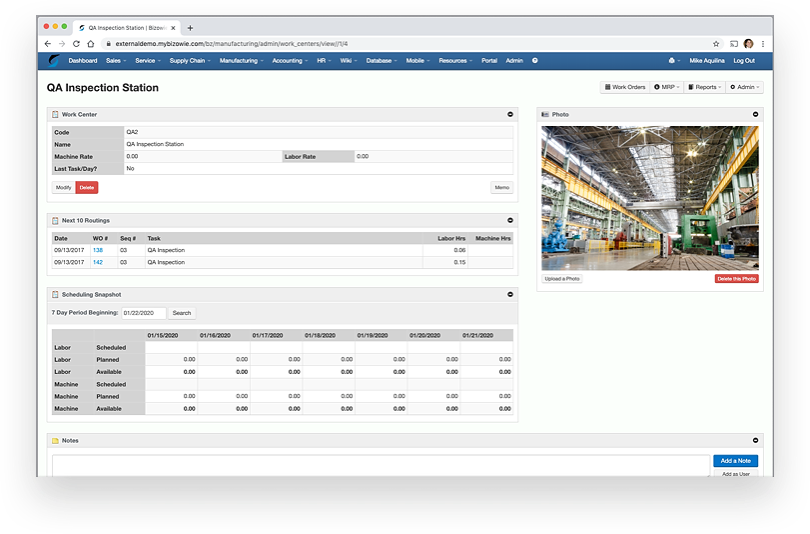
Work Centers & Capacity
Routings, labor and machine rates, and a scheduling snapshot for every work center.
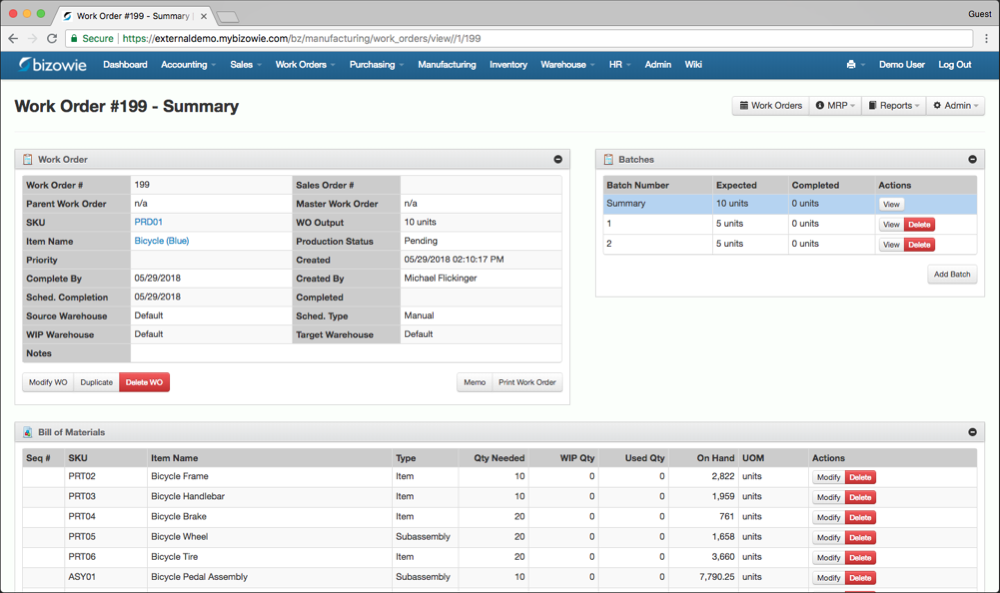
Work Orders & BOMs
Each work order carries its multi-level bill of materials, batches, and live on-hand quantities.
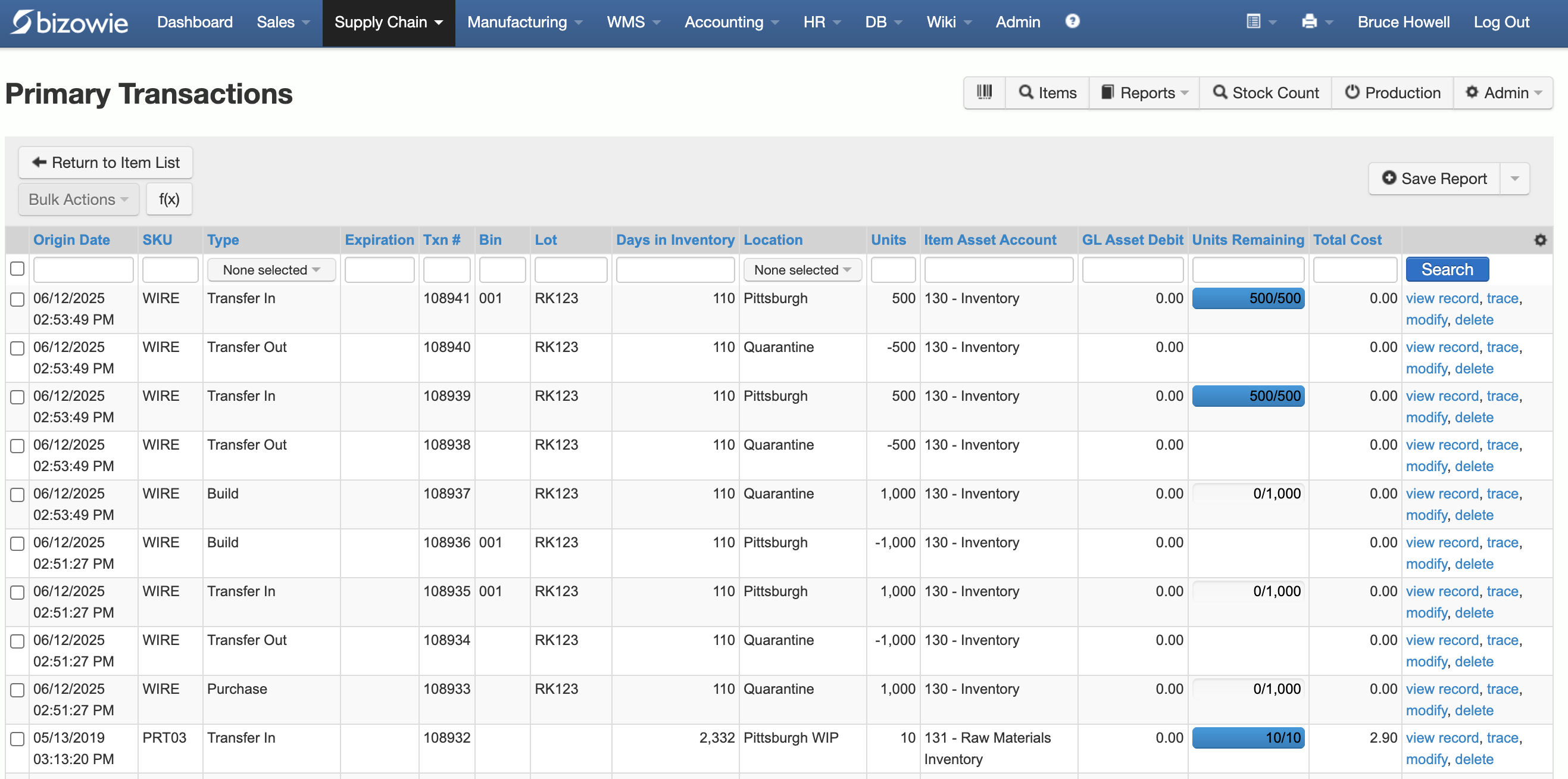
Inventory Transactions
Every receipt, transfer, build, and quarantine move by SKU, lot, bin, and location.
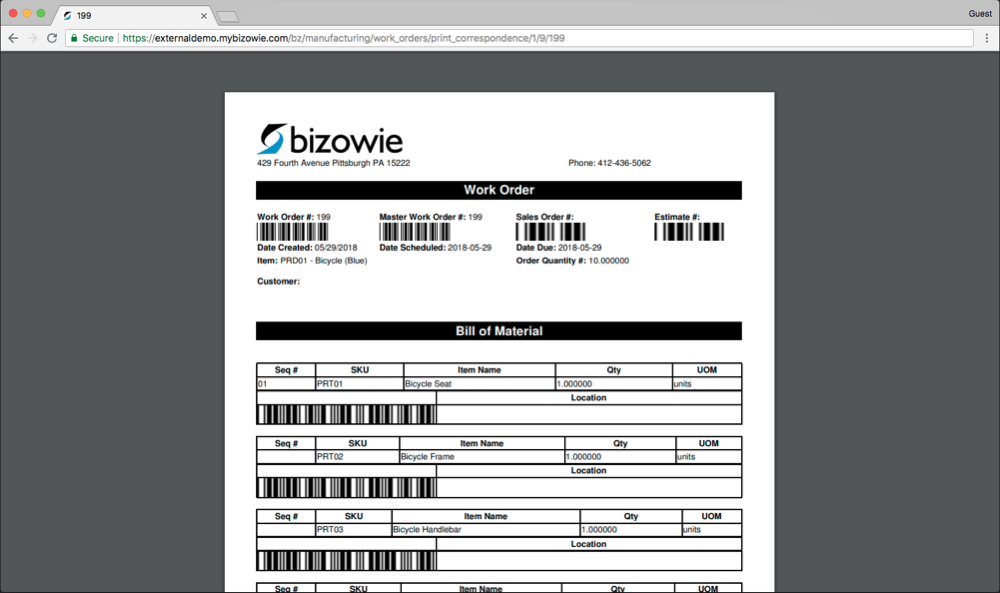
Barcoded Travelers
Printed work orders with barcoded BOM lines, so the shop floor scans instead of writing.
Overhead and Costing in Bizowie
In Bizowie, work centers carry labor and machine rates, and labor and machine time recorded on the shop floor are applied as costs to the work order, using actual or standard costs. Both direct and indirect job costs can be tracked, and profitability can be reviewed by job, product, product line, customer, and sales rep. Every production event updates inventory, costing, and the general ledger at the same time. See job costing in manufacturing ERP and WIP inventory.
“From our first contact all the way through to our implementation, Bizowie has been a first class organization to work with… We strongly recommend the Bizowie software program.”
Alan Seymour — President, Cleveland Electric Labs
Frequently Asked Questions
How do you calculate a manufacturing overhead rate?
Divide estimated annual manufacturing overhead by the estimated annual allocation base, such as machine hours or direct labor hours.
What costs are included in manufacturing overhead?
Indirect production labor, factory rent or depreciation, equipment depreciation and maintenance, production utilities, shop supplies, and factory insurance and taxes. Selling and administrative costs are not included.
What is under-applied overhead?
When actual overhead for the period is higher than the overhead applied to jobs using the predetermined rate.
Should we use one overhead rate or several?
Several work-center or departmental rates usually give more accurate costs when departments differ in how they use equipment and labor.
Bring Us a Job You Think You Underquoted
Tell us how you cost jobs today. We’ll show you how Bizowie would apply labor, machine, and overhead costs, and if we are not the right fit, we will tell you.
See how Bizowie would cost your jobs
Tell us a little about your operation and we’ll reply with an honest assessment of fit, not a sales pitch.
- A real person reviews your submission and replies within one business day.
- No automated email sequences.
- If we’re not the right fit, we’ll tell you.
Prefer to talk?
Call (888) 635-2517, Mon–Fri, 9 AM–5 PM Eastern