
Lot Traceability for Manufacturers: Forward, Backward, and Across BOM Levels
A customer calls with a failed part and a lot number. How long does it take you to find every other customer who received product made from the same material?
For manufacturers with real lot traceability, the answer is minutes. For everyone else, it is days of searching travelers, receiving logs, and shipping records, and often a wider recall than necessary because nobody can be sure which lots were affected.
This guide explains lot traceability for manufacturers: forward and backward tracing, lot genealogy across BOM levels, what has to be captured and when, mock recalls, and what your systems need.
What Is Lot Traceability?
Lot traceability is the ability to follow a specific batch of material, from the supplier lot you received, through every production step, to every finished lot and every customer who received it, and back again.
Forward and Backward Tracing
- Backward (trace back): from a finished lot or serial number to every component and raw material lot used, and their suppliers. Used to find the cause of a problem.
- Forward (trace forward): from a raw material or component lot to every finished lot it went into and every customer who received them. Used to contain a problem.
Lot Genealogy Across BOM Levels
In multi-level manufacturing, lots pass through subassemblies before reaching finished goods. A raw material lot becomes a subassembly lot, which becomes part of several finished lots. Lot genealogy is the full family tree: which lots were consumed to make which lots, at every level. Without it, tracing stops at the first level and the rest becomes guesswork. See BOM management.
What to Capture, and When
- At receiving: supplier lot, your internal lot if different, quantity, date, and any certificates.
- At issue to production: which lots were consumed by which work order, and how much of each.
- At completion: the lot or serial numbers produced, and the quantity of each.
- At inspection: results and holds recorded against the lot.
- At shipment: which lots went to which customer, on which order.
Barcode scanning at each step is what makes this practical. If operators have to write lot numbers by hand, gaps are inevitable.
Lots vs. Serial Numbers
A lot identifies a batch of identical items made or received together. A serial number identifies one unit. Many manufacturers use both: lots for materials and components, serial numbers for finished equipment. Serial traceability works the same way, with one unit at a time.
Who Requires Traceability
- Customers, especially in automotive, aerospace, medical, energy, and industrial markets
- Quality standards such as ISO 9001 and industry-specific standards. See ISO 9001 and manufacturing ERP.
- Regulations in food, medical devices, and other regulated industries. See ERP for food and beverage manufacturers.
- Your own risk management: limiting recalls to the lots actually affected
Mock Recalls
Test traceability before you need it. Pick a random raw material lot, run a full forward and backward trace, and time it. Record what was hard to find and fix those gaps. Many manufacturers run mock recalls at least once or twice a year, and their customers or auditors may require them.
See Bizowie in Action
Real screens from Bizowie, not mockups. Click any screen to enlarge.
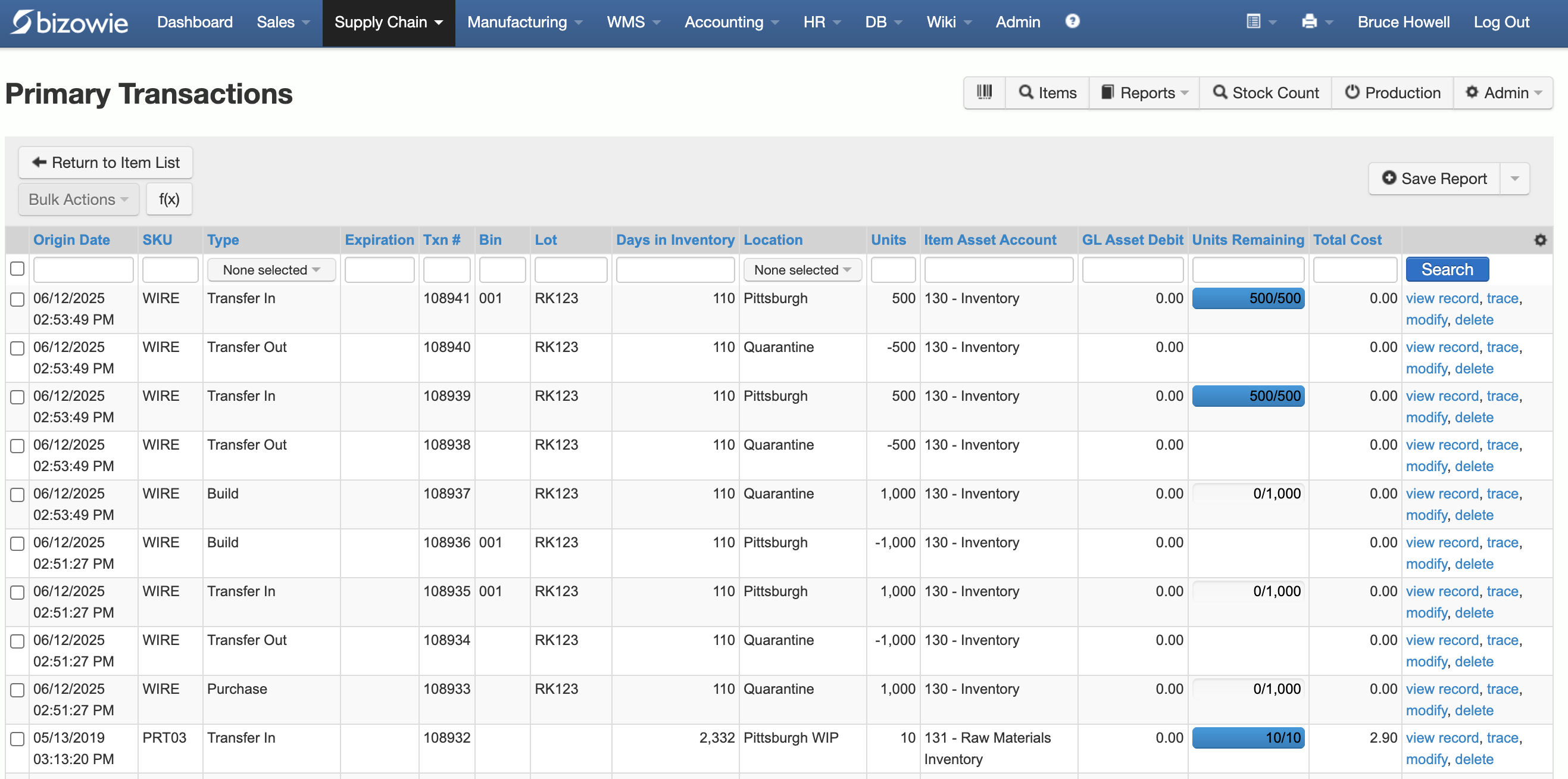
Inventory Transactions
Every receipt, transfer, build, and quarantine move by SKU, lot, bin, and location.
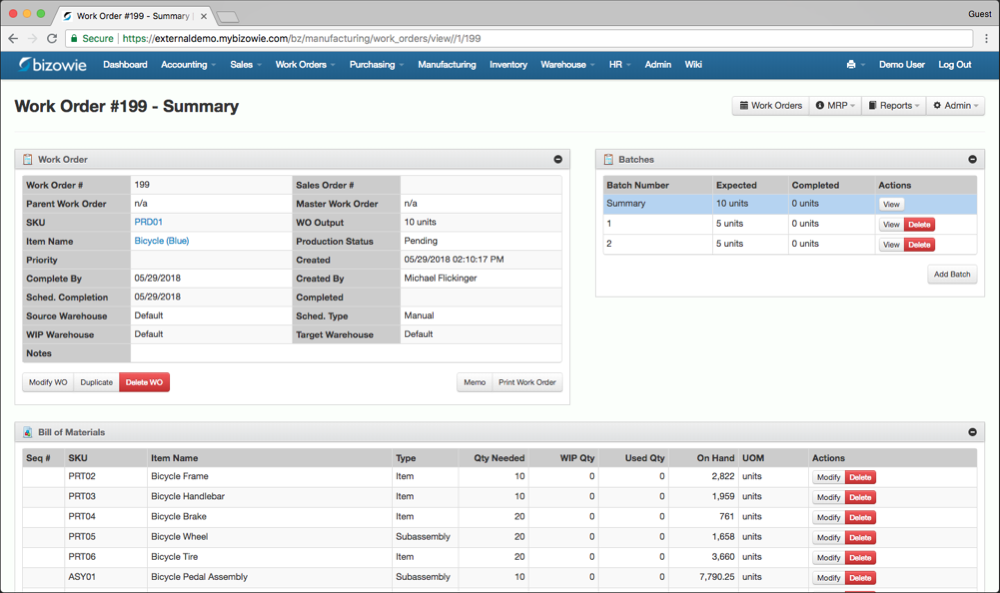
Work Orders & BOMs
Each work order carries its multi-level bill of materials, batches, and live on-hand quantities.
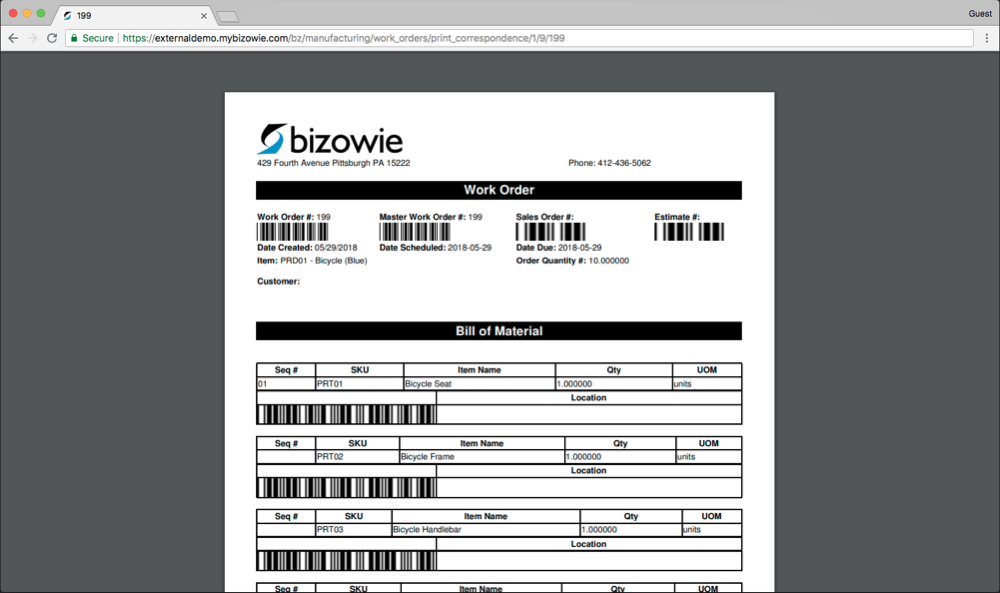
Barcoded Travelers
Printed work orders with barcoded BOM lines, so the shop floor scans instead of writing.
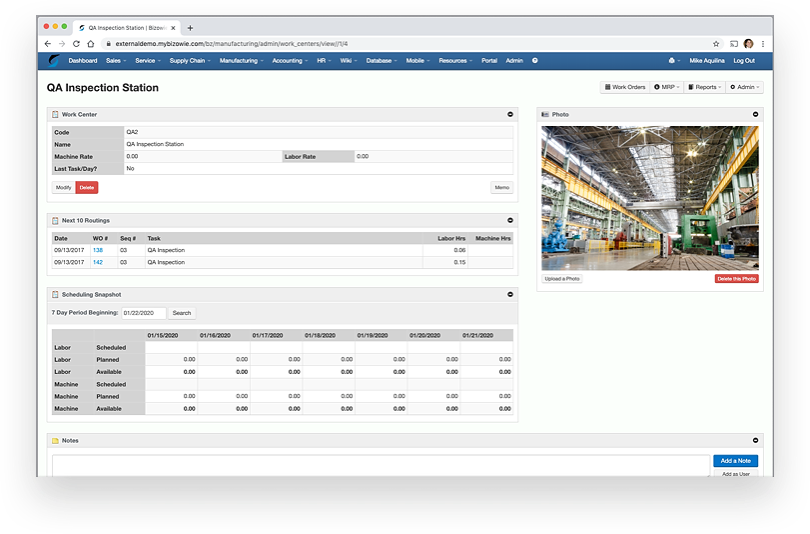
Work Centers & Capacity
Routings, labor and machine rates, and a scheduling snapshot for every work center.
Common Gaps
- Lots recorded at receiving but not at issue to production
- Backflushing that consumes “any” lot instead of the lot actually used
- Rework and scrap that break the chain
- Outside processing that loses lot identity. See outside processing.
- Lots split or combined without a record
- Shipping records that do not capture the lot sent
Lot Traceability in Bizowie
Bizowie maintains full end-to-end traceability for lotted and serialized items, from purchase order to sale. Lot numbers are recorded on received materials, barcoded picking ensures traceability as material is issued to production, and serial numbers, expiration dates, and other dependent data can be generated as product is completed. Quality data tracking is built into the platform, and inventory is tracked by warehouse, zone, bin, and LPN.
“From our first contact all the way through to our implementation, Bizowie has been a first class organization to work with… We strongly recommend the Bizowie software program.”
Alan Seymour — President, Cleveland Electric Labs
Frequently Asked Questions
What is lot traceability in manufacturing?
The ability to follow a batch of material from receipt through every production step to every customer who received it, and to trace any finished lot back to its materials and suppliers.
What is lot genealogy?
The complete record of which lots were consumed to produce which other lots, across every level of the bill of materials.
What is the difference between forward and backward traceability?
Backward traceability follows a finished lot back to its inputs to find a cause. Forward traceability follows an input lot forward to its finished lots and customers to contain a problem.
How often should manufacturers run a mock recall?
Many run them at least once or twice a year, and more often if customers, auditors, or regulations require it.
Run a Trace With Us
Bring us a lot number and tell us how you trace product today. We’ll show you how it would work in Bizowie, and if we are not the right fit, we will tell you.
See how Bizowie would trace your lots
Tell us a little about your operation and we’ll reply with an honest assessment of fit, not a sales pitch.
- A real person reviews your submission and replies within one business day.
- No automated email sequences.
- If we’re not the right fit, we’ll tell you.
Prefer to talk?
Call (888) 635-2517, Mon–Fri, 9 AM–5 PM Eastern