
Kitting for Distributors: How to Manage, Build, and Cost Kits
Kitting turns several items into one: a starter kit, a repair kit, a gift set, a bundled promotion, or a set of components prepared for a customer’s job.
For distributors, kits add value and margin. They also add complexity: the kit is sold as one item but stocked as many, components may be shared with other kits, and the cost of assembly labor and packaging has to land somewhere.
This guide explains the types of kits, how to manage kit inventory, how to cost kits, and what your system needs to support kitting without errors.
What Is Kitting?
Kitting is grouping individual items into a single unit that is sold, shipped, or used together. The kit has its own item number and price, and a list of components, effectively a simple bill of materials.
Pre-Built Kits vs. Kits Assembled to Order
| Pre-built (stocked) kits | Assembled to order | |
|---|---|---|
| When assembled | Ahead of demand, in batches | When an order is received |
| Inventory | Finished kits on the shelf | Components on the shelf |
| Speed to ship | Fastest | Slower, but flexible |
| Risk | Components tied up in kits that may not sell | Assembly capacity at peak times |
| Best for | High-volume, standard kits | Variable or customer-specific kits |
Some distributors also sell “virtual” kits or bundles, priced as one item but picked as separate components with no assembly step.
Managing Kit Inventory
When kits are built, component inventory goes down and kit inventory goes up, in one transaction. When kits are assembled to order, components are allocated and consumed by the order. Either way, the system must keep component and kit quantities accurate, especially when the same component is used in several kits and sold on its own.
Availability and Component Shortages
For assemble-to-order kits, availability depends on the scarcest component. If one component is short, the kit is short. The system should show kit availability based on components, flag shortages, and drive purchasing for components from kit demand, not just individual item demand. See reorder point and min-max.
Costing a Kit
A kit’s cost includes:
- The cost of every component
- Packaging, inserts, and labels
- Assembly labor
- Any overhead you allocate to kitting
Leaving out labor and packaging is the most common reason kits look more profitable than they are. See inventory costing methods.
Kitting in the Warehouse
- Set up a dedicated kitting area with component staging
- Issue components to kit builds by scan, so inventory stays accurate
- Label finished kits with their own barcode
- Build stocked kits in batches based on forecast, not one at a time
Returns and Traceability
Returned kits may be restocked as kits, broken back into components, or scrapped. Each path needs its own transaction. If components carry lot or serial numbers, record them at assembly so a kit can be traced if a component is recalled.
See Bizowie in Action
Real screens from Bizowie, not mockups. Click any screen to enlarge.
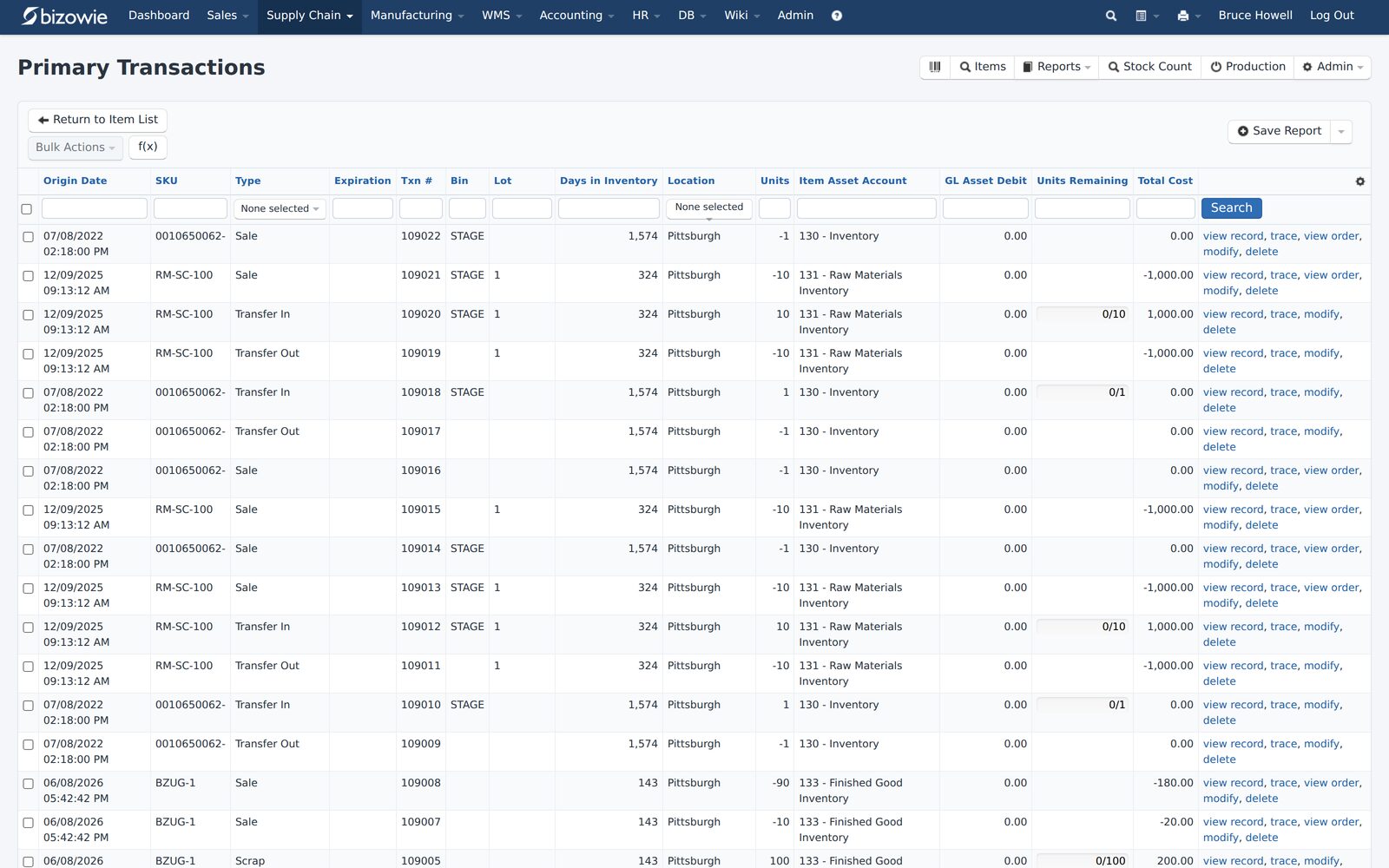
Every receipt, transfer, build, and quarantine move by SKU, lot, bin, and location.
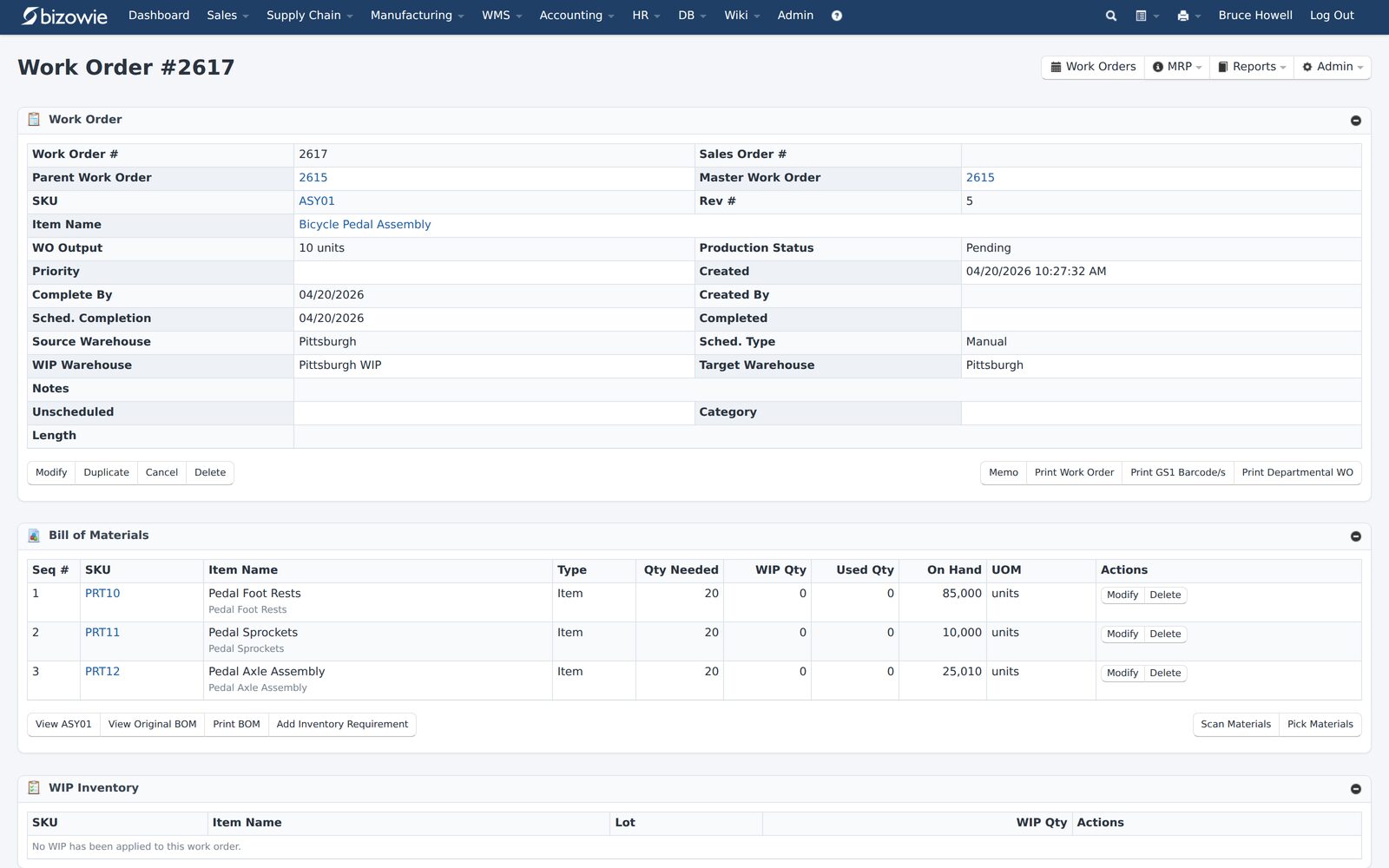
Each work order carries its multi-level bill of materials, batches, and live on-hand quantities.
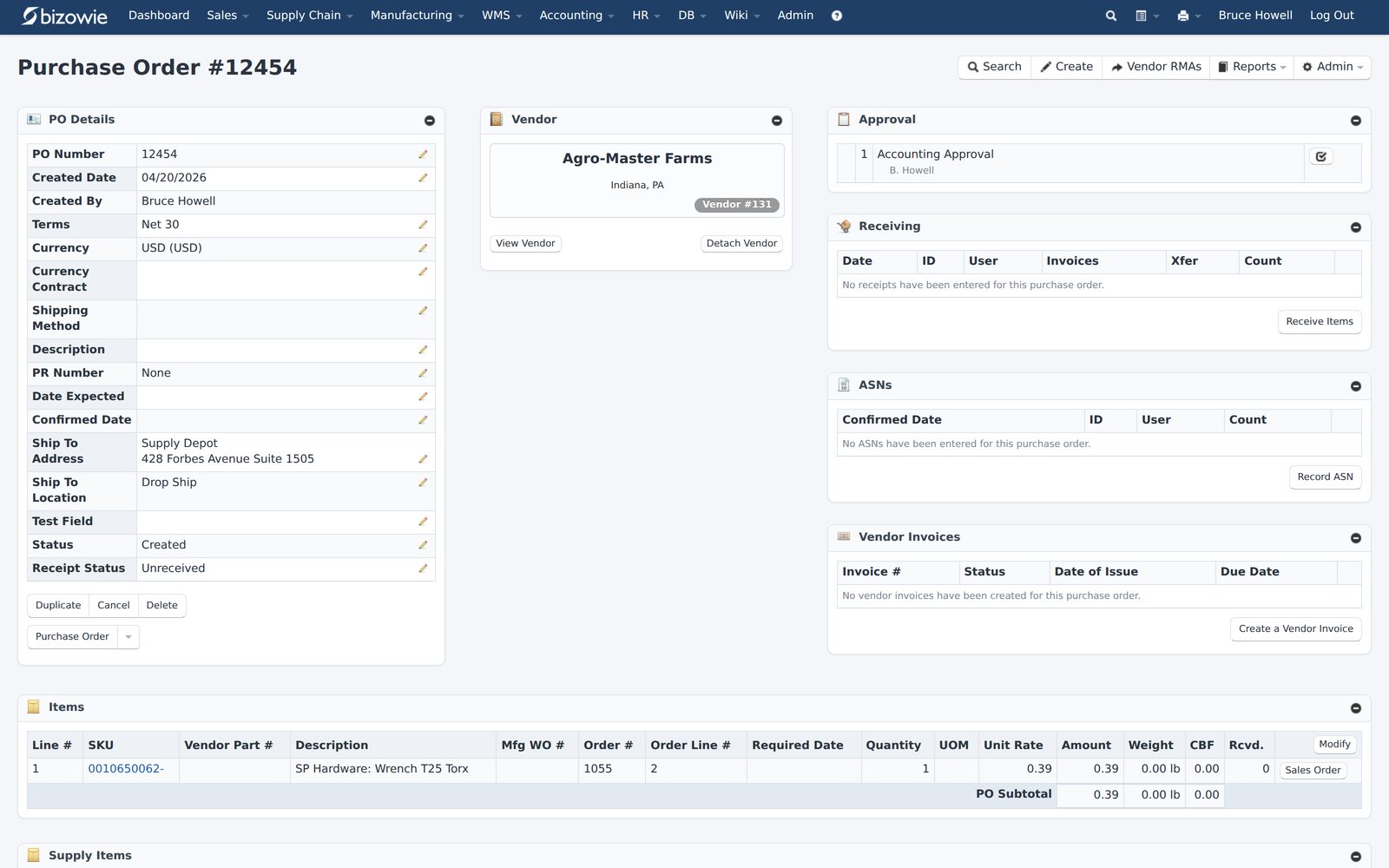
Purchase orders with approvals, receiving, ASNs, and vendor invoices on one screen.
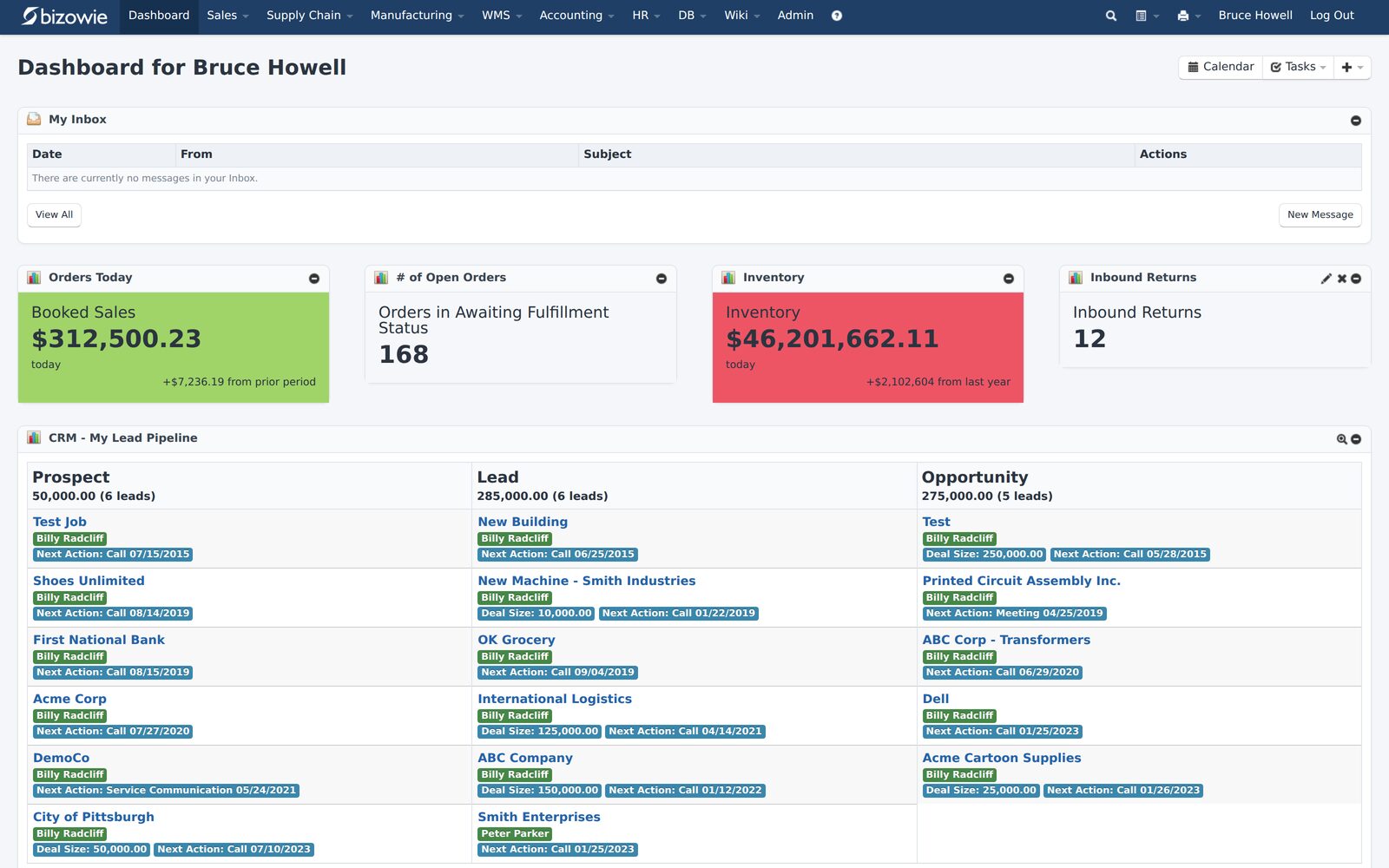
Bookings, open orders awaiting fulfillment, and inventory value at a glance.
Kitting in Bizowie
Bizowie supports assembly and value-add operations alongside distribution, with multi-level bills of material, work orders created automatically or manually from sales activity and planned demand, and component picking that maintains full traceability for lotted and serialized items. Labor time can be recorded and applied as a direct cost to finished goods, and inventory, warehouse, and financial records all update in real time as kits are built and sold.
“We have seen immediate economic benefit for our business in terms of productivity from our warehouse staff, eliminated processing errors, and better stock control.”
Julius Hart — Managing Director, LensesOnline
Frequently Asked Questions
What is kitting in distribution?
Grouping several items into a single sellable unit with its own item number, price, and component list.
What is the difference between kitting and assembly?
Kitting groups finished items together, often in a package, without changing them. Assembly combines components into a new product. In practice, many systems manage both with a bill of materials.
How do you cost a kit?
Add the cost of all components, packaging, and assembly labor, plus any overhead allocated to kitting.
Bring Us Your Best-Selling Kit
Tell us how you build and sell kits today. We’ll show you how it would work in Bizowie, and if we are not the right fit, we will tell you.
See how Bizowie would manage your kits
Tell us a little about your operation and we’ll reply with an honest assessment of fit, not a sales pitch.
- A real person reviews your submission and replies within one business day.
- No automated email sequences.
- If we’re not the right fit, we’ll tell you.
Prefer to talk?
Call (888) 635-2517, Mon–Fri, 9 AM–5 PM Eastern