

Backflushing in Manufacturing: How It Works and When to Use It
Backflushing is a way of recording material consumption after the fact. Instead of issuing each component to a work order before production starts, the system waits until production is reported and then deducts the components the bill of materials says should have been used.
It removes a large number of inventory transactions, which is why repetitive and high-volume manufacturers like it. It also assumes that what was actually used matches the bill of materials. When that assumption is wrong, backflushing quietly builds errors into inventory, costing, and lot records.
This guide explains how backflushing works, shows the calculation with a worked example, compares it with discrete material issue, and covers when it fits, when it does not, and what it takes to keep backflushed inventory accurate.
What Is Backflushing?
Backflushing is the automatic deduction of component inventory based on the quantity of a parent item reported as produced. The system multiplies the quantity completed by each component’s quantity on the bill of materials and relieves that amount from inventory, with no separate pick or issue transaction.
The name comes from the direction of the transaction. A normal issue flows forward: material is issued, then production happens. A backflush works backward from the finished quantity to the material that must have gone into it.
The Backflush Calculation
Backflush quantity = Quantity reported complete × Component quantity per unit on the BOM
If the bill of materials carries a scrap factor for the component, the standard quantity includes it:
Backflush quantity = Quantity reported complete × Quantity per unit ÷ (1 − Scrap factor)
Some systems apply the scrap factor as a simple multiplier, quantity × (1 + scrap factor), which gives a slightly smaller number. Know which method your system uses.
Worked Example
A work order for 200 control boxes is reported complete. The bill of materials per box is:
- 1 enclosure
- 2 mounting brackets
- 8 screws
- 1.5 feet of wire, with a 4% scrap factor
| Component | Per unit | Calculation | Backflushed |
|---|---|---|---|
| Enclosure | 1 | 200 × 1 | 200 |
| Mounting bracket | 2 | 200 × 2 | 400 |
| Screw | 8 | 200 × 8 | 1,600 |
| Wire (feet) | 1.5 | 200 × 1.5 ÷ (1 − 0.04) | 312.5 |
One completion transaction replaced four issue transactions. Across hundreds of work orders and dozens of components, that is a real saving in labor.
Now the catch. Suppose the floor actually damaged 12 brackets during assembly and used 412. The backflush relieved 400. Unless someone reports the 12 as scrap, the system shows 12 brackets on hand that do not exist. The work order is also undercosted by the value of 12 brackets. Repeat that every day and the next shortage will come as a surprise.
Backflushing vs. Discrete Issue
| Backflushing | Discrete issue | |
|---|---|---|
| When inventory is relieved | When production is reported | When material is picked or issued to the work order |
| Quantity relieved | Standard quantity from the BOM | Actual quantity issued |
| Transactions | Few | Many |
| Inventory between issue and completion | Overstated: material on the floor still shows in stock | Shown as work in process |
| Usage variances | Hidden unless scrap is reported separately | Visible on each work order |
| Lot and serial traceability | Weak unless the lot is confirmed at completion | Strong: the lot issued is the lot recorded |
| Best fit | Repetitive, short-cycle production with stable BOMs | Job shops, long cycles, high-value or lot-controlled material |
Types of Backflushing
- Completion backflush: all components are relieved when the finished item is reported complete. Simplest, and the longest delay between use and deduction.
- Operation backflush: components are tied to routing operations and relieved as each operation is reported. This shortens the delay on long routings. See routings in manufacturing.
- Labor backflush: standard labor and machine hours are charged from the routing when production is reported, in place of actual time reporting. It saves time entry and hides efficiency problems in the same way material backflushing hides usage problems.
- Mixed: low-value, high-volume parts are backflushed while expensive or lot-controlled parts are issued discretely. This is the most common arrangement in practice.
When Backflushing Works, and When It Does Not
Backflushing fits when:
- Bills of materials are accurate and stable
- Production cycle times are short, so the delay in relieving inventory is hours, not weeks
- Usage is predictable and scrap is low or consistently reported
- Components are low in value and used in high volume, such as fasteners, labels, and packaging
- Material is stored at the point of use
It is a poor fit when:
- Components are lot- or serial-controlled and you must prove which lot went into which product. See lot traceability for manufacturers.
- Jobs stay open for weeks, leaving inventory overstated for the whole period
- Usage varies from unit to unit, as with yield-dependent or cut-to-fit material
- Substitutions are common and not recorded
- Components are expensive enough that every unit should be accounted for
- Bills of materials are known to be wrong
What Backflushing Requires
- Accurate bills of materials. Every error in the BOM is repeated on every completion. See bill of materials management.
- Scrap reporting. Anything used beyond standard has to be reported as a separate transaction, or inventory drifts.
- Prompt production reporting. Completions entered a day late leave inventory wrong for a day, and MRP plans against the wrong balance.
- The right location. The system has to relieve the bin the material was actually used from. Backflushing from the wrong location creates a negative balance in one bin and a phantom balance in another.
- Substitution discipline. If an alternate part is used, it must be recorded before the backflush runs.
- Cycle counting of backflushed parts. Regular counts catch drift before it causes a shortage.
- A negative-inventory review. Negative balances are the first visible symptom that reporting and reality have separated.
Backflush Costing
Backflush costing is the accounting counterpart. Instead of tracking cost through raw materials, work in process, and finished goods as each step happens, the entries are made at a trigger point, usually completion or sale, using standard costs. It suits lean plants where work in process is small and short-lived.
The trade-off is the same as on the inventory side. With few entries there is little detail, so work in process is not visible in the ledger between trigger points, and differences from standard are found only at period-end. Plants with long cycle times or significant work in process usually need conventional costing. See work in process inventory and manufacturing cost variances.
Common Mistakes
- Turning on backflushing to save transactions before the bills of materials are accurate
- Not reporting scrap, so every loss stays in the on-hand balance
- Backflushing lot-controlled components against whichever lot the system picks
- Reporting production late or in batches at the end of the shift
- Backflushing from a stockroom location when the material sits at the line
- Allowing negative inventory and never reviewing it
- Backflushing labor and then wondering why efficiency never changes
- Using backflushing on long-running jobs, which overstates stock for weeks
See Bizowie in Action
Real screens from Bizowie, not mockups. Click any screen to enlarge.
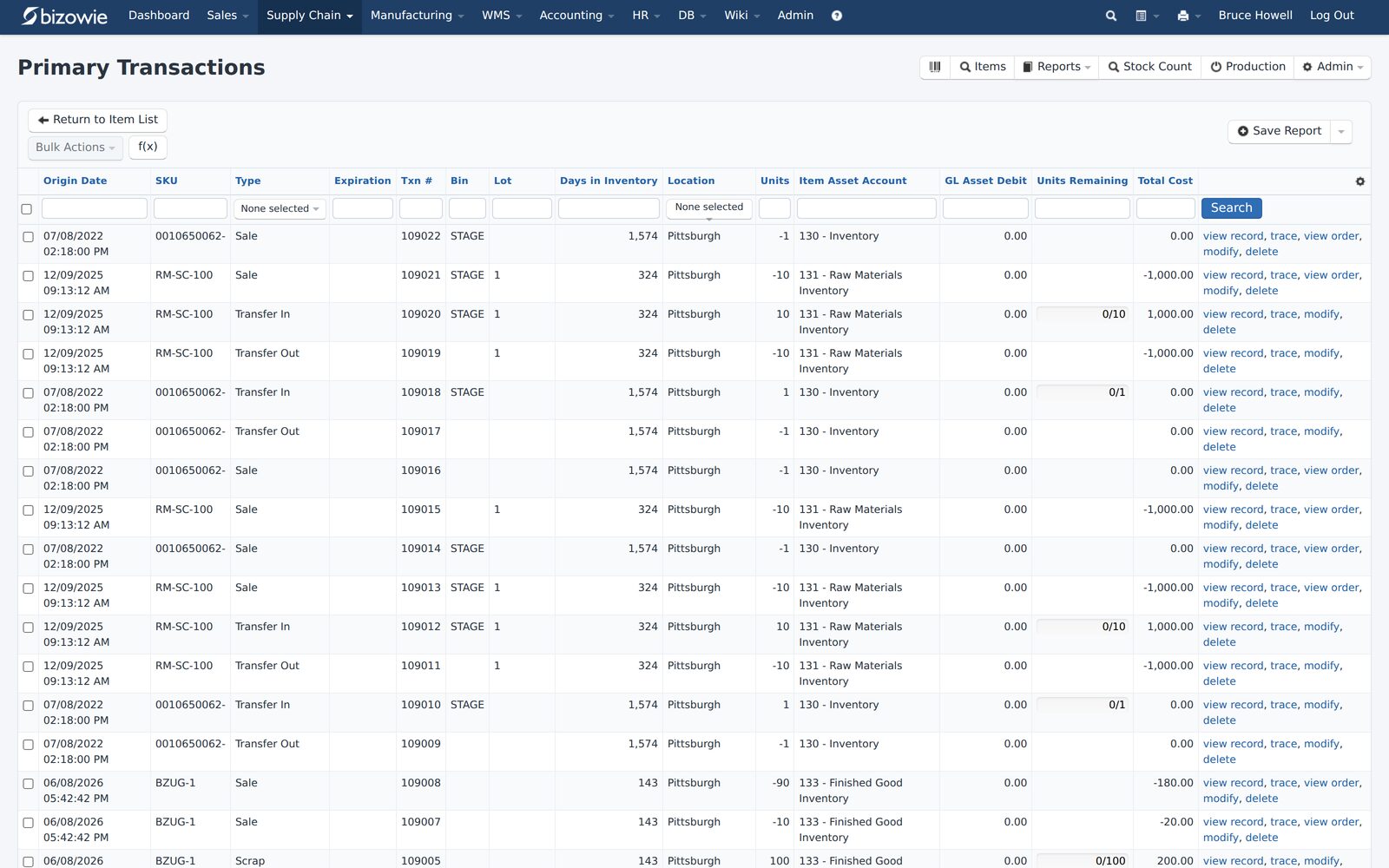
Every receipt, transfer, build, and quarantine move by SKU, lot, bin, and location.
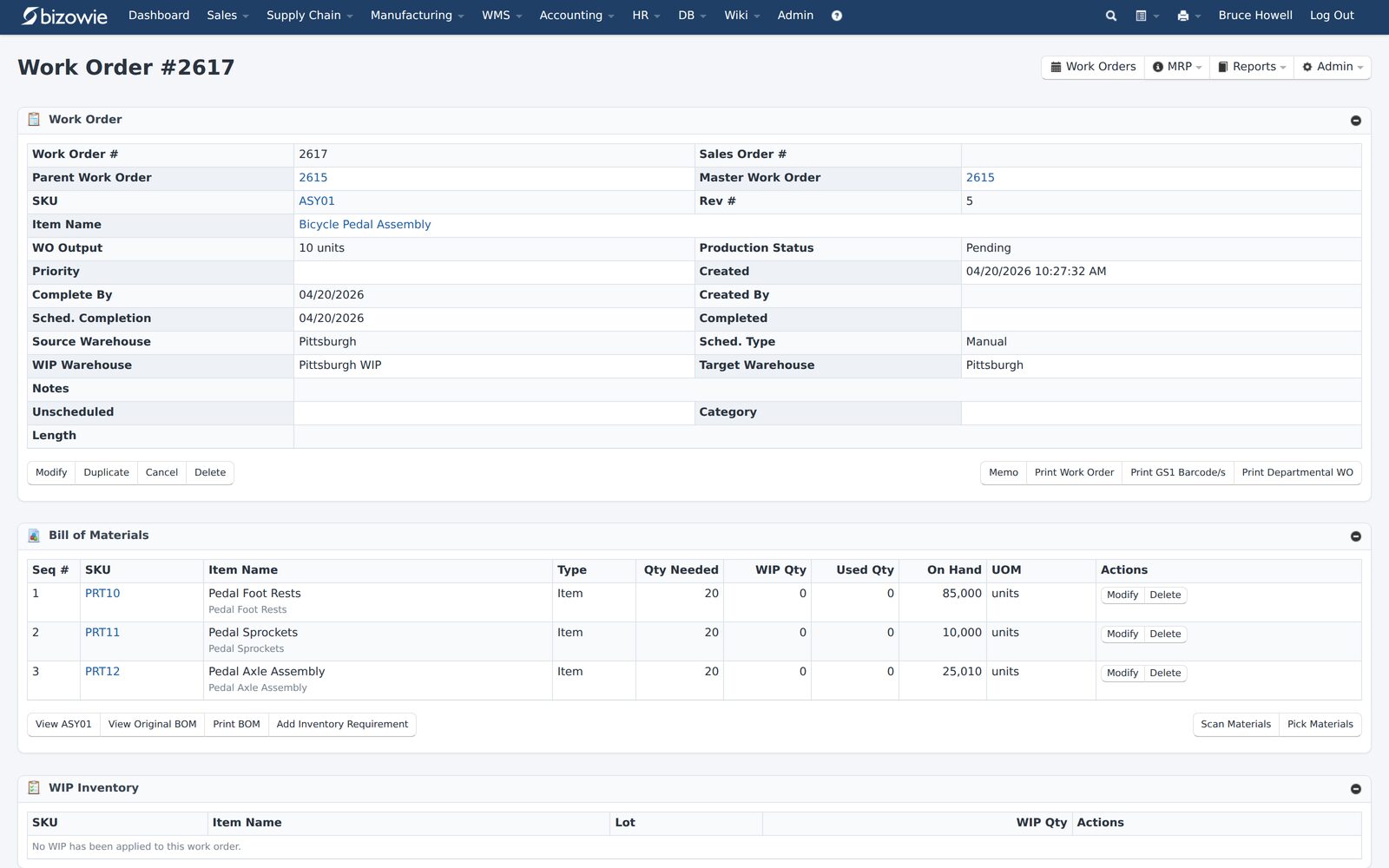
Each work order carries its multi-level bill of materials, batches, and live on-hand quantities.
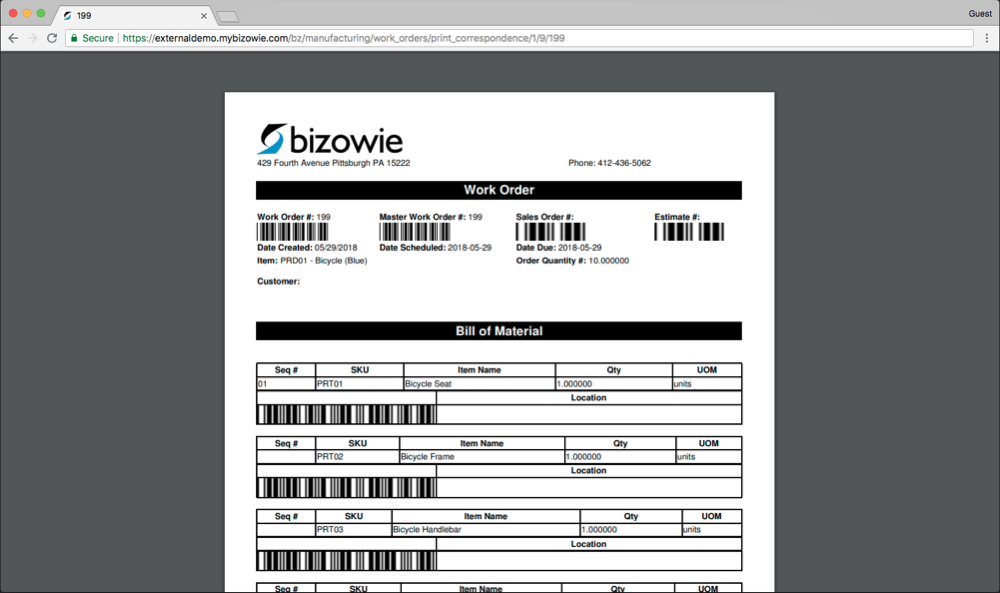
Printed work orders with barcoded BOM lines, so the shop floor scans instead of writing.
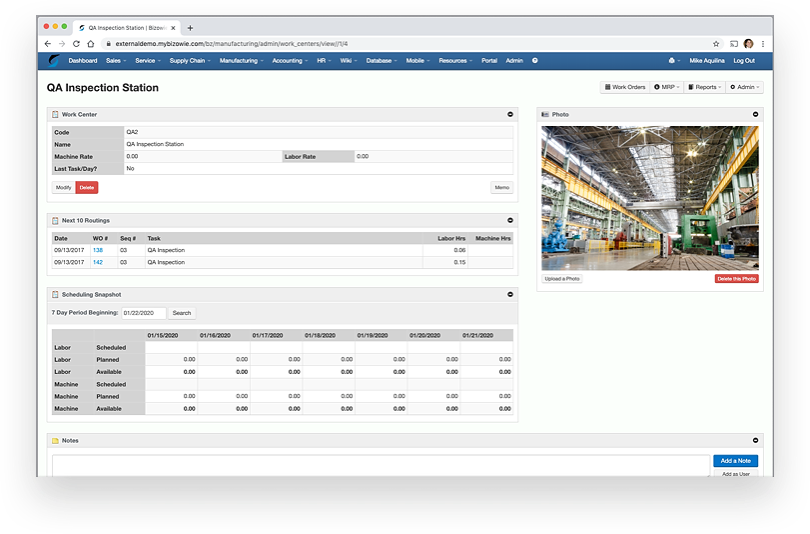
Routings, labor and machine rates, and a scheduling snapshot for every work center.
Recording Material Usage in Bizowie
In Bizowie, inventory is picked to work orders with barcoded picking, work in process is tracked, and production data is collected in real time from computers, tablets, or touchscreens on the shop floor. Labor and machine time are recorded and applied as costs, and every production event updates inventory, costing, and the general ledger at the same time. The platform provides end-to-end traceability, with inventory tracked by warehouse, zone, bin, and LPN. For the wider evaluation, see our manufacturing ERP software buyer’s guide and our guide to manufacturing inventory management.
“From our first contact all the way through to our implementation, Bizowie has been a first class organization to work with… We strongly recommend the Bizowie software program.”
Alan Seymour — President, Cleveland Electric Labs
Frequently Asked Questions
What is backflushing in manufacturing?
Backflushing is the automatic deduction of components from inventory when production is reported, based on the quantities on the bill of materials, instead of issuing each component to the work order beforehand.
How is the backflush quantity calculated?
Multiply the quantity reported complete by the component quantity per unit on the bill of materials, adjusted for any scrap factor on the component.
What is the difference between backflushing and discrete issue?
Discrete issue records the actual quantity when material is picked for a work order. Backflushing records the standard quantity after production is reported. Discrete issue is more accurate; backflushing needs fewer transactions.
Does backflushing cause negative inventory?
It can. If production is reported before receipts or transfers are entered, or the system relieves a different location from the one actually used, the backflush can drive a balance below zero.
Can you backflush lot-controlled items?
Only with care. The lot actually consumed has to be confirmed when production is reported. If the system simply relieves the oldest lot, the traceability record will not match what happened on the floor.
Bring Us a Part That Is Never Where the System Says
Tell us how you issue material to production today. We’ll show you how Bizowie records picks, production, and inventory in real time, and if we are not the right fit, we will tell you.
See how Bizowie would track your material
Tell us a little about your operation and we’ll reply with an honest assessment of fit, not a sales pitch.
- A real person reviews your submission and replies within one business day.
- No automated email sequences.
- If we’re not the right fit, we’ll tell you.
Prefer to talk?
Call (888) 635-2517, Mon–Fri, 9 AM–5 PM Eastern