
ERP for Engineer-to-Order and Industrial Equipment Manufacturers
Engineer-to-order manufacturers build things that have not been designed yet when the order is signed.
Industrial equipment, custom machinery, material handling systems, and specialized enclosures often start as a quote based on a concept, become an engineering project, and then turn into a long build with purchased components, fabricated parts, and assembly. Jobs can run for months, change along the way, and carry significant cost and risk.
This guide explains what engineer-to-order (ETO) and industrial equipment manufacturers need from an ERP system and the scenarios to test before choosing one.
What Makes Engineer-to-Order Different
In make-to-stock and make-to-order manufacturing, the product is already designed. In engineer-to-order, engineering is part of the order: the BOM and routing are created, or heavily modified, for each customer. That changes planning, purchasing, and costing. See make-to-order vs. make-to-stock vs. engineer-to-order.
Quoting Before the Design Exists
ETO quotes are built from experience: similar past jobs, estimated engineering hours, material and purchased-component estimates, outside services, and contingency. The best systems let estimators start from a past job or a template, and turn a won quote into a job, with part numbers and a sales order, without retyping.
Engineering Release and Evolving BOMs
Engineering rarely releases a complete design at once. Long-lead items are released first so purchasing can start, then subassemblies, then the rest. The ERP has to plan and buy from a partial BOM, track what has been released, and control changes once purchasing and production are under way. See engineering change management and BOM management.
Long-Lead Procurement
Motors, drives, controls, castings, and custom components can take months. Purchasing has to start from early engineering releases, track every purchased item against the job it belongs to, and alert the project team when a supplier date threatens the ship date.
Project Visibility and Milestones
Customers want progress updates; management wants to know which projects are at risk. That requires one view of each job: engineering status, purchased items and their dates, work orders and their progress, outside processing, and cost to date. See production scheduling.
Job Costing on Long Projects
On a long project, waiting until the end to find out whether it made money is too late. Costs should accumulate on the job as they happen, including engineering hours, materials, labor, machine time, and outside services, so estimated versus actual can be reviewed at every milestone. See job costing in manufacturing ERP and work in process inventory.
Spare Parts and Service After Delivery
Equipment builders often sell spare parts and service for years. Knowing exactly what was built for each customer, the as-built BOM and serial numbers, makes spare parts quoting and service far faster.
Scenarios to Test Before You Buy
- Quote a custom machine from a similar past job, adjust it, and convert the won quote into a job and sales order.
- Release long-lead items before the full design is complete, and buy them against the job.
- A supplier pushes a motor date by three weeks. Show the effect on the project.
- Release an engineering change mid-build and control what happens to parts already purchased.
- Review estimated versus actual cost at the halfway point of a project.
- A year later, quote spare parts from the as-built record for a serial number.
See Bizowie in Action
Real screens from Bizowie, not mockups. Click any screen to enlarge.
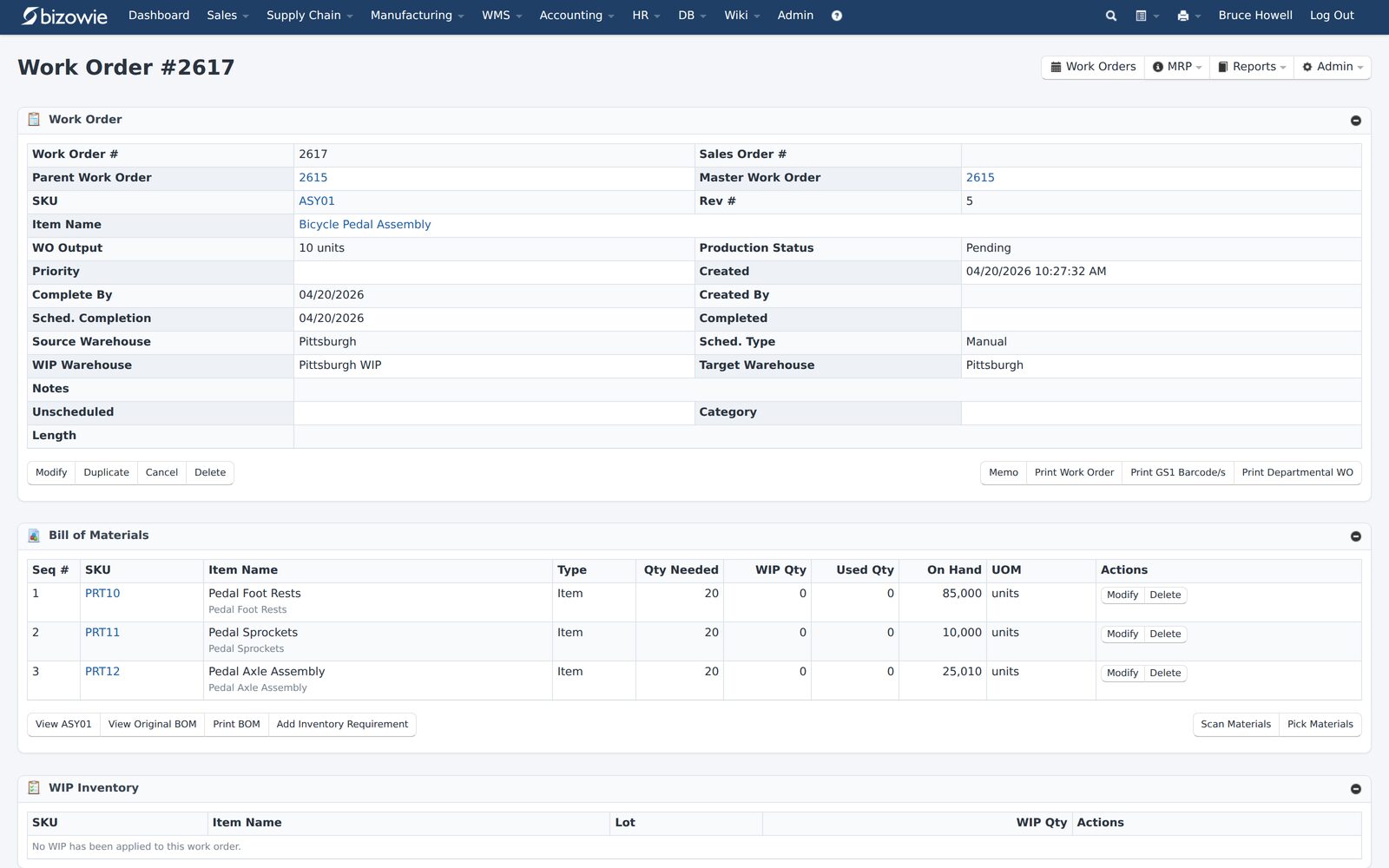
Each work order carries its multi-level bill of materials, batches, and live on-hand quantities.
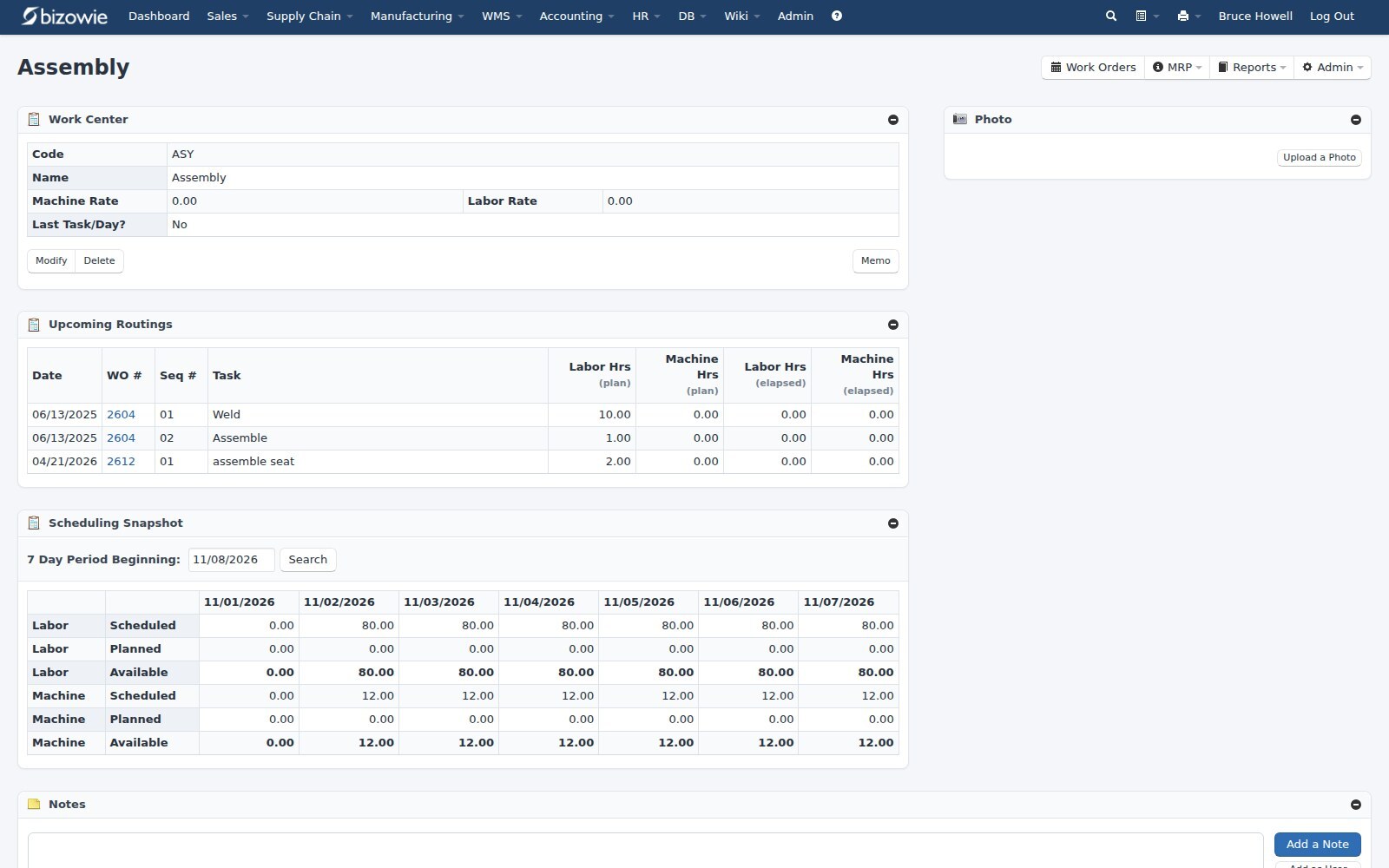
Routings, labor and machine rates, and a scheduling snapshot for every work center.
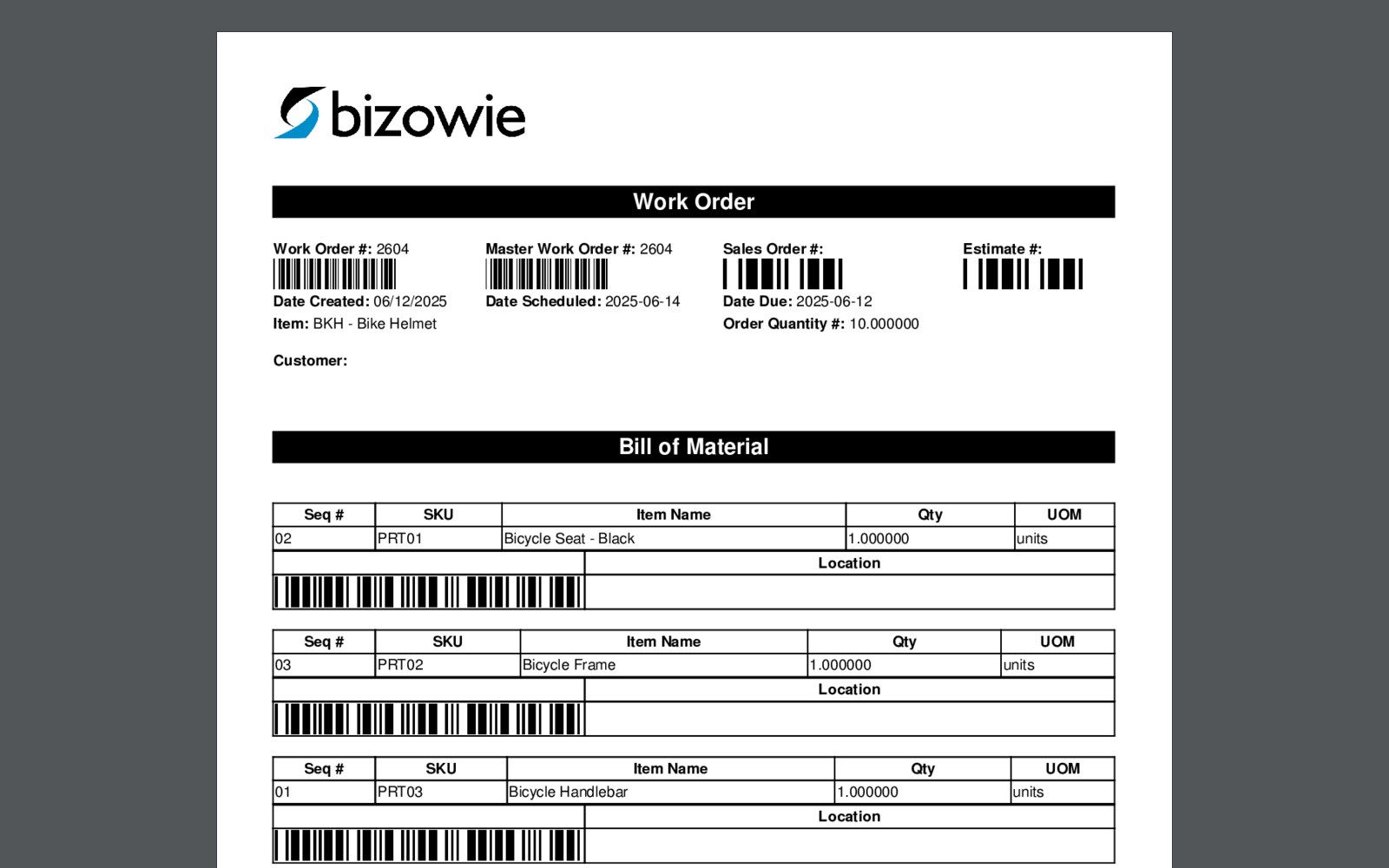
Printed work orders with barcoded BOM lines, so the shop floor scans instead of writing.
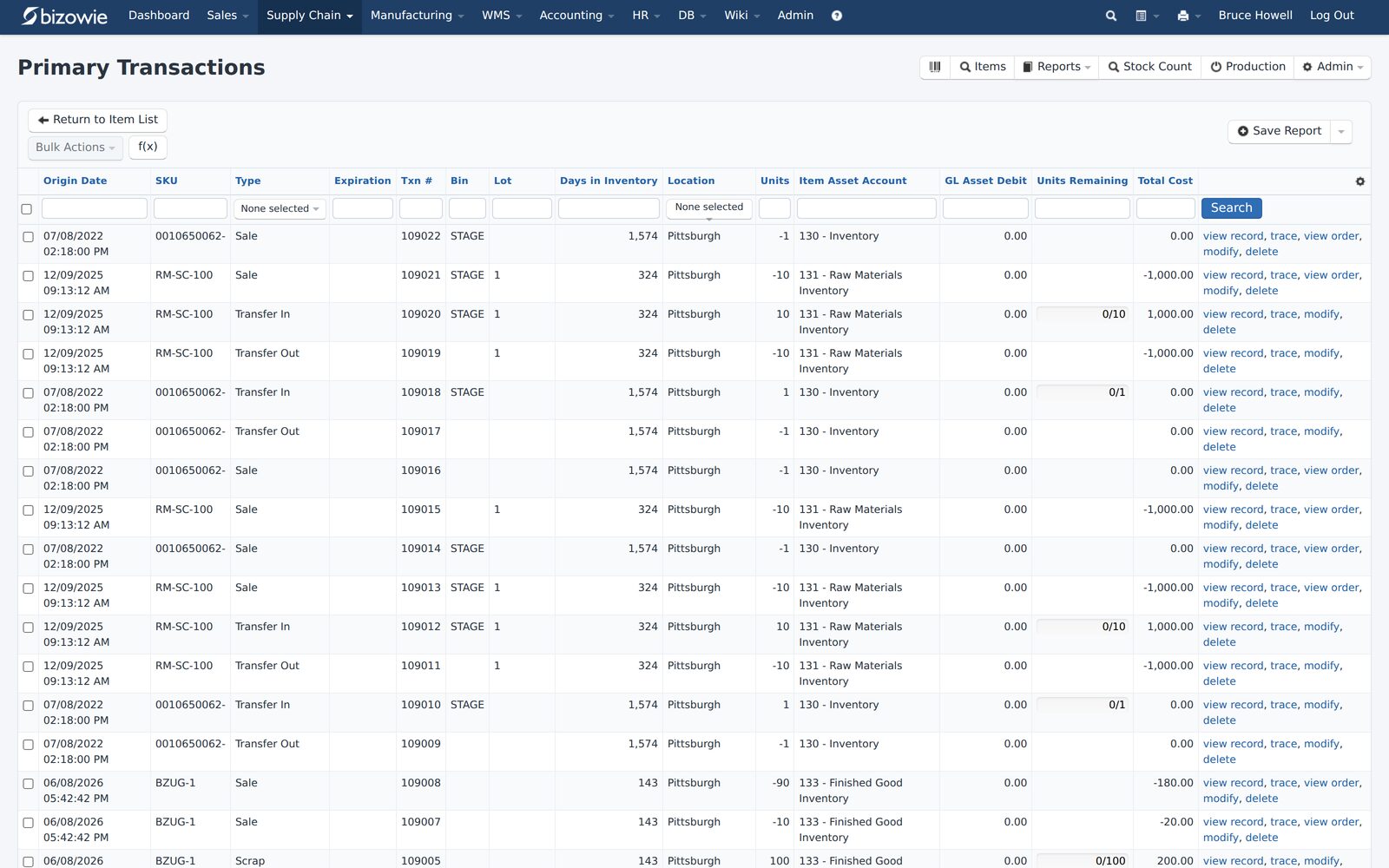
Every receipt, transfer, build, and quarantine move by SKU, lot, bin, and location.
How Bizowie Supports ETO Manufacturers
- Engineer-to-order, make-to-order, make-to-stock, and assembly workflows in any combination, so standard products and custom projects can run side by side.
- Engineering estimates from labor, materials, third-party services, and fees, with standard and custom markups, then part numbers and a sales order when the deal closes.
- True multi-level BOMs with automatic creation of dependent work orders for complex subassemblies.
- Document management with controlled drawings and ECO/ECR workflows.
- Scheduling by labor and machine capacity, with forward and backward scheduling by priority.
- Third-party processes managed within the work order.
- Job costing with labor and machine time applied as direct costs, using actual or standard costs.
- Serial number generation and traceability through production.
“From our first contact all the way through to our implementation, Bizowie has been a first class organization to work with… We strongly recommend the Bizowie software program.”
Alan Seymour — President, Cleveland Electric Labs
Frequently Asked Questions
What is engineer-to-order manufacturing?
A production approach in which each product is designed or significantly engineered for a specific customer order, so engineering, purchasing, and production all happen after the order is received.
What should ETO manufacturers look for in an ERP?
Estimating from past jobs, planning and purchasing from partial engineering releases, controlled engineering changes, project visibility, job costing as work happens, and as-built records for service.
Can one ERP handle ETO and standard products?
Some can. Mixed-mode support lets custom projects and stocked standard products follow different workflows in the same system.
Bring Us a Real Project
Tell us how you quote, engineer, and build today. We’ll show you how Bizowie would handle a real project, and if we are not the right fit, we will tell you.
See how Bizowie fits your engineer-to-order operation
Tell us a little about your operation and we’ll reply with an honest assessment of fit, not a sales pitch.
- A real person reviews your submission and replies within one business day.
- No automated email sequences.
- If we’re not the right fit, we’ll tell you.
Prefer to talk?
Call (888) 635-2517, Mon–Fri, 9 AM–5 PM Eastern