
Replacing an AS/400 (IBM i) ERP: Options, Data, and a Plan
Plenty of distributors and manufacturers still run their business on an IBM midrange system: the platform people still call the AS/400, now IBM i on IBM Power servers.
It has earned its reputation. These systems are stable, fast, and often run for decades with little downtime. Many run packaged ERP built for the platform; many more run custom RPG programs written and refined by the company’s own staff over thirty years.
The challenge is rarely the platform’s reliability. It is everything around it: fewer people who know RPG, green-screen interfaces new employees struggle with, integrations that are hard to build, and reporting that still depends on IT. This guide explains when to replace an AS/400 ERP, the options, how to get the data out, and how to manage the move.
AS/400, iSeries, IBM i: What We’re Talking About
IBM introduced the AS/400 in 1988. The platform has been renamed several times, through iSeries and System i, and today runs the IBM i operating system on IBM Power servers. People still call the whole family “the AS/400,” and its character-based screens “green screens.” Business applications are commonly written in RPG or COBOL, with data in DB2 for i. Some companies run packaged ERP built for the platform, such as JD Edwards World or Infor’s LX (formerly BPCS); many run software developed in-house.
What the Platform Does Well
Be fair to the system you are replacing:
- Reliability: long uptime and few surprises
- Speed: experienced users fly through green-screen order entry with the keyboard
- Integrated database: data and programs live together on the same platform
- Fit: custom applications often match the business closely, because they were built for it
Those strengths become requirements for the replacement, especially fast order entry for experienced users.
Why Companies Move Off It
- Shrinking talent: fewer developers know RPG, and the people who wrote the system are retiring
- Usability: new hires expect modern screens, mobile access, and self-service reporting
- Integration: ecommerce, EDI, carriers, portals, and APIs are harder to connect
- Warehouse and mobile: barcode-driven warehouse work and mobile devices often need add-ons
- Reporting: many reports still require a programmer or a data export to spreadsheets
- Cost and risk: hardware refreshes, software licensing, support contracts, and dependence on a few people
Your Options: Modernize, Rehost, or Replace
| Option | What it means | Trade-offs |
|---|---|---|
| Modernize in place | Add web or graphical front ends, APIs, and reporting tools on top of the existing system | Faster and cheaper at first, but the core code, data model, and talent dependency remain |
| Rehost | Move the IBM i workload to a hosted or cloud provider | Removes hardware ownership, but the applications stay the same |
| Replace | Move to a modern ERP platform | The largest project, but it removes the talent, integration, and usability constraints for good |
If the main concern is hardware, rehosting can help. If the concern is the business software itself, such as people, integration, usability, and growth, replacement is usually the long-term answer.
Getting Data Out of DB2 for i
Data on IBM i can be extracted through standard database access, but the structure often needs interpretation:
- Fixed-length fields, packed decimals, and date formats need converting
- Codes and flags that only make sense with knowledge of the programs
- Data that has drifted in meaning over decades
- Master data that needs cleanup: duplicate customers, inactive items, inconsistent units
Bring balances, open transactions, and clean master data, and keep detailed history accessible. See data migration: what to bring, archive, and leave behind.
Capturing Decades of Business Logic
The most valuable part of an AS/400 system is often the logic buried in the RPG: pricing rules, allocation priorities, credit checks, and special cases. Before the people who know it leave:
- Interview developers and power users about what each critical program does and why
- List every batch job, report, and interface that runs
- Turn that list into requirements and test scenarios for the new system
See replacing a homegrown or custom system.
Moving Users From Green Screen
Experienced users can be the strongest resisters, because they are genuinely fast on the old screens. Show them keyboard-friendly workflows, involve them in testing, train them with their own transactions, and expect a short dip in speed after go-live. See overcoming resistance to new systems.
See Bizowie in Action
Real screens from Bizowie, not mockups. Click any screen to enlarge.
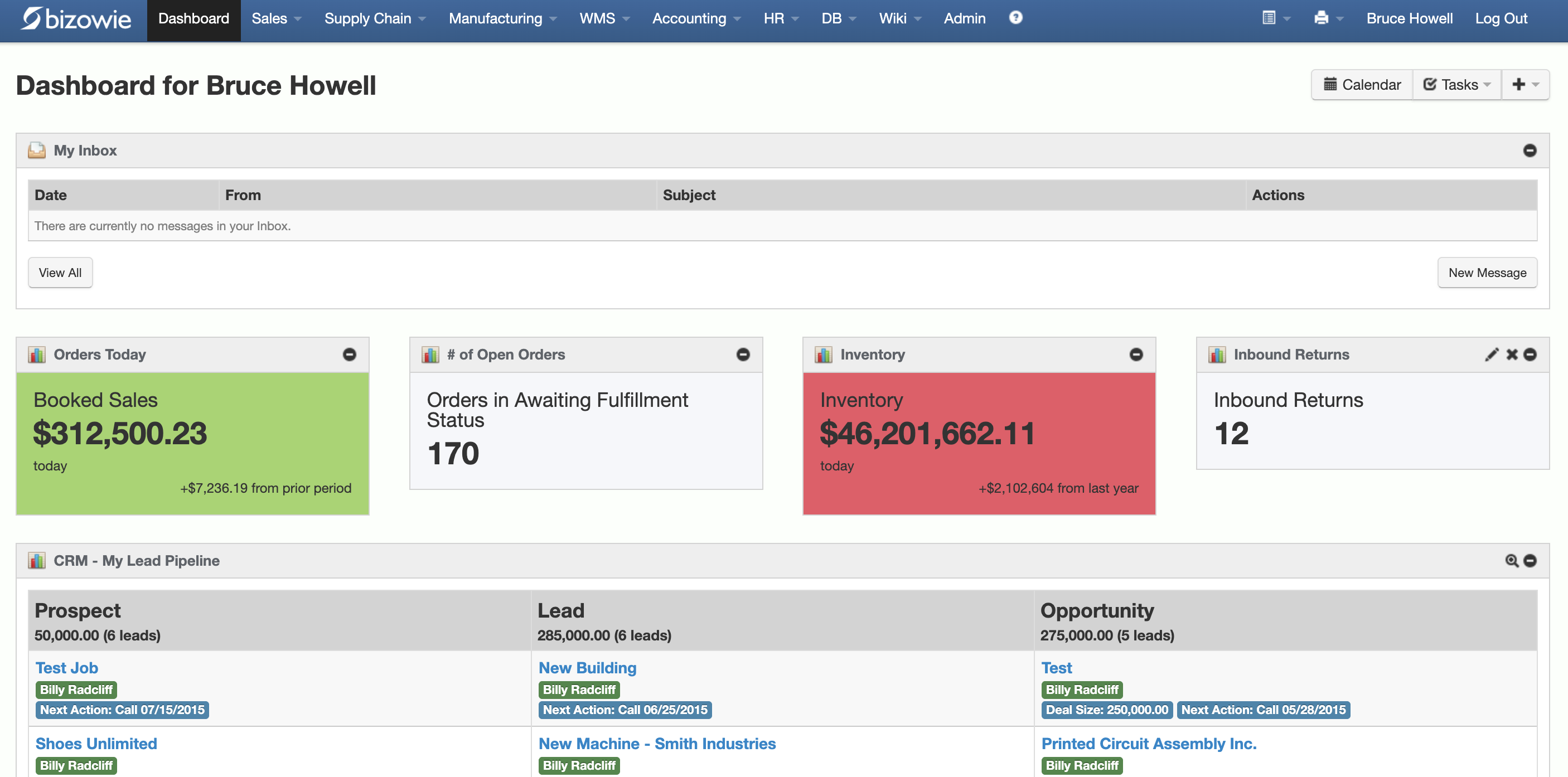
Live Dashboard
Bookings, open orders awaiting fulfillment, and inventory value at a glance.
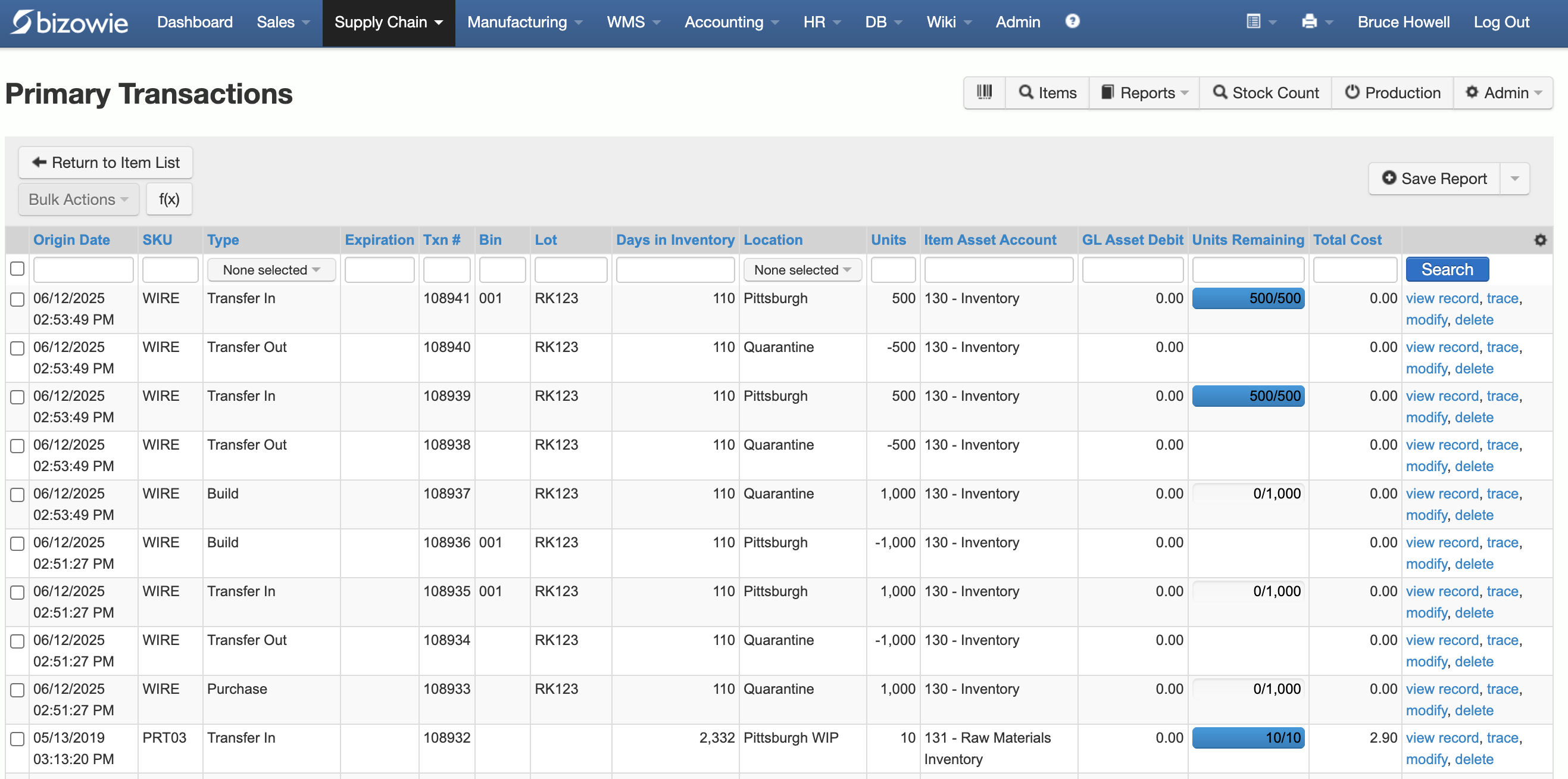
Inventory Transactions
Every receipt, transfer, build, and quarantine move by SKU, lot, bin, and location.
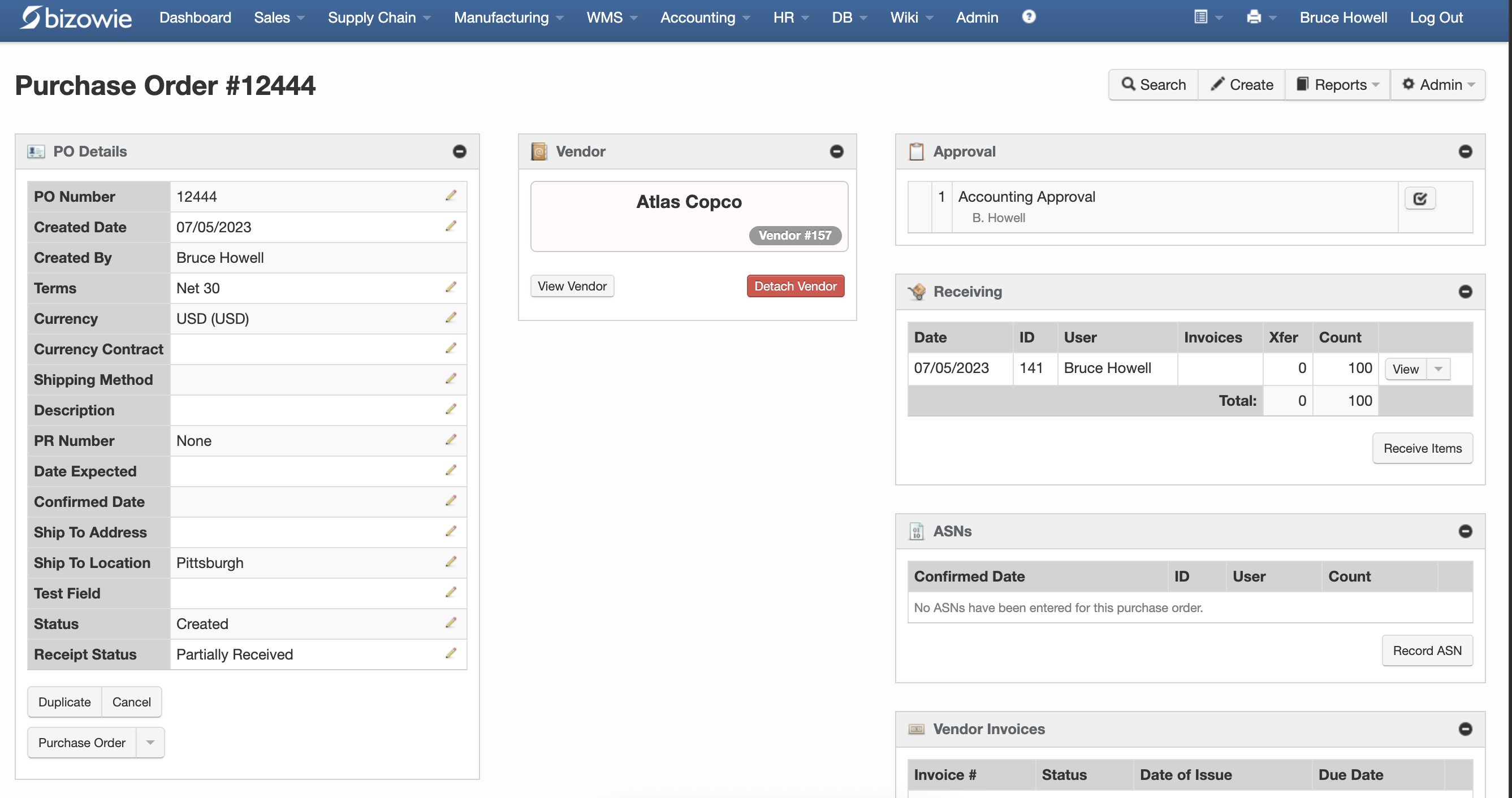
Purchasing & Receiving
Purchase orders with approvals, receiving, ASNs, and vendor invoices on one screen.
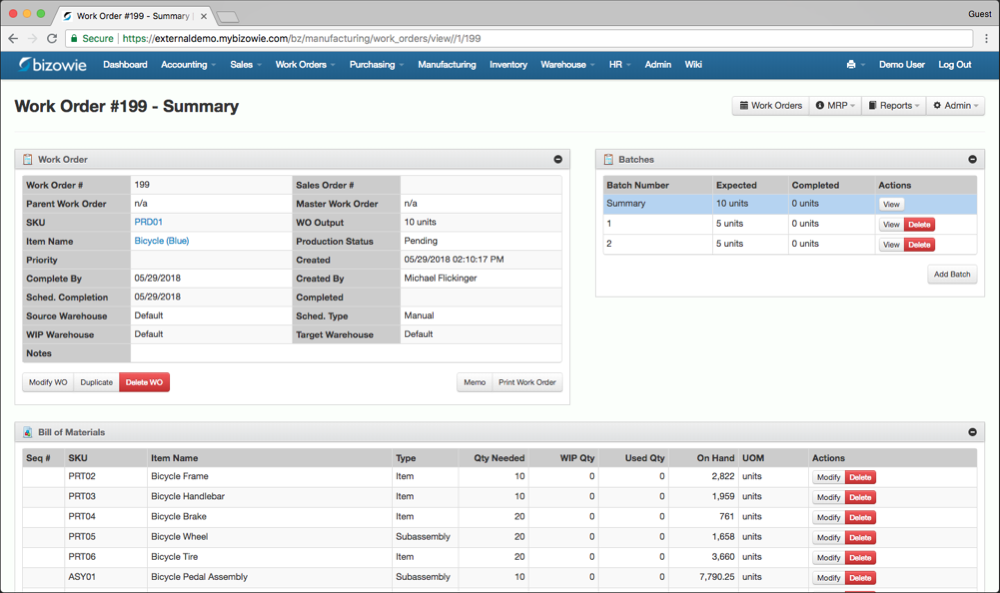
Work Orders & BOMs
Each work order carries its multi-level bill of materials, batches, and live on-hand quantities.
A Replacement Plan
- Document what the system does, while the knowledge is still available
- Define requirements and hard scenarios. See the ERP RFP template.
- Evaluate platforms with your own data and scenarios
- Map and clean the data
- Rebuild integrations, or replace them with native functionality
- Test thoroughly and plan the cutover. See ERP cutover planning.
- Keep the old system available read-only for reference after go-live
“From our first contact all the way through to our implementation, Bizowie has been a first class organization to work with… We strongly recommend the Bizowie software program.”
Alan Seymour — President, Cleveland Electric Labs
Moving From AS/400 to Bizowie
Bizowie is a cloud ERP platform, so there is no hardware to own or refresh. Orders, inventory, warehouse management with mobile barcode scanning, purchasing, manufacturing, direct ANSI X12 EDI, a B2B customer portal, and GAAP financials run in one system, and requirements are met through configuration, no-code platform capabilities, and workflows rather than custom code. Bizowie is implemented directly by the team that builds and supports the software, which helps when translating decades of custom logic into a modern platform.
Frequently Asked Questions
Is the AS/400 still supported?
The platform lives on as IBM i on IBM Power servers, with IBM releasing new versions. Support for your specific hardware, operating system release, and applications depends on their versions, so check with IBM and your software vendors.
Should we modernize or replace our AS/400 ERP?
Modernizing the screens or rehosting can address usability or hardware concerns quickly. If the real constraints are the business software, RPG skills, integrations, and growth, replacement is usually the long-term answer.
How do you migrate data off an AS/400?
Extract data from DB2 for i, convert field formats, interpret codes with help from the people who know the programs, clean master data, and load balances and open transactions into the new system.
Will our users accept a new system after green screen?
Usually, with involvement in testing, training with their own transactions, and keyboard-friendly workflows. Expect a short adjustment period after go-live.
Tell Us What Your AS/400 Does
Walk us through the programs your business depends on. We’ll show you how Bizowie would handle them, and if we are not the right fit, we will tell you.
See how Bizowie would replace your AS/400 system
For manufacturers and distributors. Tell us a little about your operation and we’ll reply with an honest assessment of fit, not a sales pitch.
- A real person reviews your submission and replies within one business day.
- No automated email sequences.
- If we’re not the right fit, we’ll tell you.
Prefer to talk?
Call (888) 635-2517, Mon–Fri, 9 AM–5 PM Eastern