ERP Modules Guide
ERP Modules Explained: What Each One Does and Which You Need
"ERP" is one word for a long list of capabilities.
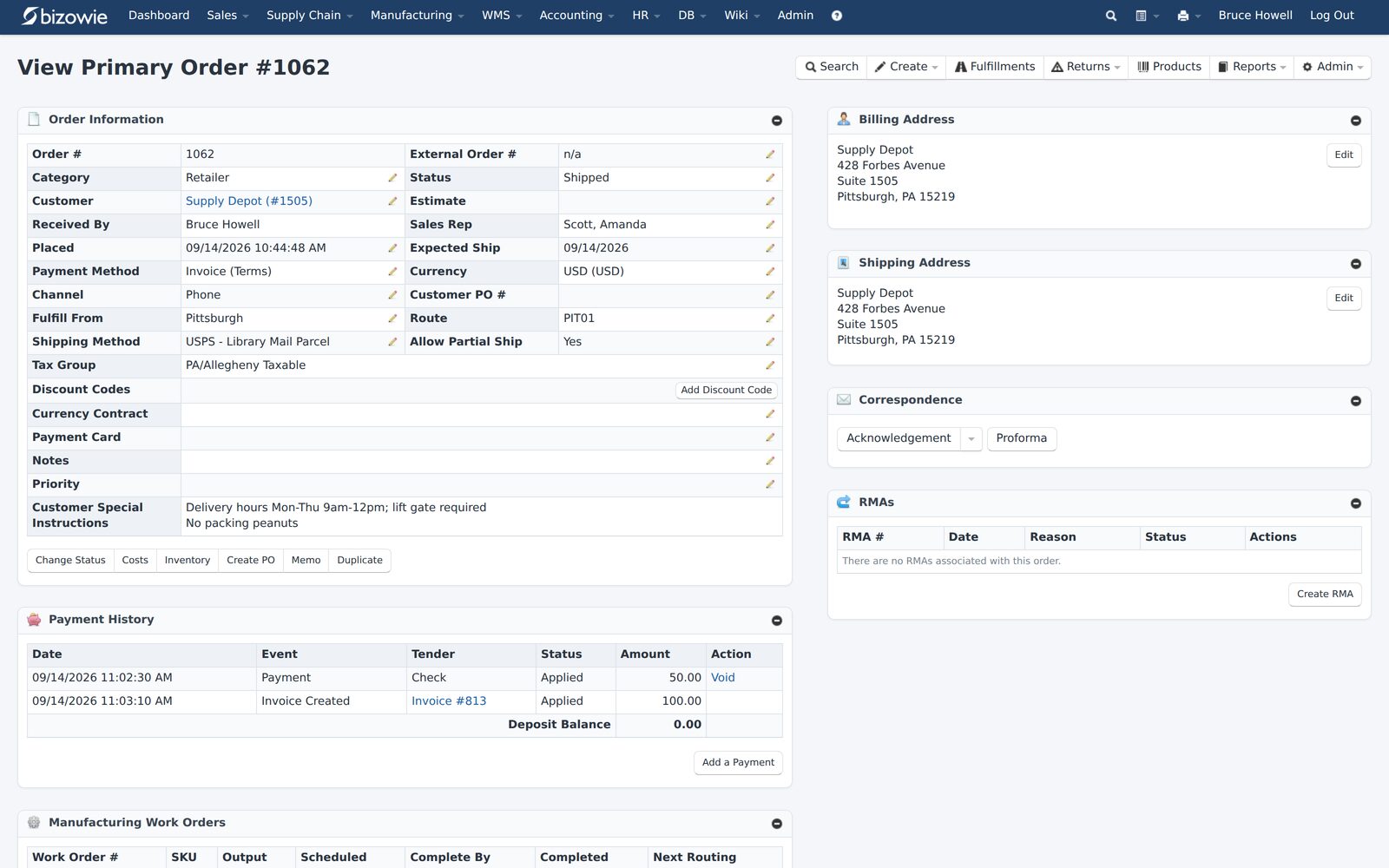
One platform, one vendorBuilt, implemented, and supported by the Bizowie team


"ERP" is one word for a long list of capabilities.
Vendors package those capabilities into modules, and the names vary from system to system. One vendor's "supply chain" module is another's "inventory," "purchasing," and "warehouse" modules sold separately. That makes it hard to compare proposals, and easy to buy a system that is missing something important.
This guide explains the core ERP modules, what each one actually does, which ones manufacturers and distributors need, and the questions to ask about how they work together.
An ERP module is a set of functions for one area of the business, such as financials, inventory, or manufacturing, built to share the same data as every other module.
That shared data is the point. When a warehouse worker ships an order, the order, the inventory, the invoice, and the general ledger all update at once, because they are all part of the same system. A "module" that only connects to the rest through an integration or a nightly import is really a separate system.
| Module | What it does | Who relies on it |
|---|---|---|
| Financial management | General ledger, AP, AR, cash, fixed assets, reporting | Finance and accounting |
| Order management | Quotes, sales orders, pricing, allocation, invoicing | Sales and customer service |
| Inventory management | Quantities, locations, lots and serials, valuation | Operations, purchasing, finance |
| Purchasing | Requisitions, purchase orders, receiving, vendor invoices | Purchasing and AP |
| Warehouse management | Receiving, put-away, picking, packing, counting by barcode | Warehouse |
| Shipping | Carriers, labels, shipping documents, tracking | Shipping and customer service |
| Manufacturing | BOMs, routings, MRP, work orders, scheduling, job costing | Production and planning |
| CRM | Leads, opportunities, accounts, quotes, activity | Sales |
| EDI and integration | Electronic orders, invoices, and shipment notices with trading partners | Customer service and IT |
| Customer portal and ecommerce | Self-service ordering, invoices, and payments for customers | Sales and customer service |
| Reporting and analytics | Dashboards, reports, and alerts across all of the above | Everyone |
The financial module is the system of record for the general ledger, accounts payable, accounts receivable, bank reconciliation, and fixed assets. For growing companies, the important questions are multi-entity and multi-currency support, consolidation, dimensional reporting by location or department, and how closely operational transactions post to the ledger. When the ledger updates from the same transactions as inventory and orders, month-end close stops being a reconciliation exercise.
Order management handles quotes, sales orders, pricing, credit checks, allocation, backorders, and invoicing. For distributors this is often the busiest module: customer-specific pricing, partial shipments, drop ships, special orders, and orders arriving by EDI, portal, and ecommerce all live here.
Inventory management tracks what you have, where it is, and what it is worth: quantities by warehouse and location, lot and serial numbers, expiration dates, transfers, and valuation. Our guides to inventory costing methods and inventory turnover go deeper.
Purchasing covers requisitions, approvals, purchase orders, receiving, and matching vendor invoices to what was ordered and received. Replenishment features, such as reorder points, min/max levels, and demand-based suggestions, often live here or in inventory. See our reorder point and min-max guide.
A warehouse management module directs work on the warehouse floor: receiving, put-away, picking, packing, loading, and counting, usually by barcode scanner. Some ERPs include it; others rely on a separate WMS connected by integration. See why WMS and ERP should be one system and our guide to warehouse picking methods.
Shipping covers carrier selection, rate quotes, labels, packing slips, bills of lading, manifests, and tracking. Integrated shipping avoids rekeying orders into carrier websites. See freight and carrier management for distributors.
Manufacturing modules cover bills of material, routings, MRP, work orders, scheduling, shop floor data collection, and job costing. Process manufacturers also need formulas, batches, and yields. See our manufacturing ERP buyer's guide.
CRM tracks leads, opportunities, accounts, contacts, quotes, and sales activity. When CRM is part of the ERP, sales reps see real order history, pricing, and inventory instead of a separate database. See ERP vs. CRM.
EDI exchanges orders, invoices, and shipment notices electronically with customers, suppliers, and carriers. Integration tools such as APIs connect the ERP to ecommerce sites, marketplaces, and other software. See APIs and ERP.
A B2B customer portal lets customers place orders, check stock and order status, and pay invoices themselves. Ecommerce integration connects online stores to the same inventory and orders. See customer portal strategy.
Reporting turns everything above into dashboards, reports, and alerts. The key question is whether users can build their own reports from live data, or whether every new report becomes an IT project. See ERP reporting tools explained.
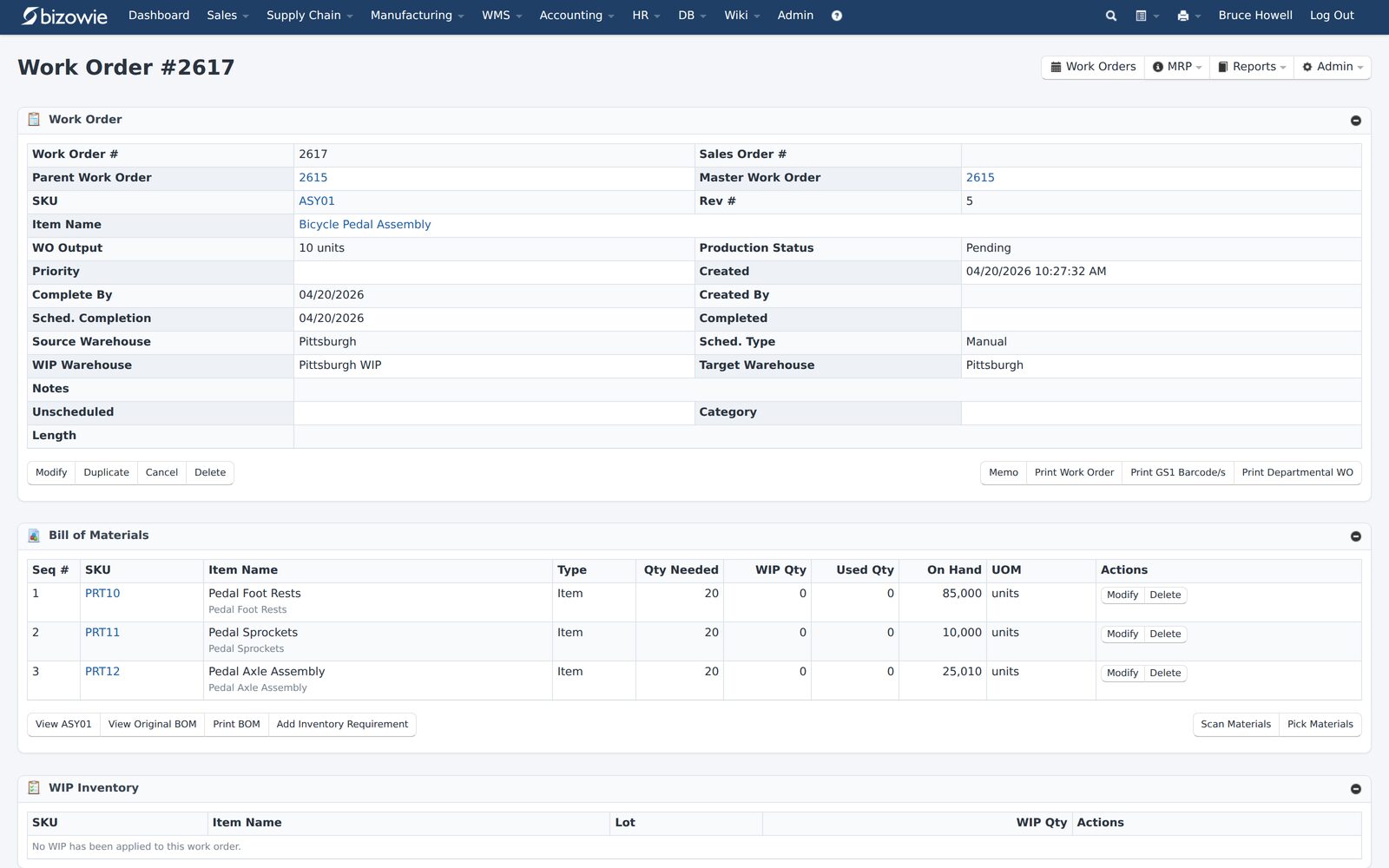
Real screens from Bizowie, not mockups. Click any screen to enlarge.
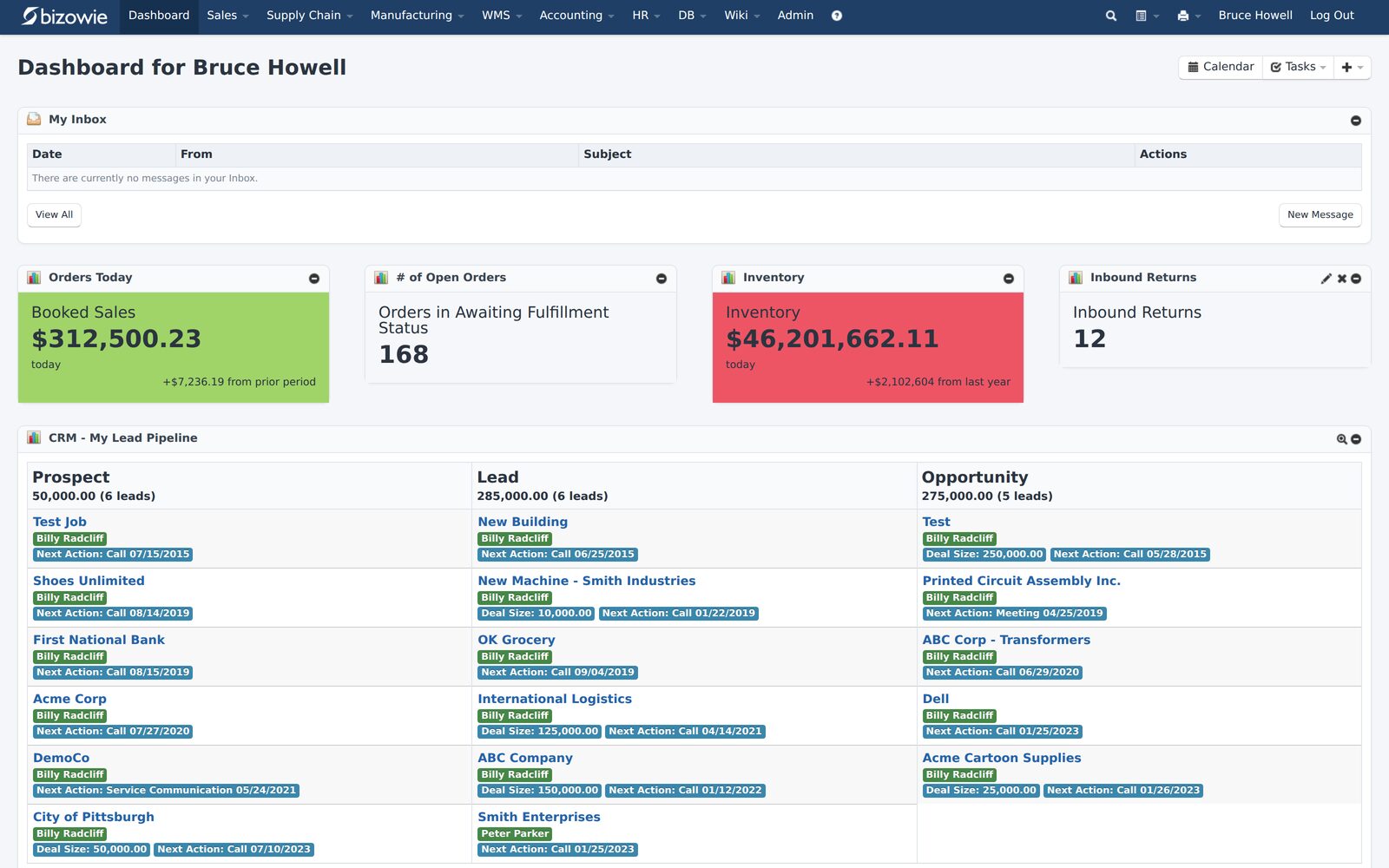
Bookings, open orders awaiting fulfillment, and inventory value at a glance.
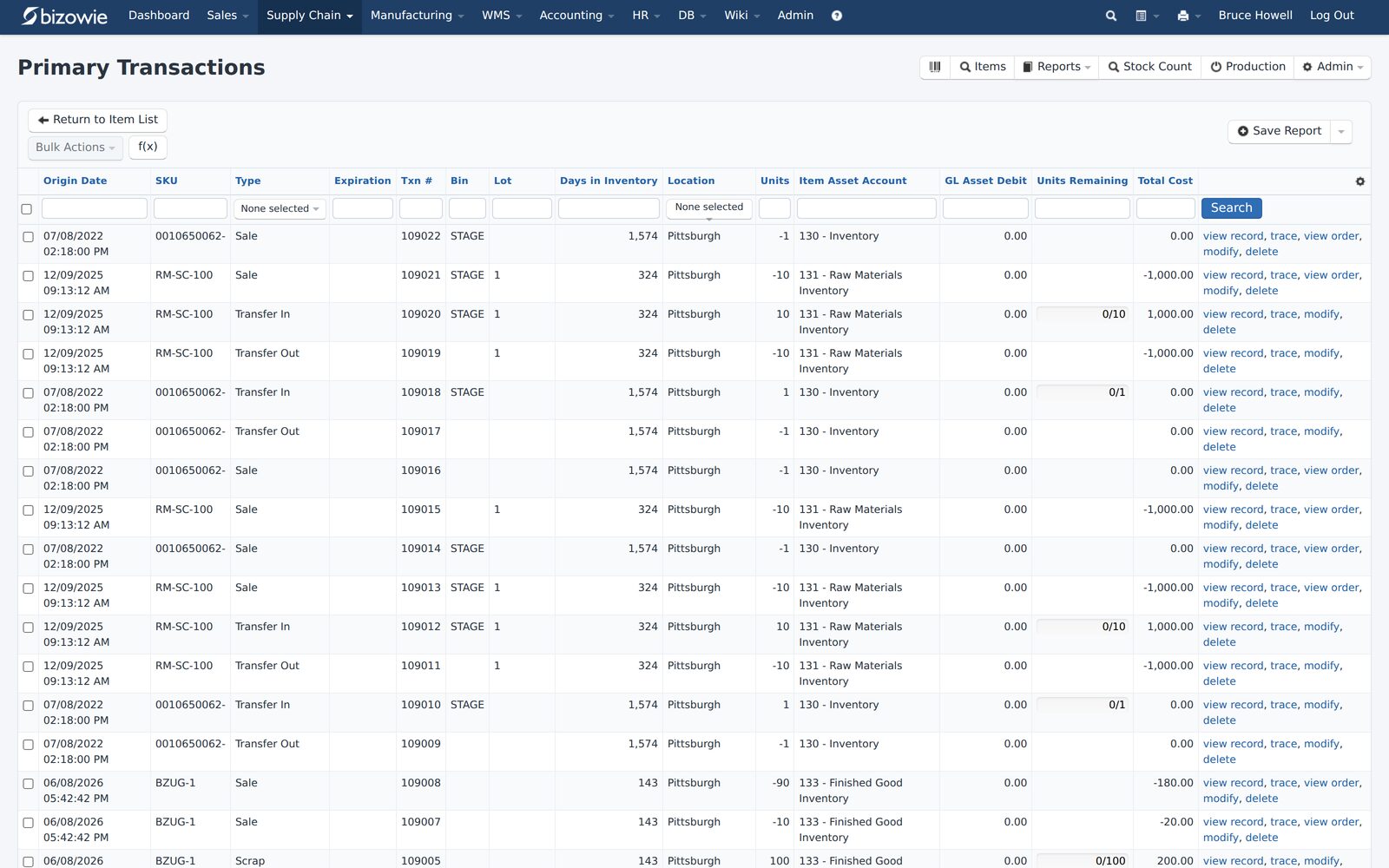
Every receipt, transfer, build, and quarantine move by SKU, lot, bin, and location.
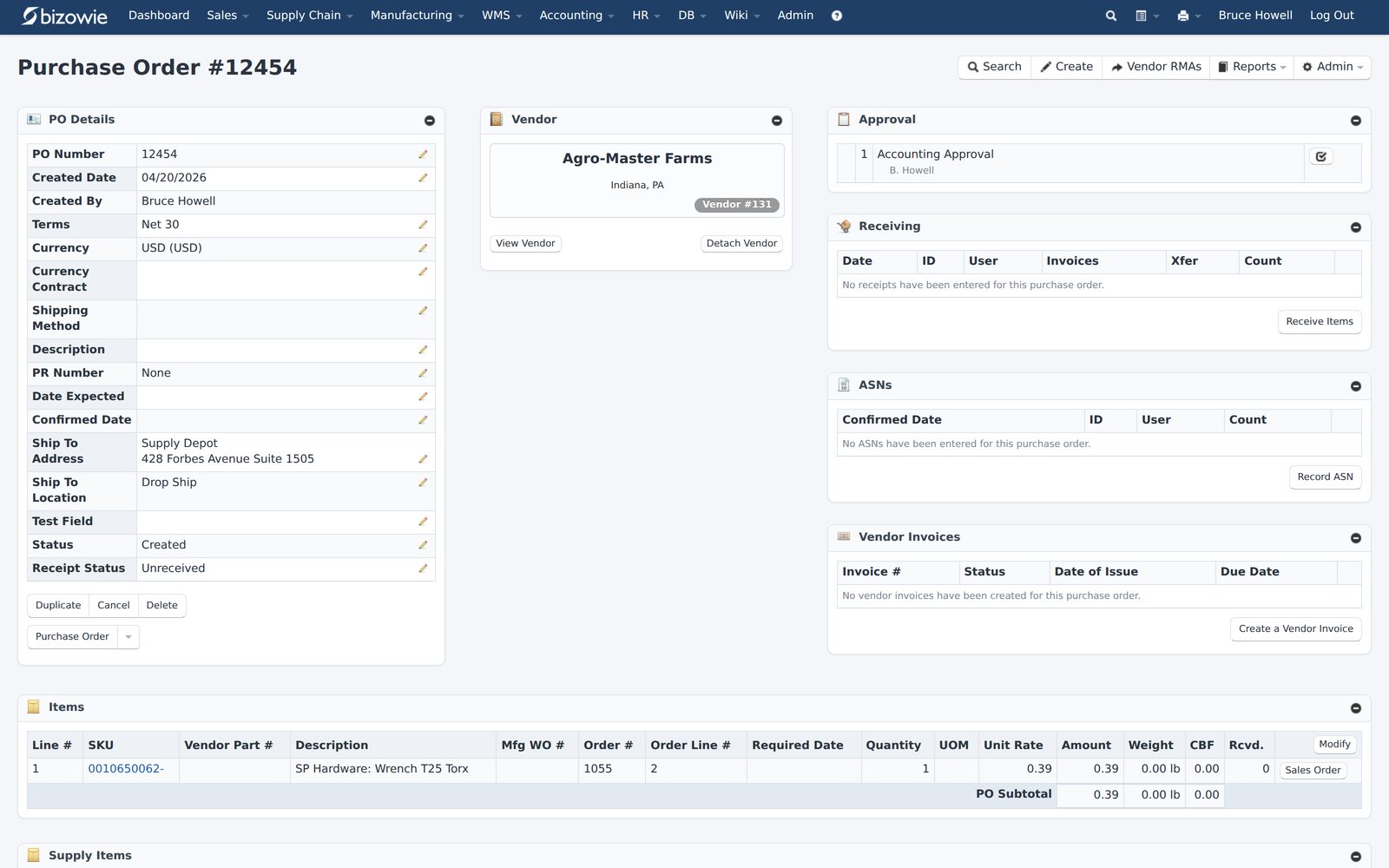
Purchase orders with approvals, receiving, ASNs, and vendor invoices on one screen.
Each work order carries its multi-level bill of materials, batches, and live on-hand quantities.
| Business type | Usually essential | Often needed |
|---|---|---|
| Distributor | Financials, order management, inventory, purchasing, WMS, shipping | EDI, customer portal, CRM, landed cost |
| Manufacturer | Financials, inventory, purchasing, manufacturing, order management | Shop floor data collection, scheduling, WMS, CRM |
| Manufacturer that also distributes | All of the above | EDI, portal, multi-entity financials |
Questions to ask every vendor about modules:
Bizowie Cloud ERP includes financials, order management, inventory control, purchasing, warehouse management, shipping and fulfillment, manufacturing, CRM, EDI, and a B2B customer portal in one platform. Inventory, order management, shipping, warehouse management, and financial accounting communicate in real time, with no batch updates or import and export required. CRM and the customer portal are part of the ERP, not separate products, so sales reps and customers see the same pricing, inventory, and order status as everyone else.
“We have seen immediate economic benefit for our business in terms of productivity from our warehouse staff, eliminated processing errors, and better stock control.”
Julius Hart — Managing Director, LensesOnline
Have a question about your own system? Talk to the team that builds Bizowie.
The core modules are financial management, order management, inventory, and purchasing. Most manufacturers and distributors also need some combination of warehouse management, shipping, manufacturing, CRM, EDI, a customer portal, and reporting.
No. Vendors package and name modules differently, and some rely on partners or third-party apps for functions others include. Compare proposals by function, not by module name.
Often, yes. Many vendors license modules individually. Make sure the modules you are not buying now can be added later without a new implementation.
A module shares the same data and transactions as the rest of the ERP. An integration connects two separate systems that each keep their own data, which means the data has to be kept in sync.
Tell us how your business runs today, and we'll show you which parts of Bizowie you would use and how they fit together. If we are not the right fit, we will tell you.
For manufacturers and distributors. Tell us a little about your operation and we’ll reply with an honest assessment of fit, not a sales pitch.
Prefer to talk?
Call (888) 635-2517, Mon–Fri, 9 AM–5 PM Eastern
(888) 635-2517
2545 Railroad St., Suite 301
Pittsburgh, PA 15222
info@bizowie.com