ERP for Auto Parts Distributors: Catalogs, Cores, and Returns
Automotive aftermarket distribution is a catalog problem, a speed problem, and a returns problem at the same time.

Automotive aftermarket distribution is a catalog problem, a speed problem, and a returns problem at the same time.

A single part may fit hundreds of vehicles and be sold under several brands. Shops want it delivered within hours. Customers return parts that were ordered "just in case," and many parts carry a core charge that has to be tracked until the old part comes back.
This guide explains what auto parts distributors need from an ERP system and the scenarios to test before you choose one. For the full evaluation process, see the distribution ERP buyer’s guide.
Aftermarket catalogs are built on fitment (which vehicles a part fits) and interchange (which parts from other brands can substitute). Industry data standards such as ACES (for fitment) and PIES (for product information) are widely used to exchange this data between manufacturers, distributors, and sellers.
For the ERP, the key questions are how item data and cross-references are stored, how counter and inside sales staff search for a part, and how catalog data from suppliers gets loaded and kept current, whether in the ERP itself or in a catalog system connected to it. Ask every vendor to show this with your own data.

Repair shops often need parts within hours, which is why many parts distributors run multiple warehouses and stores with frequent deliveries. The system needs to show live availability across every location, decide the best location to fill from, and move stock between locations quickly as demand shifts. See multi-warehouse and multi-location distribution.
Many remanufactured parts, such as alternators, starters, and calipers, carry a core charge: a deposit refunded when the customer returns the old part. That creates a second transaction to track for every sale: the core owed, the core received, the credit issued, and the core sent back to the supplier for credit. Ask how a vendor handles cores, because spreadsheets lose money here.
Parts returns are frequent: wrong part, part not needed, or warranty failure. Each type needs a different process, a different credit, and often a return to the supplier. Fast, accurate returns processing protects both customer relationships and margin. See why RMA management can't be an afterthought.
A parts distributor may sell to independent repair shops, fleets, dealers, jobbers, and consumers, each with different price levels and terms. Customer-specific and tiered pricing, plus vendor programs and rebates, need to be applied automatically and accurately. See vendor rebates and pricing tiers.
Many parts distributors sell online, through their own sites and through marketplaces, alongside B2B accounts. All of those channels need to sell from the same inventory, or the business oversells and cancels orders. See why real-time inventory breaks down in high-volume ecommerce.
Real screens from Bizowie, not mockups. Click any screen to enlarge.
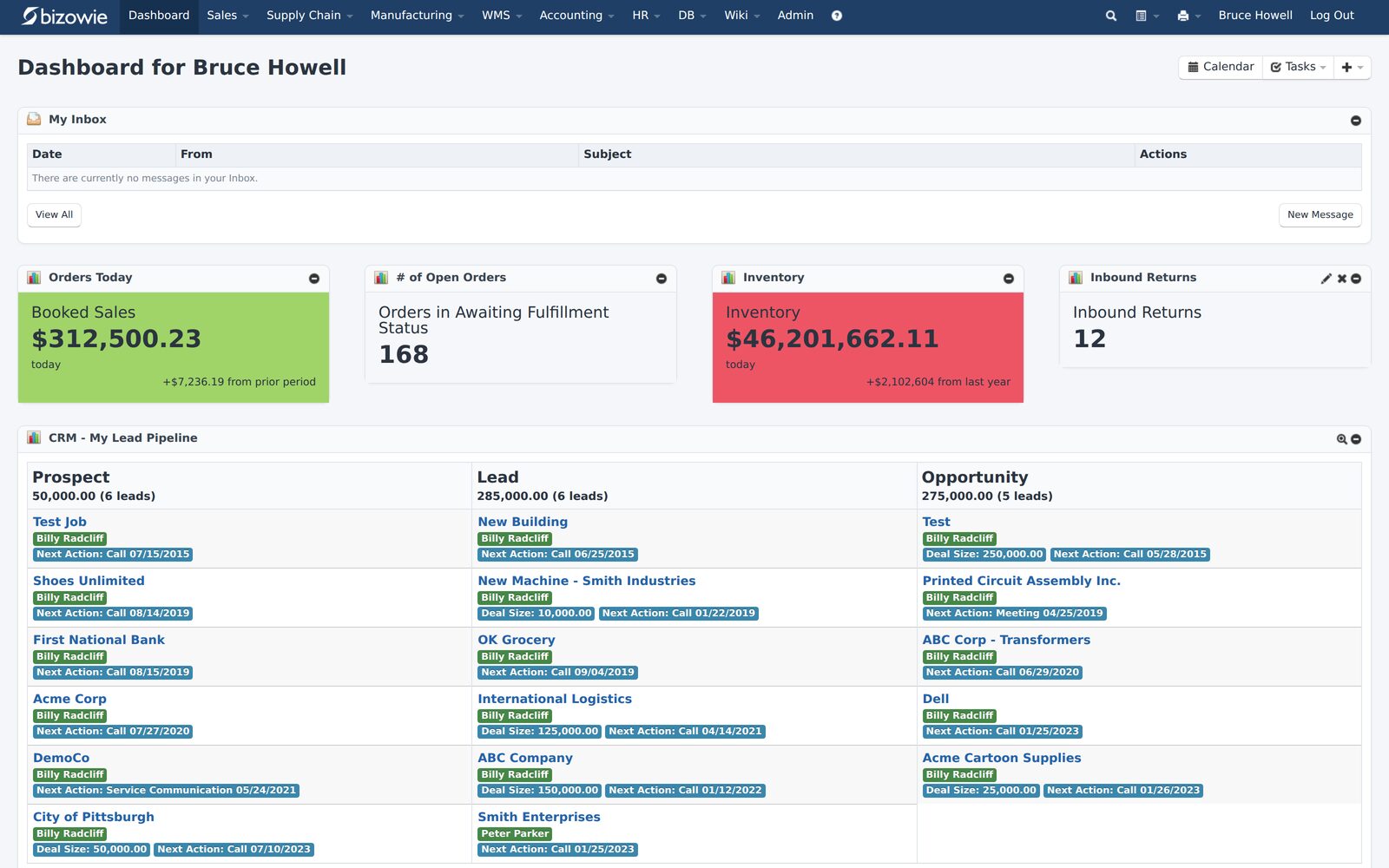
Bookings, open orders awaiting fulfillment, and inventory value at a glance.
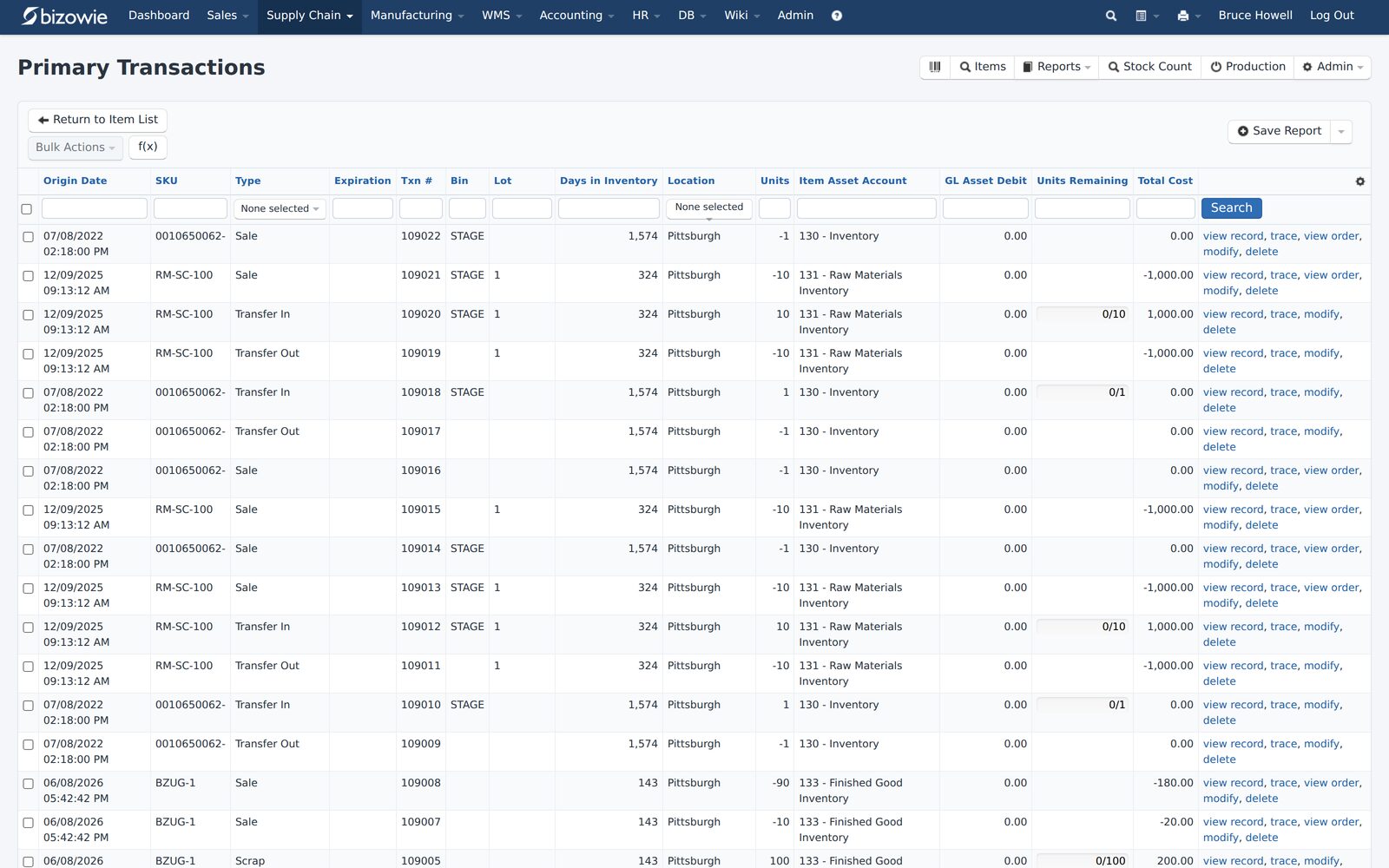
Every receipt, transfer, build, and quarantine move by SKU, lot, bin, and location.
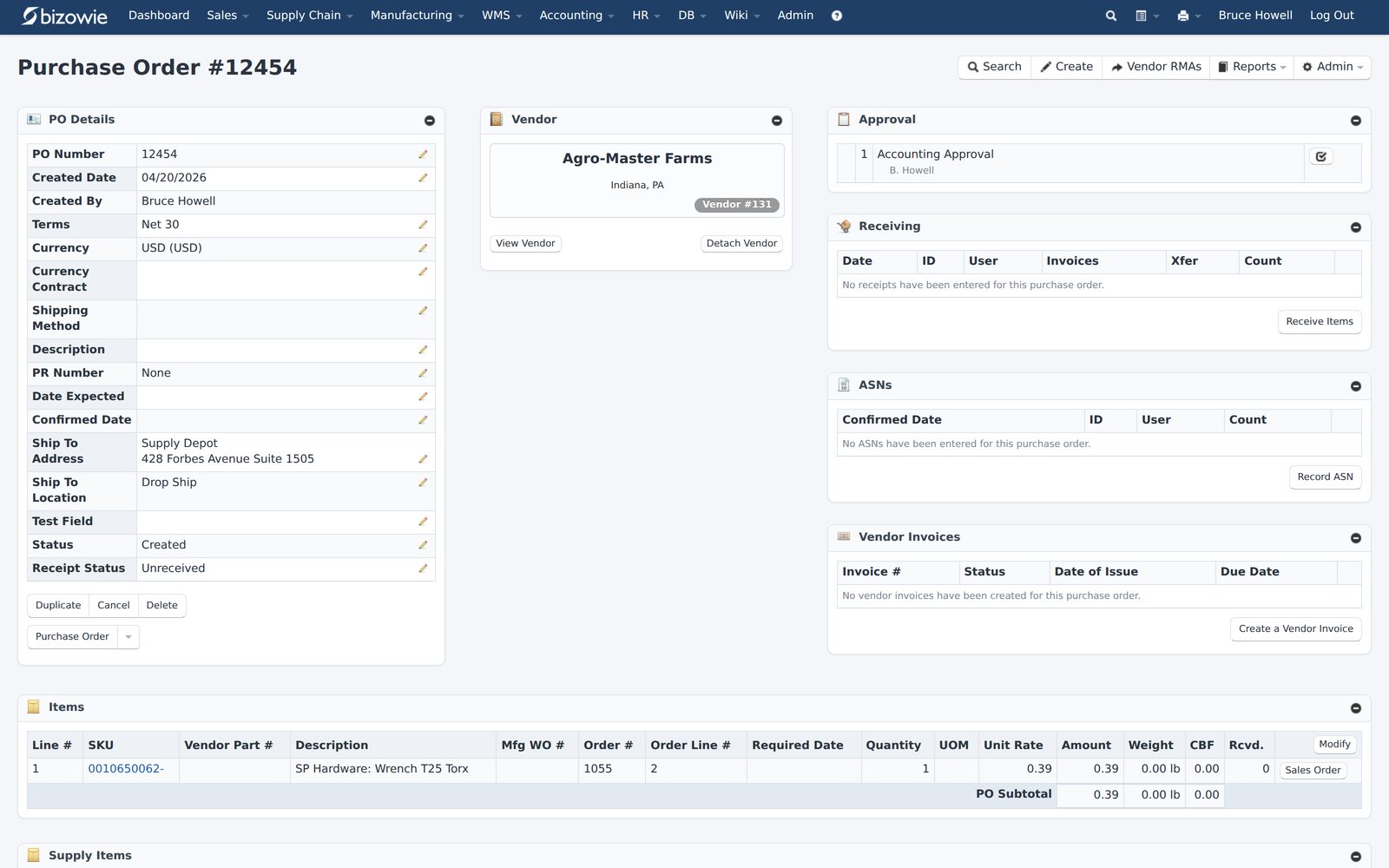
Purchase orders with approvals, receiving, ASNs, and vendor invoices on one screen.
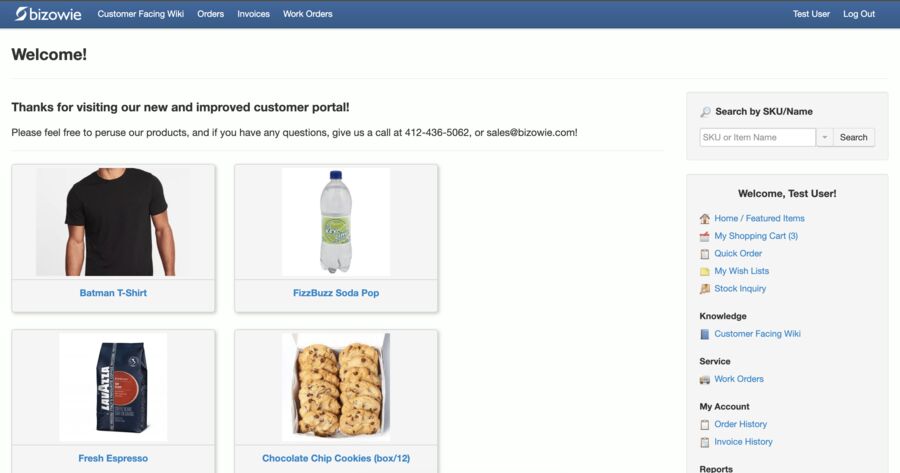
Customers search items, place orders, and check order and invoice history themselves.
For catalog and fitment data, core tracking, and returns, bring your specific processes to a demonstration so we can show you exactly how they would work.
“We have seen immediate economic benefit for our business in terms of productivity from our warehouse staff, eliminated processing errors, and better stock control.”
Julius Hart — Managing Director, LensesOnline
Have a question about your own system? Talk to the team that builds Bizowie.
ACES and PIES are aftermarket industry standards for exchanging data: ACES describes which vehicles a part fits, and PIES describes product attributes such as dimensions, packaging, and pricing.
A deposit charged on parts such as remanufactured alternators and starters, refunded when the customer returns the old part, which is then usually returned to the supplier for credit.
Fast search with cross-references, real-time multi-location availability, core and returns tracking, pricing by customer type, and inventory shared across online and B2B channels.
Tell us how your locations, customers, and returns work today. We'll show you how Bizowie would handle them, and if we are not the right fit, we will tell you.
Tell us a little about your operation and we’ll reply with an honest assessment of fit, not a sales pitch.
Prefer to talk?
Call (888) 635-2517, Mon–Fri, 9 AM–5 PM Eastern