One platform, one vendorBuilt, implemented, and supported by the Bizowie team
Products carry lot numbers and expiration dates, like food. Many are regulated, with identifiers that must be captured and traced. Customers buy through group purchasing contracts with pricing set by someone else. And when a manufacturer issues a recall, a distributor has to know within hours which customers received the affected lots.
This guide explains what medical supply distributors need from an ERP system and the scenarios to test before choosing one. For how to evaluate any distribution system, see our guide to distribution ERP software.
01
Lot, Serial, and Expiration Tracking
Most medical supplies are tracked by lot, many devices by serial number, and nearly everything by expiration date. That affects every step: receiving must capture lot and expiration, picking should follow first-expired-first-out (FEFO), expired stock must be blocked from shipping, and every shipment needs the lots recorded against the customer. Capturing this by barcode scan, rather than by hand, is what keeps it accurate. See serial number tracking for distributors.
02
Regulatory Identifiers and Records
Several regulations shape what medical distributors must capture and keep:
Unique Device Identification (UDI): the FDA's UDI system requires many medical devices to carry a unique identifier on their labels. Distributors benefit from capturing UDI-related data, such as lot, serial number, and expiration, as product is received and shipped.
Prescription drugs: if you distribute prescription drugs, the Drug Supply Chain Security Act (DSCSA) adds product identifier, transaction data, and verification requirements for trading partners.
Licensing and recordkeeping: state and federal licensing, and customer license verification for certain products.
Requirements depend on exactly what you distribute and to whom, and they change over time. Check current FDA guidance and your regulatory advisors for your product mix, and make sure your system can capture and report the data those requirements call for.
03
Contract Pricing and Chargebacks
Hospitals, clinics, and other providers often buy through group purchasing organization (GPO) contracts negotiated with manufacturers. The distributor sells at the contract price and then claims the difference from the manufacturer through a chargeback. That requires:
Loading and maintaining contract prices by customer, contract, and product
Applying the right contract price automatically at order entry
Calculating and submitting chargeback claims accurately and on time
Reconciling payments against claims
Errors here leak margin quietly. Ask every vendor to demonstrate contract pricing and chargebacks with your own contracts.
04
Recall Readiness
When a manufacturer recalls a lot, a distributor must quickly identify every customer who received it, notify them, quarantine remaining stock, and manage returns. With lot numbers captured at every step, that is a report. Without them, it is days of searching. Run mock recalls to prove the process works. See product recall management for distributors.
05
Quality Holds and Special Handling
Inbound product may need inspection before release. Some items need temperature control, special storage, or restricted access. The system should support quarantine on receipt, holds and releases by lot, and location rules that keep products where they belong.
06
Serving Healthcare Customers
Healthcare customers often order by EDI or through procurement systems, want par-level or scheduled replenishment, and expect accurate, fast deliveries. A B2B portal and EDI reduce order-entry work and errors. See cloud ERP and EDI.
07
Scenarios to Test Before You Buy
Receive product with lot and expiration by scan, quarantine it, and release it after inspection.
Pick by FEFO, block an expired lot, and ship with lots recorded on the order.
Sell to a hospital at its GPO contract price and generate the chargeback claim.
Run a mock recall: find every customer who received a lot, and the remaining stock, in minutes.
Receive a hospital's order by EDI and confirm it automatically.
Real screens, not mockups
See Bizowie in Action
Real screens from Bizowie, not mockups. Click any screen to enlarge.
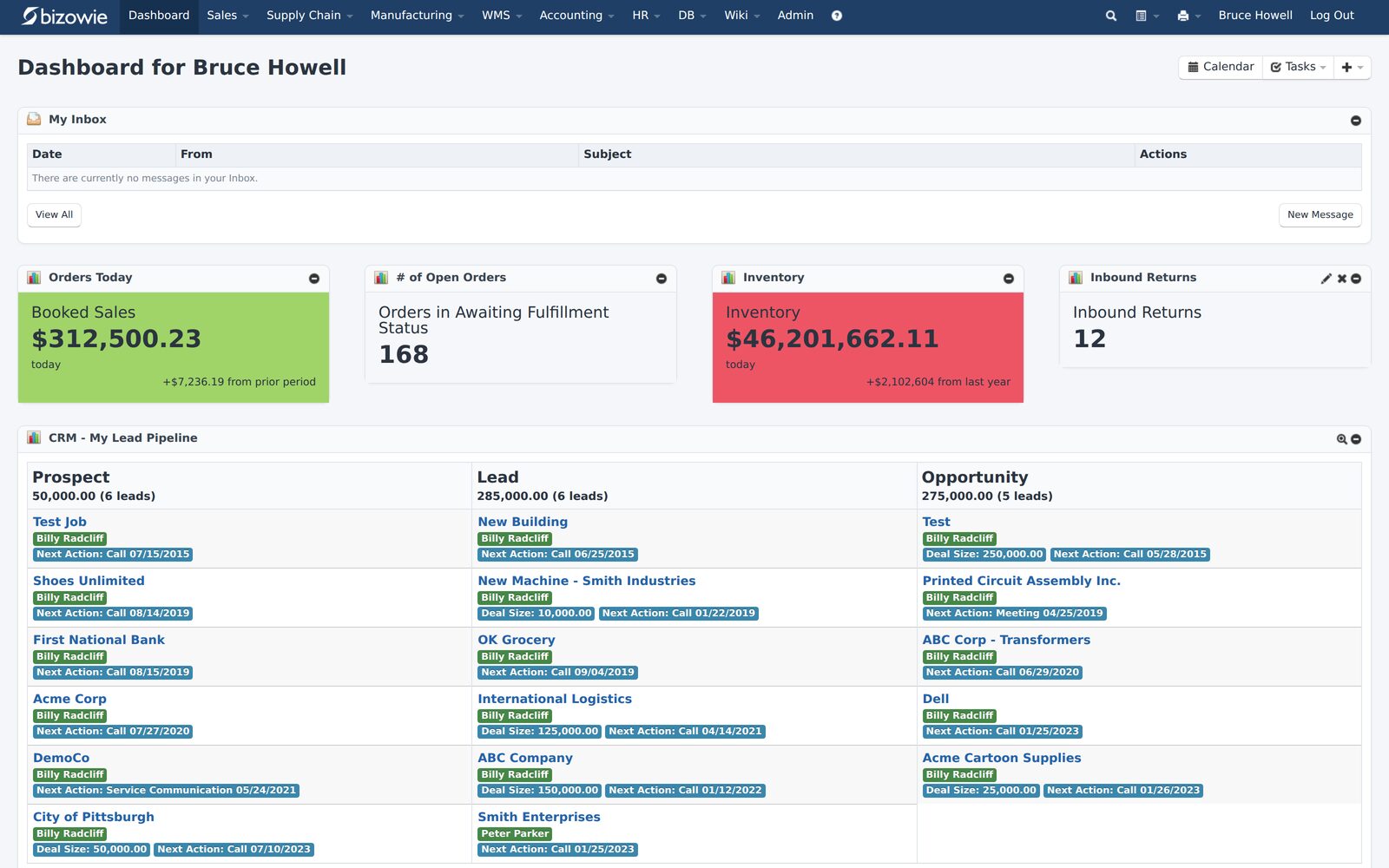
Bookings, open orders awaiting fulfillment, and inventory value at a glance.
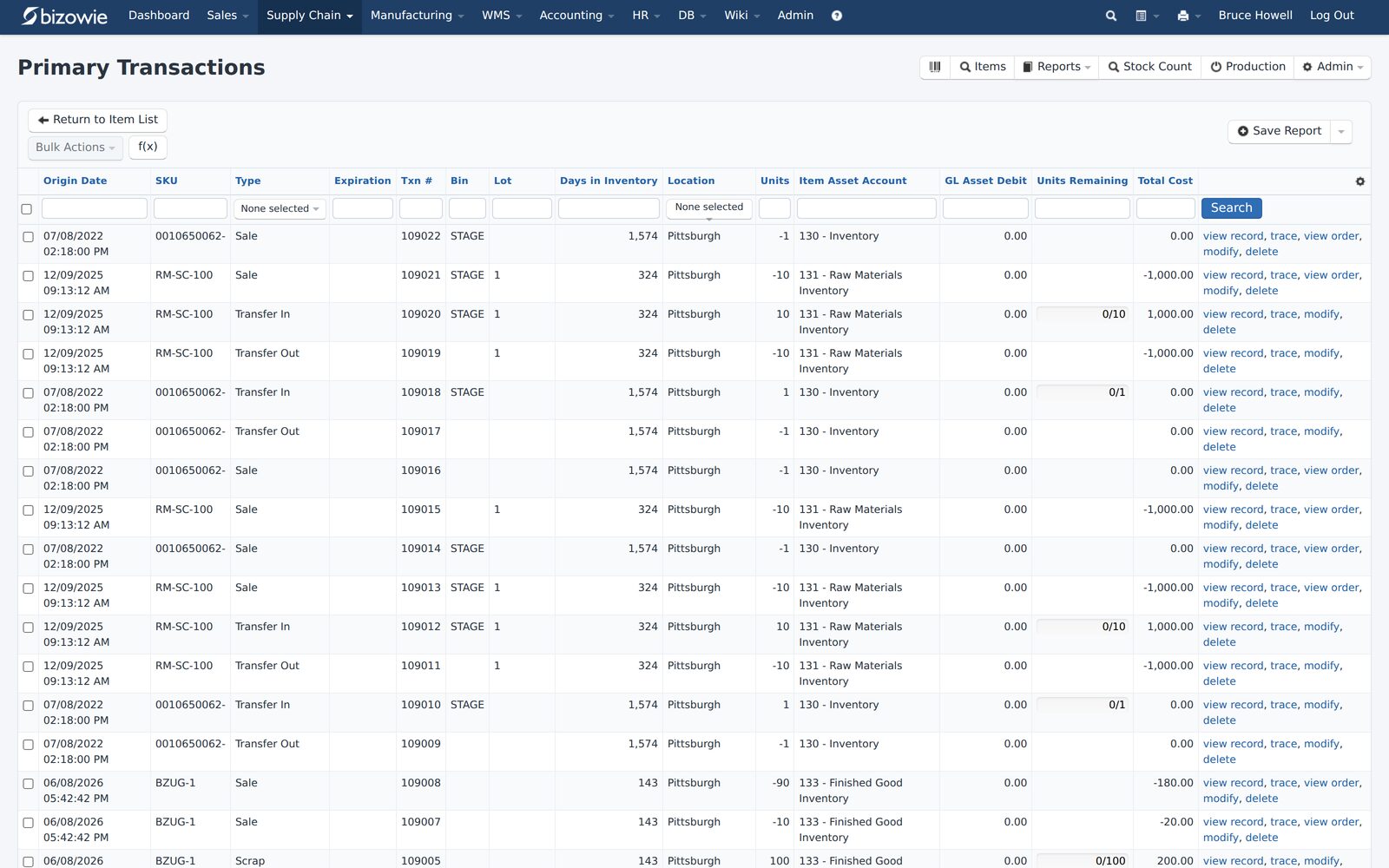
Every receipt, transfer, build, and quarantine move by SKU, lot, bin, and location.
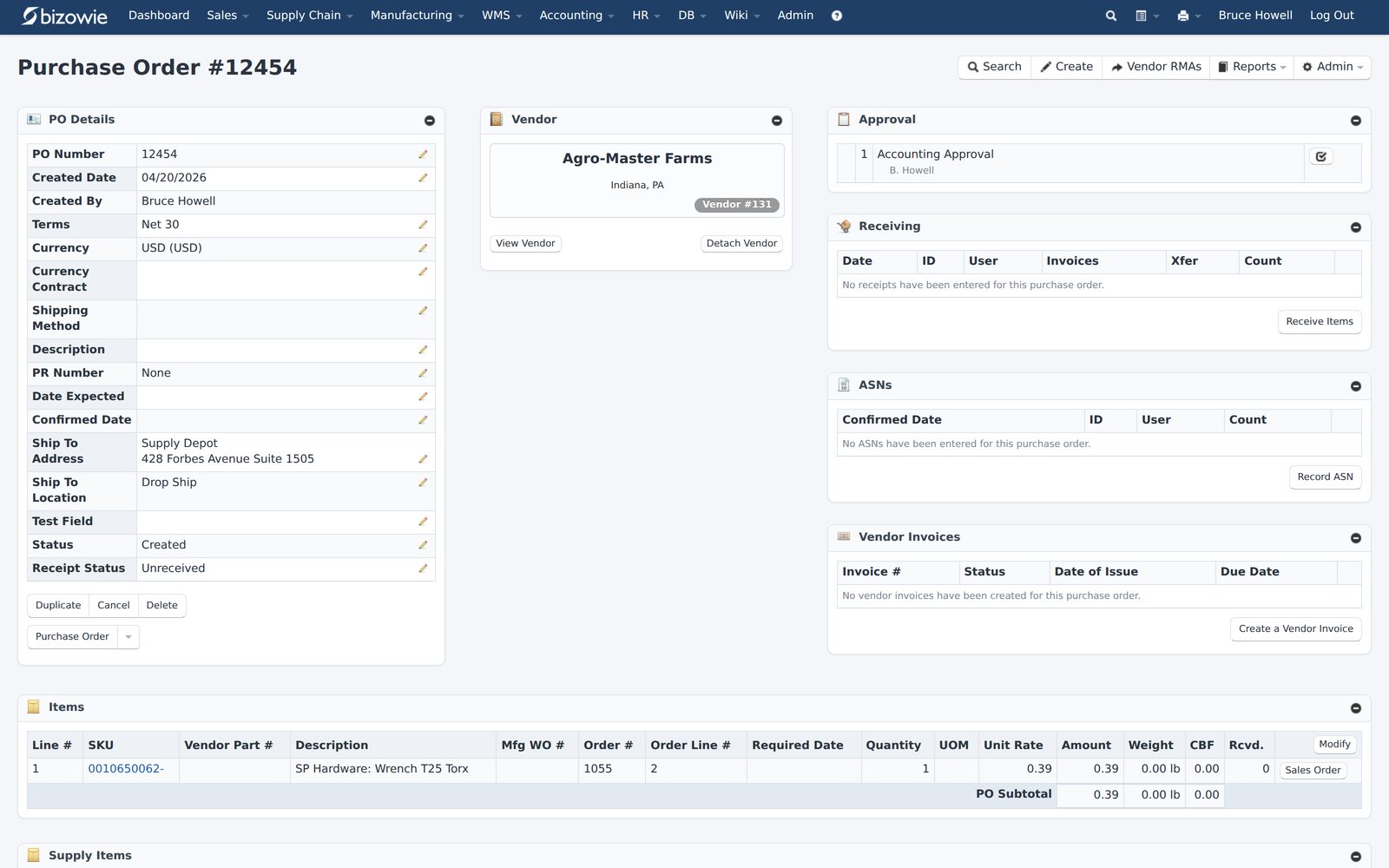
Purchase orders with approvals, receiving, ASNs, and vendor invoices on one screen.
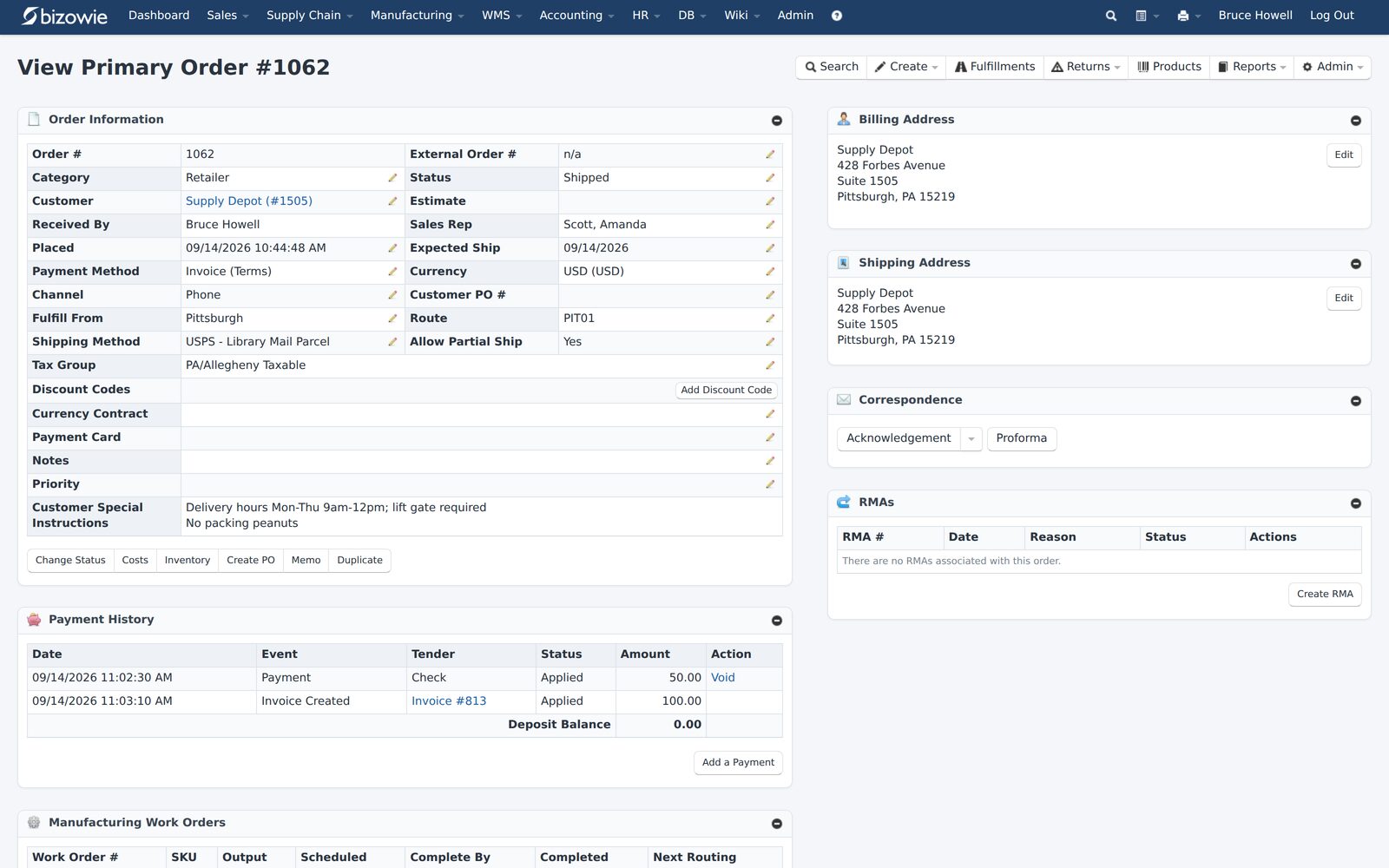
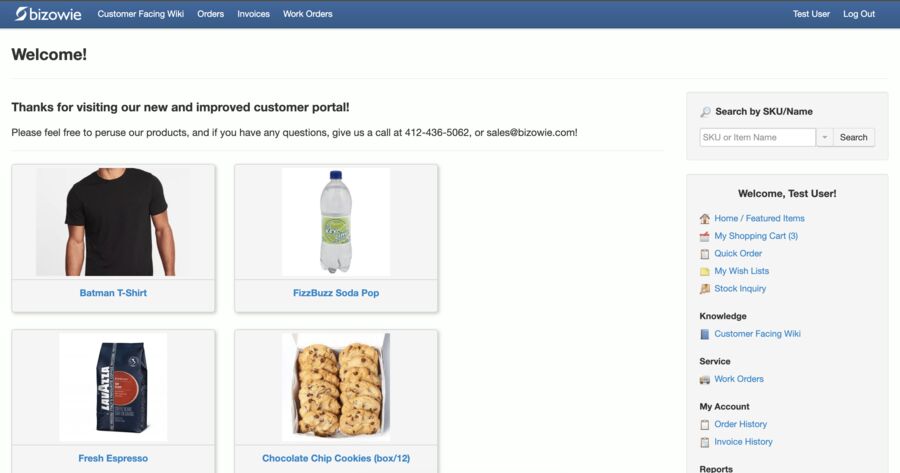
Customers search items, place orders, and check order and invoice history themselves.
Serialized and lotted inventory with expiration datesrecorded by barcode scan, and full traceability from purchase order to sale.
Real-time inventory across multiple distribution centers, zones, bins, and LPNs.
Quarantine on receipt and required quality checks before product is released.
Customer-specific and contract-based pricing.
Direct ANSI X12 EDI with customers and suppliers.
A B2B portal with customer-specific pricing and live availability.
Role-based controls and a full audit trail of all transactions.
For GPO chargebacks and the specific regulatory data your products require, bring your contracts and processes to a demonstration so we can show you exactly how they would work.
“We have seen immediate economic benefit for our business in terms of productivity from our warehouse staff, eliminated processing errors, and better stock control.”
Julius Hart — Managing Director, LensesOnline
Answers
Frequently Asked Questions
Have a question about your own system? Talk to the team that builds Bizowie.
When a distributor sells to a provider at a group purchasing contract price below the distributor's cost, the distributor claims the difference from the manufacturer. That claim is a chargeback.
Do medical supply distributors need lot tracking?
In practice, yes. Lot and expiration tracking is essential for recalls, FEFO picking, and customer and regulatory requirements, and many devices are also tracked by serial number.
What is UDI?
Unique Device Identification is the FDA's system for identifying medical devices through a unique identifier on their labels, which can include information such as lot, serial number, and expiration date.
Free fit assessment
Bring Us a Recall Drill
Tell us what you distribute and how your customers buy. We'll show you how Bizowie would handle a mock recall and a contract-priced order, and if we are not the right fit, we will tell you.
See how Bizowie fits your medical supply distribution business
Tell us a little about your operation and we’ll reply with an honest assessment of fit, not a sales pitch.
A real person reviews your submission and replies within one business day.