
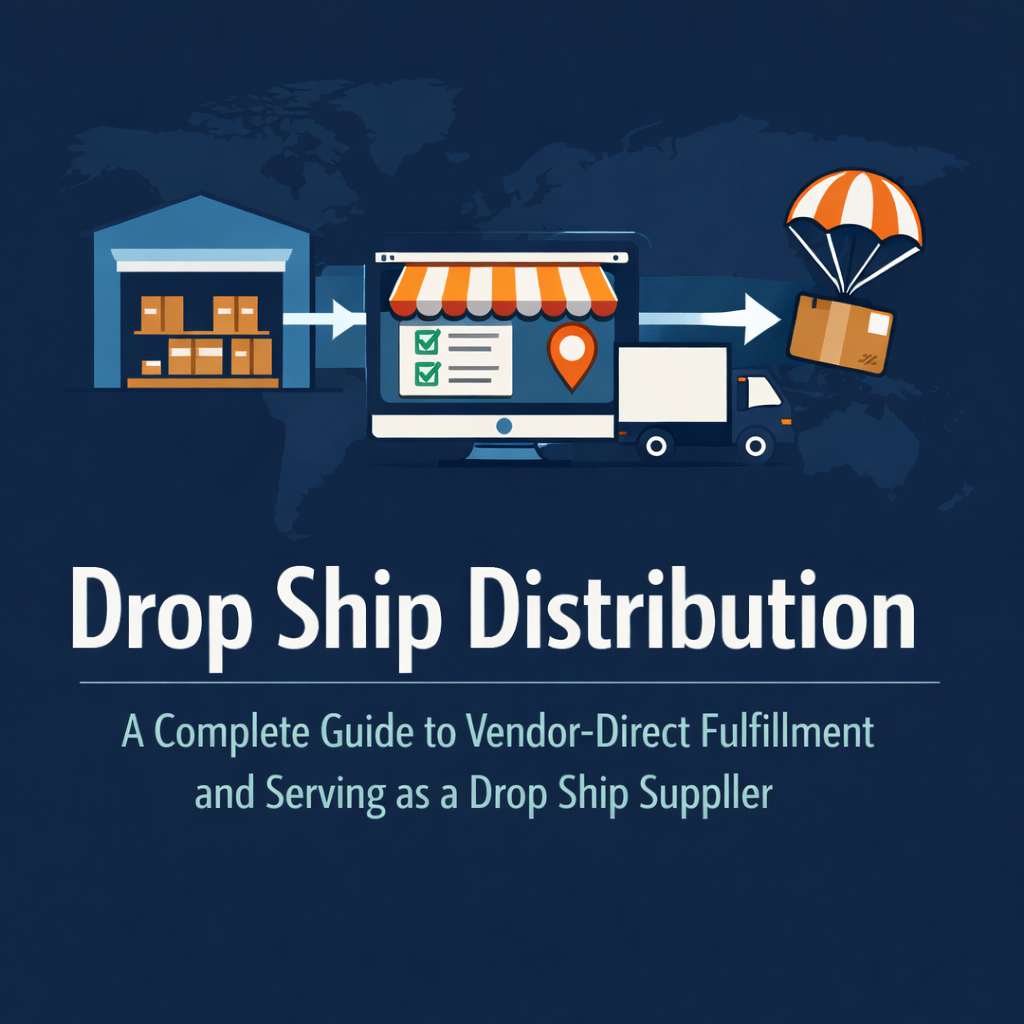
Drop Ship Distribution: A Complete Guide to Vendor-Direct Fulfillment and Serving as a Drop Ship Supplier
The order comes in at 2:47 PM. Your customer needs a specialized motor that you don’t stock, but your primary vendor has it in their warehouse three states away. Rather than buying it, receiving it, and shipping it back out, you tell your vendor to ship directly to the customer. Simple, efficient, and profitable—at least in theory.
Meanwhile, your phone rings. A regional retailer wants to know if you can fulfill orders for their online store. They’ll handle the marketing and customer relationships. You handle inventory and shipping, but the boxes need to go out with their branding, not yours. You’ve just been asked to become a drop ship supplier.
These two scenarios represent the dual nature of drop shipping in modern distribution. Distributors increasingly find themselves operating on both sides of the equation: using vendor drop ship capabilities to extend their product offering without inventory investment, while simultaneously serving as drop ship partners for retailers, resellers, and eCommerce sellers who lack warehousing capabilities.
Each direction carries distinct operational requirements, system demands, and profit dynamics. Mastering both can transform a distributor’s competitive position—expanding effective product range while adding revenue streams that leverage existing infrastructure. Getting either wrong creates customer service failures, margin erosion, and operational complexity that consumes more resources than it generates.
Part One: Using Drop Ship to Extend Your Reach
Why Distributors Drop Ship from Vendors
The traditional distribution model assumes you stock products before you sell them. You invest in inventory, house it in your warehouse, and fulfill customer orders from that stock. This model works when demand is predictable, products move consistently, and you have the capital and space to carry sufficient inventory.
But markets rarely cooperate with these assumptions. Customers request products outside your stocking range. Seasonal items spike and crash unpredictably. New product lines require inventory investment before you’ve proven demand. Large or bulky items consume warehouse space disproportionate to their revenue.
Drop shipping from vendors addresses these challenges by decoupling sales from inventory investment. When a customer orders a product you don’t stock, your vendor ships it directly to the customer on your behalf. You capture the sale, earn a margin, and satisfy the customer—without ever touching the product.
This capability fundamentally changes competitive dynamics. Instead of competing only on stocked inventory, you compete on access to vendor networks. A distributor with strong vendor relationships and effective drop ship processes can offer a catalog of hundreds of thousands of items while physically stocking only their core products. The effective product offering expands dramatically without proportional warehouse or capital investment.
The Hidden Complexity Behind Simple Transactions
If drop shipping were as simple as forwarding orders to vendors, every distributor would do it flawlessly. The reality is considerably messier.
The first challenge is visibility. When products ship from your warehouse, you control the process. You know when orders are picked, when they ship, which carrier handles them, and when they deliver. When vendors ship on your behalf, you often know none of this unless you actively pursue the information. The customer sees you as the seller and expects you to answer questions about their order—but you may have no more information than they do.
The second challenge is quality control. Your reputation rides on every shipment, but you can’t inspect products you never see. Vendors may ship wrong items, damaged goods, or products with expired shelf dates. They may use inadequate packaging that leads to transit damage. They may include their own promotional materials or invoices that expose your cost structure or confuse the customer about who they’re buying from.
The third challenge is timing. Your customer expects delivery when you promised it. But your promise depends on vendor performance you don’t control. A vendor who quotes five-day lead time but actually ships in seven puts you in the position of explaining delays you didn’t cause. Compound this across dozens of vendors with varying reliability, and delivery commitments become educated guesses.
The fourth challenge is returns. When customers need to return drop-shipped products, where do they go? Back to you, even though you never had them? Directly to the vendor? Either approach creates complications. Returns to your warehouse mean handling products that weren’t supposed to come to you. Returns to vendors mean coordinating with the same entities whose original shipment caused problems.
What Effective Vendor Drop Ship Requires
Managing these challenges requires treating vendor drop ship as a distinct operational capability with its own processes, systems, and performance management.
Vendor Qualification and Setup
Not every vendor makes a good drop ship partner. Before establishing drop ship relationships, distributors should evaluate vendors on several criteria beyond standard purchasing considerations.
Can the vendor ship individual orders rather than just bulk purchases? Do they support blind shipping—sending packages without their branding or pricing? What tracking and status information will they provide, and how? How do they handle errors, damages, and returns? What are their actual lead times, not their published ones?
These conversations should happen before the first drop ship order, not in response to the first customer complaint. Formal agreements should specify performance standards, communication requirements, and remediation processes. Vendors who won’t commit to reasonable standards probably shouldn’t receive drop ship business.
Real-Time Availability and Pricing
Drop ship viability depends on knowing what vendors can ship and at what cost before committing to customers. This requires integration with vendor systems—EDI connections, API feeds, or portal access that provides current inventory availability and pricing.
Without this integration, every drop ship sale requires manual verification. Can the vendor actually ship this product today? What will it cost? What’s the realistic delivery date? Manual verification doesn’t scale, and it introduces delays that lose sales to competitors who can confirm availability immediately.
Order Transmission and Acknowledgment
When a customer order should drop ship, that instruction must reach the vendor quickly and accurately. Manual processes—emailing orders, entering them into vendor portals, or faxing purchase orders—create delay and error. Every manual touch is an opportunity for transcription mistakes, missed orders, or processing delays.
Automated order transmission through EDI or API eliminates these risks. The customer order flows to the vendor within minutes, carrying all necessary information including ship-to address, shipping method, and special instructions. Vendor acknowledgment confirms receipt and confirms or updates the expected ship date.
Shipment Visibility and Tracking
Once vendors ship, distributors need tracking information to provide customer service and identify problems early. This means vendor processes that capture carrier and tracking number and transmit them back promptly—not days later when the customer is already calling to ask where their order is.
Best practices push tracking information into the distributor’s order management system automatically, updating customer order records without manual intervention. Sophisticated integrations monitor tracking events and proactively flag shipments that appear delayed or stuck.
Consolidated Customer Communication
Customers don’t know or care that their order shipped from a vendor rather than your warehouse. They expect the same communication regardless of fulfillment source: order confirmation, shipment notification with tracking, and delivery confirmation.
This communication should come from you, maintaining your customer relationship rather than inserting the vendor into the dialogue. Systems should generate consistent notifications whether orders ship from your warehouse, your vendor’s warehouse, or multiple locations for split shipments.
Performance Monitoring and Management
Vendor drop ship relationships require ongoing performance monitoring. What percentage of orders ship on time? How many arrive damaged or incorrect? What’s the average time from order to delivery? How do results compare across vendors offering similar products?
This data drives vendor management decisions. High-performing vendors earn more drop ship business. Underperformers receive feedback and improvement requirements—or lose drop ship status if performance doesn’t improve. Without measurement, there’s no accountability, and vendor performance drifts toward whatever is easiest for them rather than what serves your customers.
The Economics of Vendor Drop Ship
Drop shipping changes the economics of distribution in ways that require careful analysis. The obvious appeal is reduced inventory investment and handling cost. But offsetting factors affect actual profitability.
Vendors typically charge more for drop ship orders than for bulk purchases. Prices may be higher, or they may add per-order handling fees. Freight costs usually exceed what you’d pay shipping from your own warehouse, particularly if the vendor is distant from your customer.
Against these higher costs, you eliminate receiving, put-away, storage, picking, and shipping labor. You avoid carrying costs on inventory. You take no risk of obsolescence or damage for products you never own.
The net economics depend on product characteristics and order patterns. High-value products with low handling costs favor drop ship. Bulky items that consume warehouse space favor drop ship. Slow-moving items that would tie up capital indefinitely favor drop ship. Fast-moving products ordered in quantity favor warehouse fulfillment.
Smart distributors analyze these economics systematically rather than defaulting to either approach. The goal is optimizing fulfillment by product and situation, using drop ship where it makes sense and warehouse fulfillment where it’s more profitable.
Part Two: Becoming a Drop Ship Supplier
The Opportunity on the Other Side
While distributors use vendors for drop ship fulfillment, they can simultaneously serve as drop ship suppliers for others. Retailers, eCommerce sellers, resellers, and even other distributors may lack the inventory depth, warehouse capability, or geographic reach to fulfill their own orders. They need partners who can ship on their behalf.
This represents a significant business opportunity. You’ve already invested in inventory, warehouse infrastructure, and fulfillment capability. Serving as a drop ship supplier leverages these assets to generate incremental revenue with manageable incremental cost.
The opportunity is particularly strong in markets where eCommerce has fragmented traditional retail. Thousands of online sellers operate without physical inventory, relying entirely on drop ship suppliers to fulfill customer orders. Retailers expanding into online channels need fulfillment support beyond what their store-based models can provide. Even manufacturers entering direct-to-consumer sales often lack the fulfillment infrastructure that distributors have already built.
Why This Is Harder Than It Sounds
Becoming an effective drop ship supplier requires more than willingness to ship orders with someone else’s name on them. The operational requirements differ substantially from standard distribution.
Blind Shipping and Custom Branding
Drop ship customers typically require blind shipping—packages that show no evidence of your involvement. Your company name doesn’t appear on labels or packing slips. Your promotional materials stay out of the box. Nothing reveals that the product came from anyone other than the seller.
Many also require positive branding—actively showing their name, logo, and messaging rather than simply hiding yours. This means printing custom packing slips, applying branded labels, or including marketing materials they provide. Some require custom packaging or branded boxes.
These requirements demand system support. You need the ability to maintain customer-specific shipping configurations, generate appropriate documents for each customer, and ensure warehouse processes apply the right treatment to each order. Manual approaches—remembering which customer needs what, printing special documents, hand-applying labels—break down at scale and generate errors that damage relationships.
Order Integration at Volume
Retailers and eCommerce sellers generate orders through their own systems—their website platforms, marketplace integrations, or point-of-sale systems. They can’t re-enter orders into your system manually. They need integration.
This typically means EDI for traditional retailers or API connections for eCommerce sellers. Orders flow from their systems to yours automatically, carrying all required information. Your fulfillment confirmation and tracking flow back. Neither side engages in manual data entry.
Establishing these integrations requires technical capability and implementation resources. Each customer has different systems, different data formats, and different requirements. The setup effort is real, and ongoing maintenance addresses the inevitable changes and exceptions.
Service Level Compliance
Drop ship customers, particularly larger retailers, impose service level requirements that may exceed your normal operations. They may require same-day shipment for orders received by a cutoff time. They may mandate specific carriers or service levels. They may penalize late shipments, incorrect shipments, or labeling errors through chargebacks that consume your margin.
Meeting these requirements often requires operational changes. Warehouse processes must prioritize drop ship orders appropriately. Quality checks must catch errors before shipment rather than relying on customer complaints. Carrier selection must follow customer rules rather than your preferences.
The penalties for failure can be severe. Retail chargebacks of $25 to $100 per incident quickly eliminate profitability when error rates are even slightly elevated. Repeated failures can terminate the relationship entirely, losing revenue you’d already come to depend on.
Returns Processing
Drop ship suppliers typically handle returns for the orders they fulfill. When an end consumer returns a product to the retailer, that product eventually comes to you. You receive it, assess its condition, determine appropriate disposition, and issue credit to your customer.
This reverse flow requires systems and processes distinct from normal returns. The end consumer isn’t your customer—you may not have their information or understand what they ordered originally. The return may arrive with the retailer’s paperwork rather than yours. Matching returns to original shipments, assessing restocking eligibility, and processing credits accurately all present challenges.
Building Drop Ship Supplier Capability
Distributors who successfully serve as drop ship suppliers typically invest in several key capabilities.
Customer-Specific Configuration
Each drop ship customer has unique requirements. One needs orders shipped via UPS Ground with their account number. Another requires FedEx and refuses UPS. One wants custom packing slips with their logo. Another provides printed inserts to include in every box.
Systems must store these configurations and apply them automatically at fulfillment. When an order arrives for a specific customer, the warehouse should see clear instructions for that customer’s requirements. Exceptions should be flagged before they become errors, not discovered after shipment.
Scalable Integration
Adding new drop ship customers shouldn’t require custom development for each one. Mature suppliers establish standard integration patterns—EDI protocols, API specifications, file formats—that new customers can adopt. They provide documentation that helps customers’ technical teams implement integrations correctly.
This doesn’t eliminate implementation effort, but it reduces the per-customer investment and accelerates time to launch. Customers who can begin drop shipping quickly generate revenue quickly; those stuck in months of technical setup may lose interest or choose other suppliers.
Inventory Visibility and Allocation
Drop ship customers need to know what you can ship. This means exposing inventory availability through feeds or integrations they can consume, not just showing it in a portal they must manually check.
More sophisticated relationships involve inventory allocation—reserving specific quantities for specific customers rather than letting everyone sell against the same pool. This prevents overselling when demand spikes and provides drop ship customers confidence that you’ll have product when their orders arrive.
Performance Reporting
Drop ship customers want to know how you’re performing. What percentage of orders shipped on time? What’s the average order-to-delivery time? What’s the error rate? How do you compare to their other suppliers?
Providing this reporting proactively—rather than only when problems arise—builds confidence and strengthens relationships. It also gives you an opportunity to address issues before customers discover them independently.
Pricing Drop Ship Services
Pricing drop ship services requires accounting for costs that standard wholesale doesn’t include. Beyond the product itself, you’re providing order processing, picking, packing, custom documentation, shipping, tracking, and customer service support. These activities have real costs that deserve real compensation.
Most drop ship suppliers use some combination of pricing approaches.
Product Markup is the simplest approach—drop ship customers pay higher product prices than customers who take warehouse delivery. The markup covers incremental fulfillment costs.
Per-Order Fees explicitly charge for processing and handling separate from product price. A fee of $3 to $5 per order captures basic fulfillment costs regardless of order value.
Special Handling Charges apply to requirements beyond standard service: rush processing, custom packaging, special labeling, or complex integrations. These charges align your compensation with your cost.
Minimum Order Requirements prevent uneconomic transactions. If your cost to process an order is $5, a $12 order with 15% margin doesn’t cover that cost. Minimum order values or item quantities ensure every order contributes positively.
The specific pricing should reflect your costs, your market, and customer alternatives. High-service suppliers can command premium pricing. Commodity categories with many supply options face pricing pressure. Analysis of actual costs by customer and order type helps optimize pricing while maintaining competitiveness.
Managing Both Directions Simultaneously
Distributors operating on both sides of drop shipping—using vendors for fulfillment while serving as suppliers for others—face compounded complexity. The same organization must manage vendor relationships, customer integrations, multiple fulfillment paths, and consolidated visibility across all flows.
The Data Challenge
Information must flow smoothly regardless of fulfillment direction. Customer orders may ship from your warehouse, from your vendor, or split between them. Drop ship customers’ orders may fulfill from inventory or trigger vendor purchases. Every combination needs accurate tracking, timely communication, and complete financial capture.
Systems designed for simple warehouse-to-customer flows struggle with this complexity. They force manual workarounds, create visibility gaps, or simply don’t support the required combinations. Distributors with significant drop ship activity—either direction—need platforms designed for multi-source, multi-path fulfillment.
The Inventory Challenge
Inventory decisions become more complex when you’re allocating across your own customers, drop ship customers, and potentially orders that will vendor-drop-ship. How much inventory should you hold when vendors can drop ship? Should you allocate inventory to drop ship customers or let them compete with direct customers?
These questions don’t have universal answers—they depend on vendor reliability, customer importance, margin differences, and strategic priorities. But they require data and analysis that only integrated systems can provide. Flying blind leads to either excess inventory or service failures, neither of which serves the business.
The Process Challenge
Warehouse operations must handle multiple types of orders with different requirements. A normal customer order picks from inventory and ships with your standard materials. A drop ship order for a retailer picks from the same inventory but ships with custom documentation and blind labeling. An order that vendor-drop-ships doesn’t touch the warehouse but still needs tracking and customer communication.
Processes must route each order type correctly, provide appropriate instructions to warehouse staff, and ensure compliance with varying requirements. This demands clarity in system design and training, with error-checking that catches misdirected orders before they become customer problems.
The Integration Imperative
The recurring theme across both drop ship directions is integration. Vendor drop ship requires integration with vendor systems for availability, ordering, and tracking. Serving as a drop ship supplier requires integration with customer systems for orders, inventory, and fulfillment confirmation.
Distributors trying to manage this through manual processes or loosely connected systems face constant friction. Information doesn’t flow. Visibility gaps emerge. Errors multiply. The theoretical efficiency of drop shipping drowns in operational overhead.
This is why drop ship success ultimately depends on platform capability. Systems must natively support vendor integration, customer integration, multiple fulfillment paths, and consolidated visibility. Bolting these capabilities onto systems designed for simpler workflows creates fragile solutions that consume ongoing maintenance resources.
The platform question becomes particularly acute for distributors operating on both sides of drop shipping. The complexity multiplies, and the cost of inadequate systems grows proportionally.
See Bizowie in Action
Real screens from Bizowie, not mockups. Click any screen to enlarge.
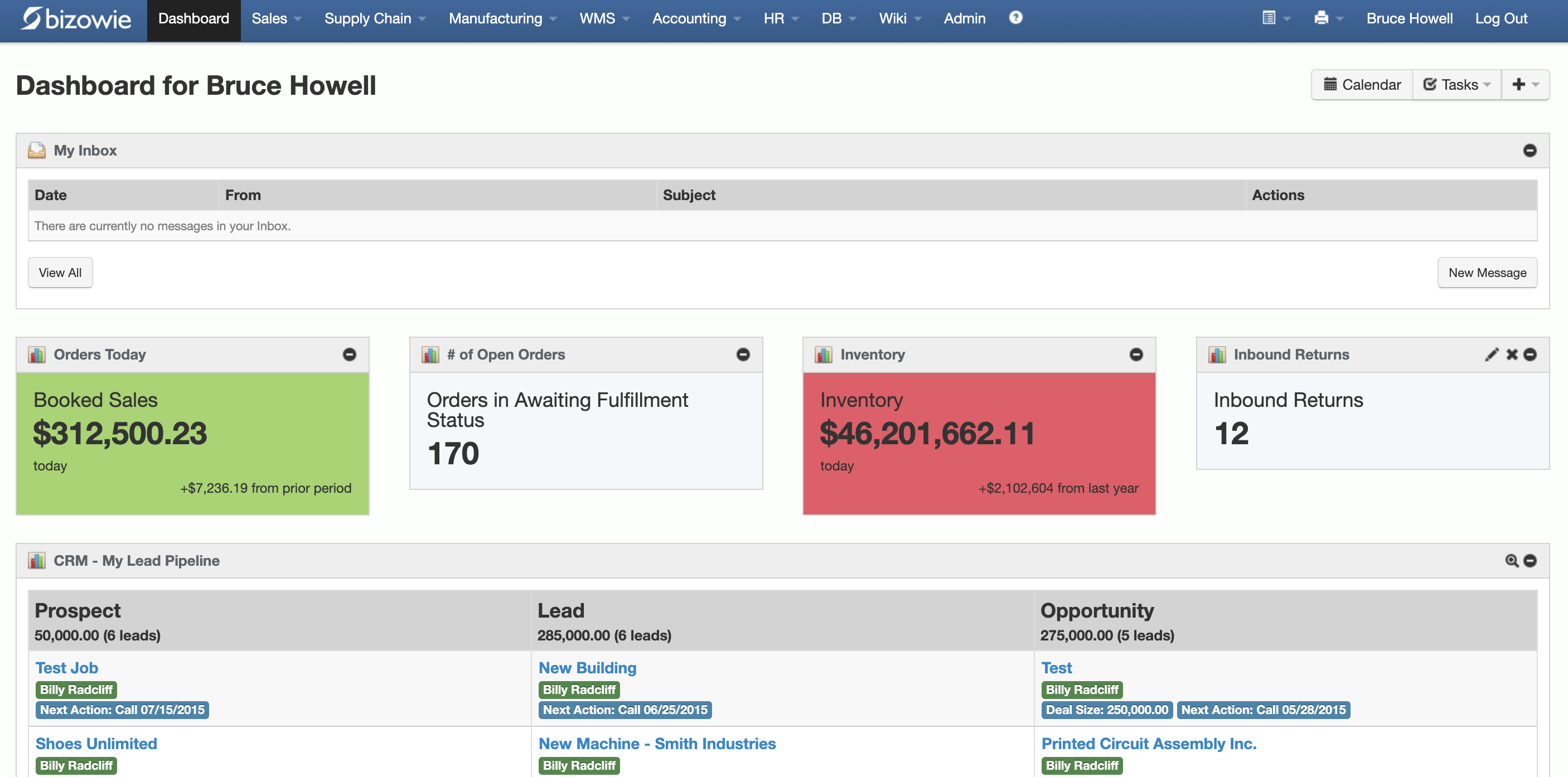
Live Dashboard
Bookings, open orders awaiting fulfillment, and inventory value at a glance.
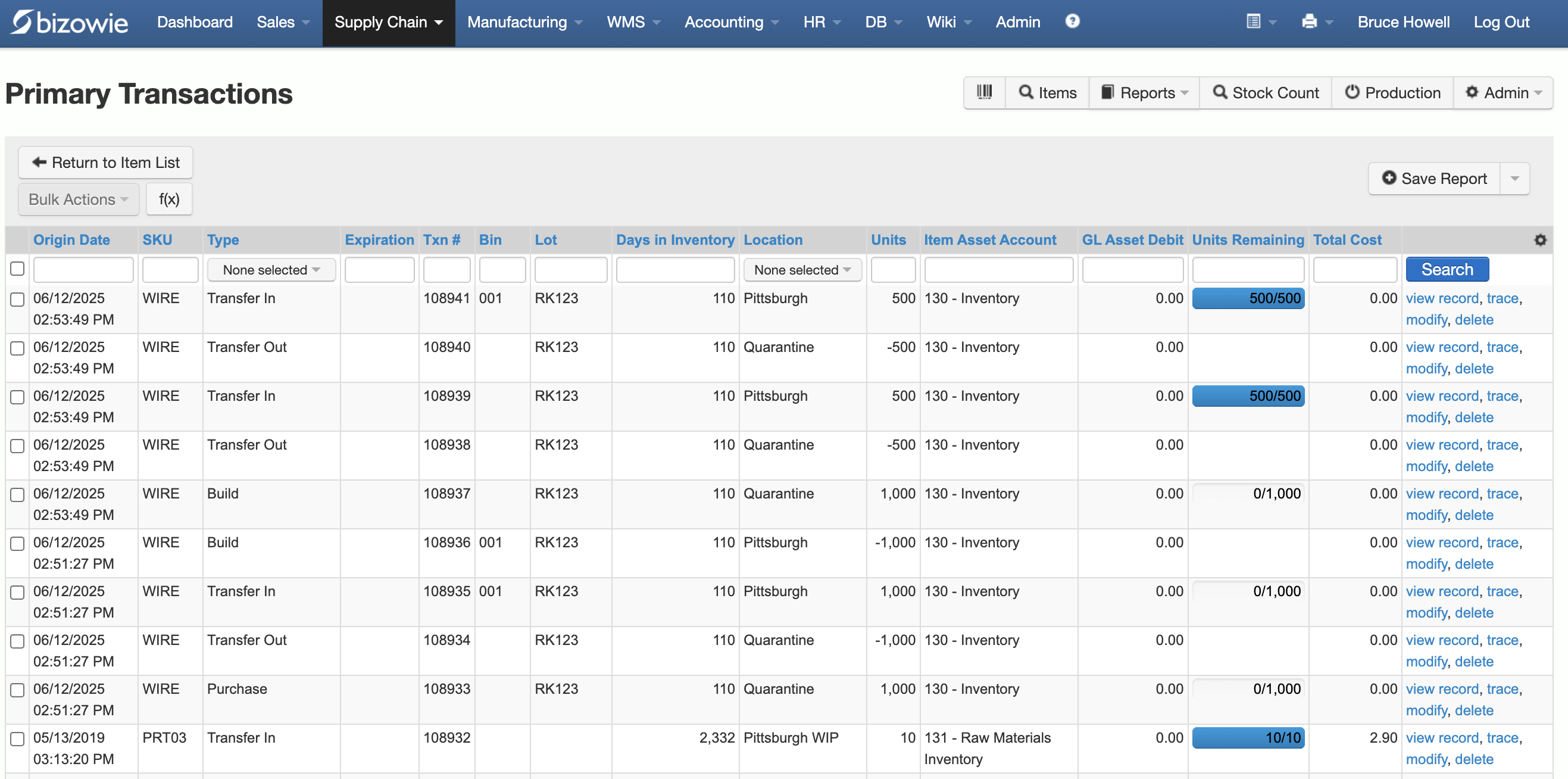
Inventory Transactions
Every receipt, transfer, build, and quarantine move by SKU, lot, bin, and location.
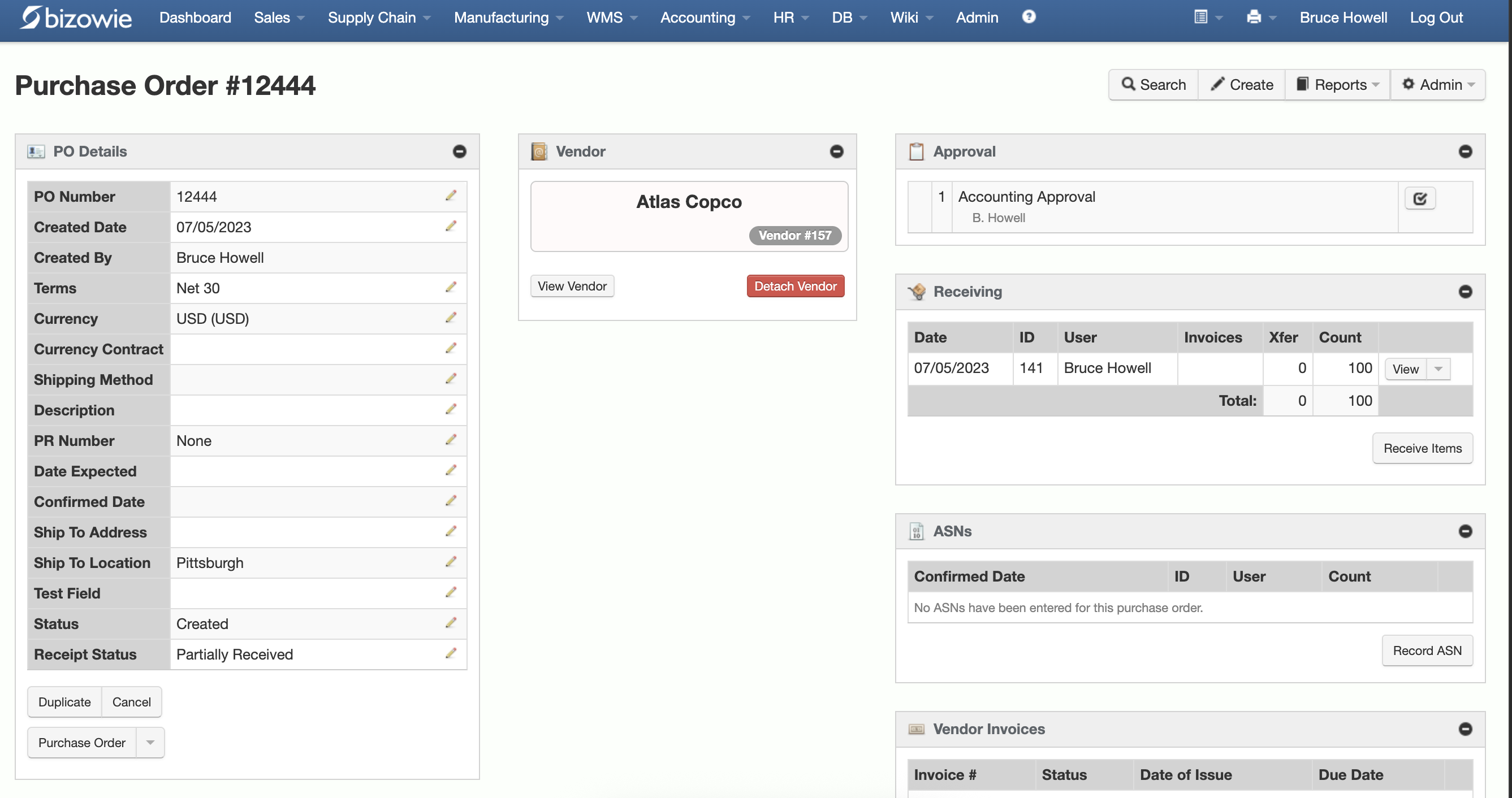
Purchasing & Receiving
Purchase orders with approvals, receiving, ASNs, and vendor invoices on one screen.
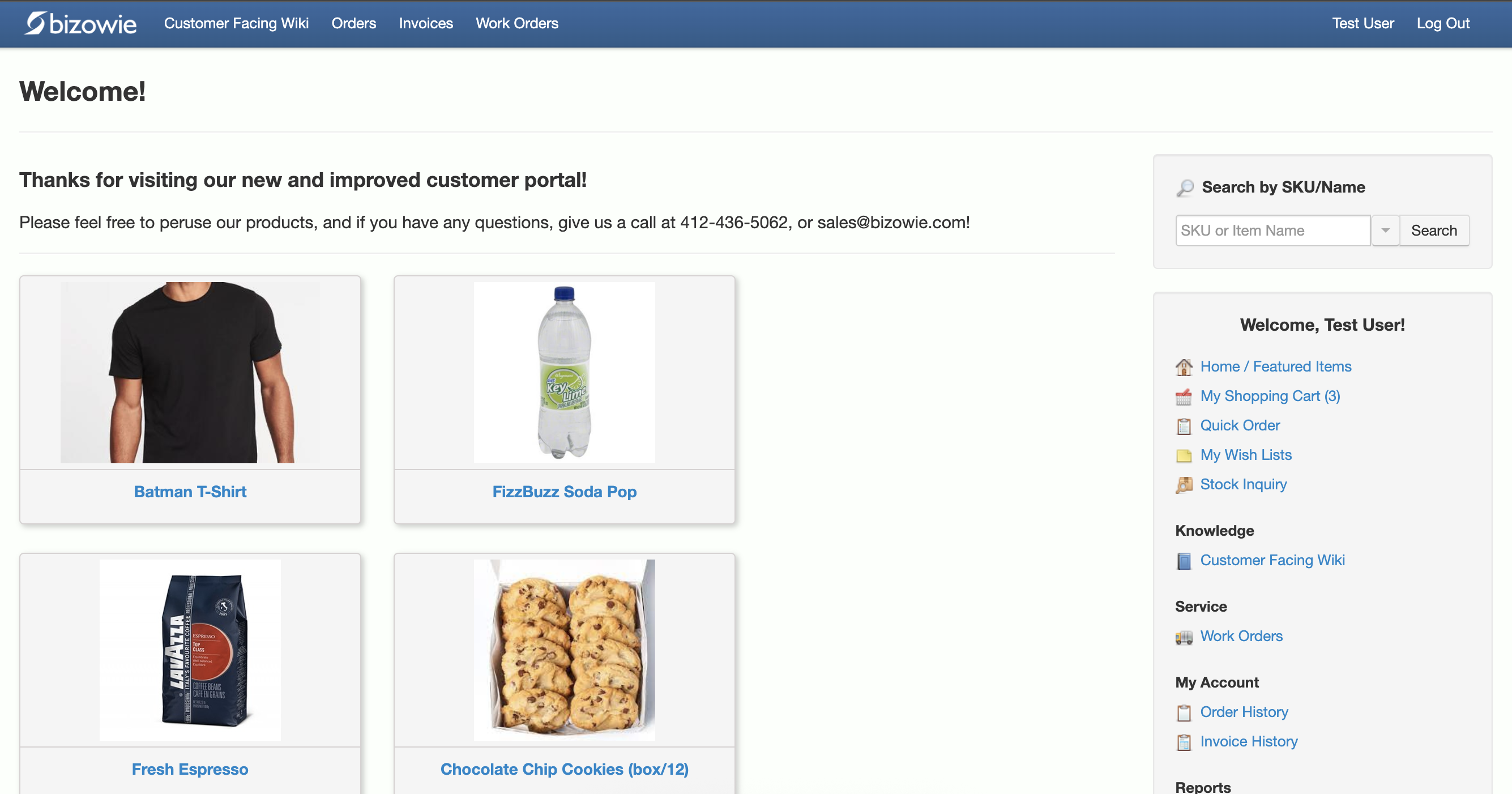
B2B Customer Portal
Customers search items, place orders, and check order and invoice history themselves.
How Bizowie Supports Drop Ship Excellence
Bizowie’s cloud ERP platform treats drop shipping as a core distribution capability rather than an edge case requiring workarounds.
For vendor drop ship, Bizowie supports EDI and API integration with vendor systems to provide real-time availability and pricing within your order entry workflows. When orders should drop ship, purchase orders generate automatically and transmit electronically. Vendor shipment confirmations and tracking flow back into the system, updating customer order status without manual intervention. Your customer service team sees consolidated status regardless of where orders ship from.
For serving as a drop ship supplier, Bizowie maintains customer-specific configurations for shipping requirements, branding, documentation, and service levels. EDI and API integrations receive orders from retailer and eCommerce platforms automatically. Warehouse workflows apply appropriate handling based on customer requirements. Fulfillment confirmations and tracking transmit back through the same integrations.
Critically, Bizowie handles the combinations that create complexity: orders that split across your inventory and vendor drop ship, drop ship customer orders that trigger vendor purchases, inventory allocation across customer types, and consolidated reporting across all fulfillment paths.
Because order management, purchasing, warehouse management, and customer integration share a common platform, the connections that drop shipping requires exist natively. There’s no middleware to maintain, no manual bridging between systems, no visibility gaps where information falls through.
“What used to take us 30 to 45 minutes can now be done in 3 to 5 minutes.”
Bridget Gaussa — Director of Program Development, Cribs for Kids
Building Your Drop Ship Strategy
Whether you’re exploring vendor drop ship to extend your product range, considering becoming a drop ship supplier, or optimizing existing operations on both sides, success requires treating drop shipping as strategic capability rather than tactical convenience.
Start with clear objectives. Are you trying to expand your effective catalog? Reduce inventory investment? Add revenue streams from fulfillment services? The answers shape priorities and investments.
Evaluate your current state honestly. What systems support drop ship today? Where are the visibility gaps? What’s the actual customer experience? What does drop ship profitability look like when all costs are included?
Identify the integration requirements. Which vendors could support drop ship if you had proper connections? Which potential customers would use you as a drop ship supplier if you could integrate with their systems?
Assess your platform capabilities. Can your current systems support the workflows, integrations, and visibility that drop ship excellence requires? Or are you fighting the tools rather than using them?
For many distributors, the platform question proves decisive. Drop shipping at scale requires capabilities that legacy systems struggle to provide and that bolted-together point solutions can’t deliver reliably. Modern, purpose-built distribution platforms offer the integrated functionality that makes drop ship both practical and profitable.
Taking the Next Step
Drop shipping has evolved from an occasional accommodation into a fundamental distribution strategy. Customers expect access to broad product assortments regardless of what you physically stock. Retailers and eCommerce sellers expect suppliers who can ship on their behalf without friction. The distributors who master both directions gain competitive advantages that those stuck in warehouse-only models can’t match.
The path to that mastery runs through systems that treat drop shipping as a first-class capability: supporting vendor integration, customer integration, flexible fulfillment routing, and consolidated visibility across all flows.
If drop shipping represents a growth opportunity for your distribution business—either direction—the time to build the capability is before your competitors do.
Ready to see how modern ERP handles drop ship complexity? Schedule a demo to explore how Bizowie integrates vendor-direct fulfillment and drop ship supplier operations into a unified distribution platform.
See how Bizowie would handle your drop ship orders
Tell us a little about your operation and we’ll reply with an honest assessment of fit, not a sales pitch.
- A real person reviews your submission and replies within one business day.
- No automated email sequences.
- If we’re not the right fit, we’ll tell you.
Prefer to talk?
Call (888) 635-2517, Mon–Fri, 9 AM–5 PM Eastern